
Have you ever wondered why the Chinese OEMs are stuffing their smartphone batteries to the proverbial gills while Apple and Samsung appear fairly conservative in bestowing a decent-sized battery to their respective offerings?
Most peg this quirk to cost considerations. But if Chinese OEMs, with their relatively limited financial resources, are able to stuff a 6,500mAh battery in a mid-ranger, clearly something else is afoot. And, that something might have to do with the stringent air safety regulations in the US and EU.
Smartphones above a specific mAh battery capacity trigger stringent scrutiny as “dangerous goods,” incentivizing Apple and Samsung to keep a lid on their smartphones’ battery juice
vivo X300 Pro battery life
The X300 Pro’s battery capacity is a bit of a contentious topic. In China and many other markets, the phone comes with a 6,510mAh battery, but in the EU its capacity is just 5,440mAh, and that’s the version we’ve tested.
The phone is most probably…
— PhoneArt (@UniverseIce) November 8, 2025
The famous tipster, Ice Universe, seems to believe that stringent air safety regulations are the biggest hurdles behind the relatively modest battery capacities of Apple and Samsung phones.
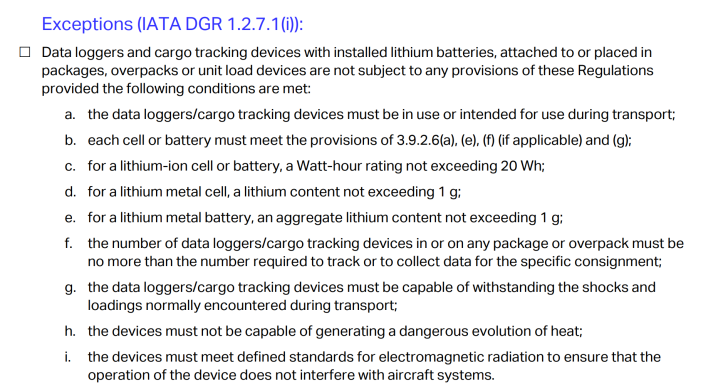
We then conducted deeper research and found this hypothesis to be quite plausible. For instance, the IATA Battery Guidance document (revised for 2025 regulations) exempts batteries from stringent regulations if their “Watt-hour rating [does] not [exceed] 20Wh.”
To convert the mAh-based battery capacity into Wh, simply divide the number by 1,000 and then multiply the result by the battery’s nominal voltage, which is typically 3.7V. For instance, to compute the Watt-hour rating for the 4,000mAh battery found within the Samsung Galaxy S25, you have to divide the given capacity by 1,000 and then multiply the answer by the battery’s nominal voltage of 3.7V, yielding a Watt-hour rating of 14.80.
The reason why Chinese OEMs can get away with higher battery capacities has a lot to do with the fact that their smartphones are mostly sold within China or in developing countries, while Samsung and Apple sell a lot of their smartphones in the US and EU, which enforce a more stringent air safety regulation regime for goods classified as dangerous, entailing extra paperwork, hazard labeling, and special packaging requirements.


So, the next time you find yourself complaining about your Apple or Samsung smartphone running out of juice at the end of the day, just keep in mind that air safety regulations might have something to do with it as well.
Follow Wccftech on Google or add us as a preferred source, to get our news coverage and reviews in your feeds.