

When architect and University of Auckland academic Professor Anthony Hōete began testing the ancient Māori building technique known as mīmiro, the results were striking. In mīmiro, wooden supports are fastened together using joints similar to tongue-and-groove and then the whole structure is fastened to the ground with rope.
The lashing techniques were originally adapted from those used for double-hulled sailing waka.
Hōete’s team, funded by the Earthquake Commission, simulated earthquake conditions, and the structure they had built held firm. The lashings, shaken loose in the quake, could be pulled tight afterwards.
Māori designs and building techniques will be groundbreaking for housing in New Zealand in the future, says Hōete, who works with MĀPIHI, the Māori and Pacific Housing Research Centre at Waipapa Taumata Rau – the University of Auckland.
Savannah Brown, a Māori architectural designer and a PhD researcher at MĀPIHI, is also pushing for a much greater recognition of Māori design and technology in construction.
As a small child, she loved to talk to her grandmother, her kuia, about the latter’s dream house, and then draw the floor plans. It was always a big, open, home that could hold everyone, Brown says, and there was a full wraparound porch – a welcoming, sheltered outdoor space: “a middle ground between outside and in”.
Brown, whose whakapapa is Ngāti Whātua, Ngāti Wai, Ngāti Hine and Ngāpuhi, didn’t know it then, but her grandmother’s wish list mirrored traditional Māori design principles: openness, whānau space, and permeability between home and environment.
That childhood fascination became her career. Brown studies how Māori building principles can help address today’s housing crisis. Her research looks at how past regulation and urban migration disrupted Māori design traditions and how bringing them back could create homes that are both affordable and culturally grounded.
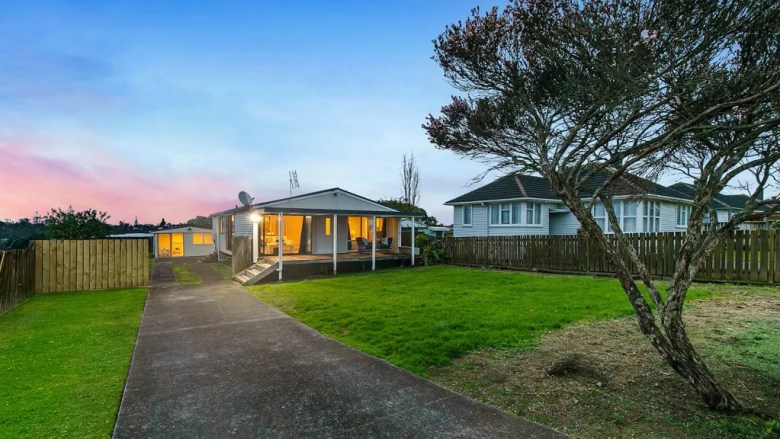 Gerhard Rosenberg’s Māori-centric home design had plenty of room out front for whānau to gather. Photo: Supplied
Historically, Māori houses were communal, practical and adaptive. They were also free. Iwi whenua contained the materials they needed to build new homes; and whānau joined together for the construction process.
But as Māori moved to cities, many families found themselves in homes that didn’t fit their lives: narrow hallways, closed kitchens, and small, nuclear-family layouts left little room for wider whānau or visitors; internal laundries and bathrooms breached tikanga.
Ironically, it was an architect from Europe who first recognised that was a problem and tried to do something about it.
Gerhard Rosenberg was a Jewish architecture student in Germany during the rise of the Nazi party in the 1930s. He fled to the UK, but during World War II was deported to Canada because of his German passport and put into an internment camp with Nazi prisoners.
It was an experience which gave him a hatred of big government and a strong empathy for the underdog. And when he emigrated to New Zealand in the 1950s, he saw Māori people were often the underdog when it came to their rights.
Working at the University of Auckland, Rosenberg turned his modernist eye to Māori housing. He visited communities to understand how they lived and designed a series of homes that responded to those needs.
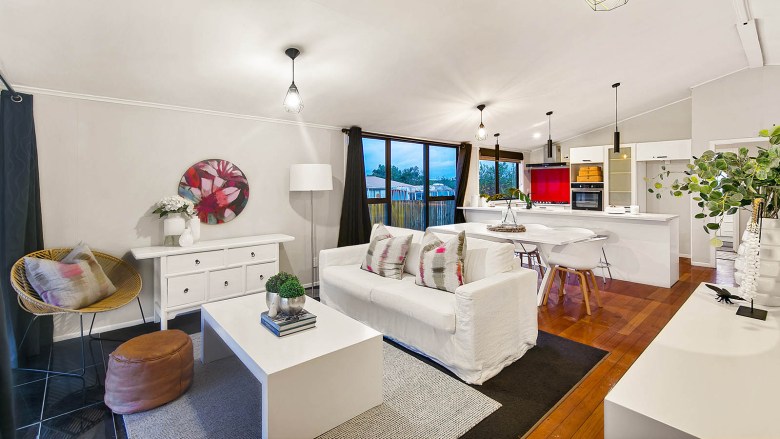 Rosenberg’s Panama Rd home was sold and destroyed for development in 2022. Even the real estate agent was devastated, Deidre Brown says. Photo: Supplied
Rosenberg’s plans featured open-plan kitchens – radical for the era – and large verandas that allowed whānau to gather or host ceremonies. He built in practical details: a wide front area, and a separate entrance at the back for whānau and kaimoana. His designs, presented at the 1959 Young Māori Leaders Conference, were functional, affordable, and infused with tikanga.
The Department of Māori Affairs liked the idea and built a pilot home on Panama Road in Mt Wellington. It stood for more than 60 years before being demolished in 2022. But it was the only one. Government policy at the time was to assimilate Māori into Pākehā society and in that environment, the authorities weren’t looking to build homes geared for whānau.
And, ironically, Māori at that time didn’t necessarily want Rosenberg’s designs either, says Professor Deidre Brown, co-founder of MĀPIHI, and one of the country’s leading architectural historians. “There was resistance. Some Māori families thought they looked too much like a whare. They didn’t want to stand out.”
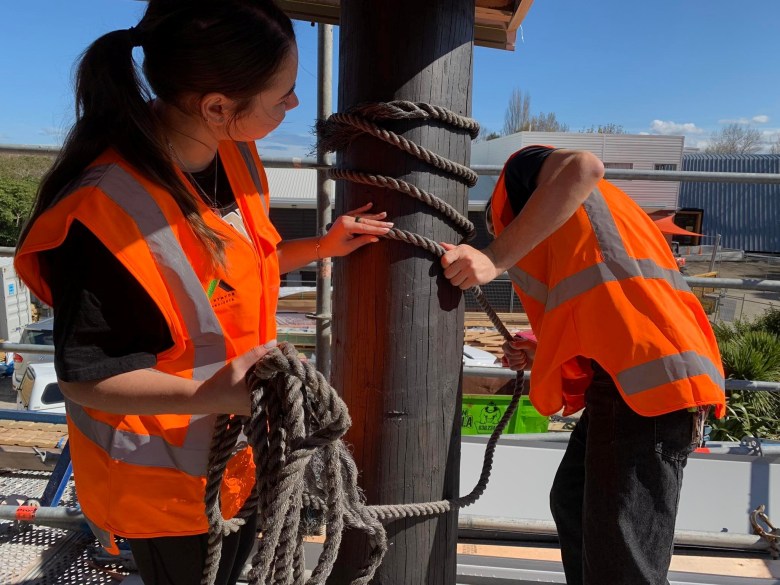 Savannah Brown (left) working on the pou lashing at Te Mahurehure Marae. Photo: Supplied
Half a century later, the open-plan layouts and indoor-outdoor flow of Rosenberg’s Māori-centric housing design have become the default of suburban New Zealand; and that means Māori families, often renters or without the money for expensive renovations, frequently find themselves living in homes with the old colonial model.
At Te Mahurehure Marae in Pt Chevalier, new design thinking is taking shape. Te Kāinga Atawhai – 14 homes clustered beside the marae’s wharenui and whare kai – combines cultural values with the realities of medium-density housing.
“It’s an intentional community,” says Deidre Brown. “People have chosen to live together, to support each other as a neighbourhood.”
Savannah Brown believes the next step is embedding Māori practices directly into New Zealand’s regulations, as Hawai‘i and Canada have done. “I want to see changes in our building code; changes that could hopefully make it cheaper and easier to build Māori housing.”
For Deidre Brown, the challenge isn’t just about policy and regulations – it’s also about perception.
“I worry the message about the importance of good design and creating spaces that enable people to thrive is not getting through,” she says. “Programmes like Grand Designs on TV leave people with the sense that housing designed to suit family needs is only available to the wealthy.
“That doesn’t need to be the case; good design [should be] accessible to everyone.”
This article comes from the latest episode of Ingenious, a podcast highlighting groundbreaking research and researchers from the University of Auckland.