
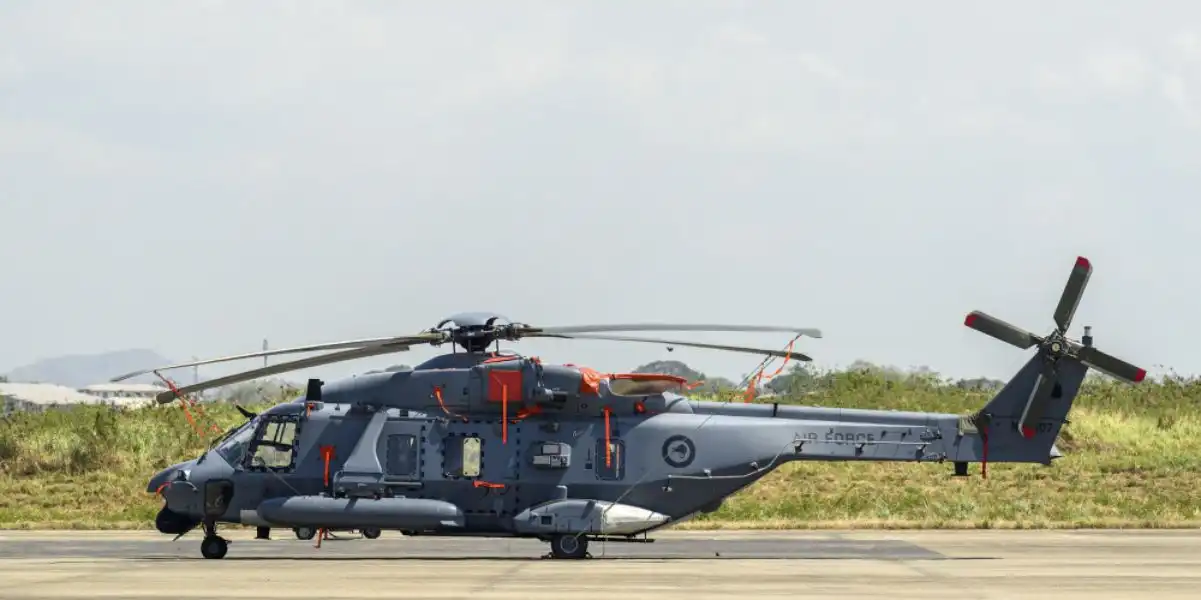
RNZAF NH90 record-breaking flight over water
With a large zone of operations to cover in the Southwest Pacific, the Royal New Zealand Air Force (RNZAF) needs its fleet of NH90s to go the distance. Fortunately, the specialised military helicopter is delivering.
The RNZAF’s jurisdiction is vast, covering a huge area including New Zealand, the Cook Islands and Vanuatu. The logistics to get assets to where they are needed is a key part of any military’s planning. “Until now, HMNZS CANTERBURY is our primary means to get around the islands,” explains Squadron Leader Lachie Johnston, 3 Squadron NH90 Flight Commander, in an Airbus news release. “Or when other partner nations have the capacity or the need arises, we have also been fortunate enough to have their support and the C-17s to get us around.”
To become less reliant on partners and minimise the impact of the loss of the Canterbury when it is being serviced, RNZAF Squadron 3 seized on the opportunity to perform a particularly long ferry flight from Papua New Guinea back to New Zealand. “That was our first opportunity to exercise what we term the ‘extended overwater operations’ component. For us, that’s flight beyond 50 nautical miles.”
Favourable winds and targeted technology
“[In terms of planning and preparation] you talk about ‘crawl, walk, run’ as a concept, and our trip to Papua New Guinea was arguably our ‘crawl’ phase,” notes Johnston. “Flying from Australia to New Zealand, where the winds are to your back, represented the “walk” phase, which was important to complete before the inevitable ‘run’, which is one day our needs might dictate that we have to get some helicopters up in the islands at short notice. With this mission we were able to get about half of our crews through this type of operation. In very short order, we’ve exercised it and we’ve actually created a depth of experience in our team, which is probably the most important bit.”
The mission necessitated long legs flown over water – the longest leg was 660 miles with 480 nautical miles over water – though, thanks to the NH90’s features and automation the crew were always confident of the mission’s success. Two additional external 1,100 pound fuel tanks were added and the mission was performed under instrument flight rules (IFR) and Johnston emphasises that the NH90’s automation was crucial for flying such long legs – especially over water. “The fuel management system supported us incredibly well in terms of both managing and monitoring fuel consumption. We took significant confidence out of its fuel performance and its cruise speed and its capabilities with respect to anti-ice and de-icing, as well as the aircraft navigation system which has increased importance in the overwater environment. Having a weather radar that has a sea-mapping and ground-mapping mode was also essential.”
RNZAF NH90 record-breaking flight over water: Safety margins and invaluable experience
Johnston also notes that while it is not uncommon for helicopter to fly long distances over water, a detailed risk assessment was completed prior to releasing the capability. Fortunately, thanks to the technology and safety features of the NH90 and the comprehensive training undertaken by NH90 crews, the risk analysis determined these types of activities can be conducted safely, with very little additional risk. Furthermore, the RNZAF was recently able to complete its Software Release 2 programme prior to the flights in question, improving communication – crucial over long leg flying: “It was helpful that some of the upgrades that came with either our secure comms programme or the Software Release 2 itself actually help support this operation.”
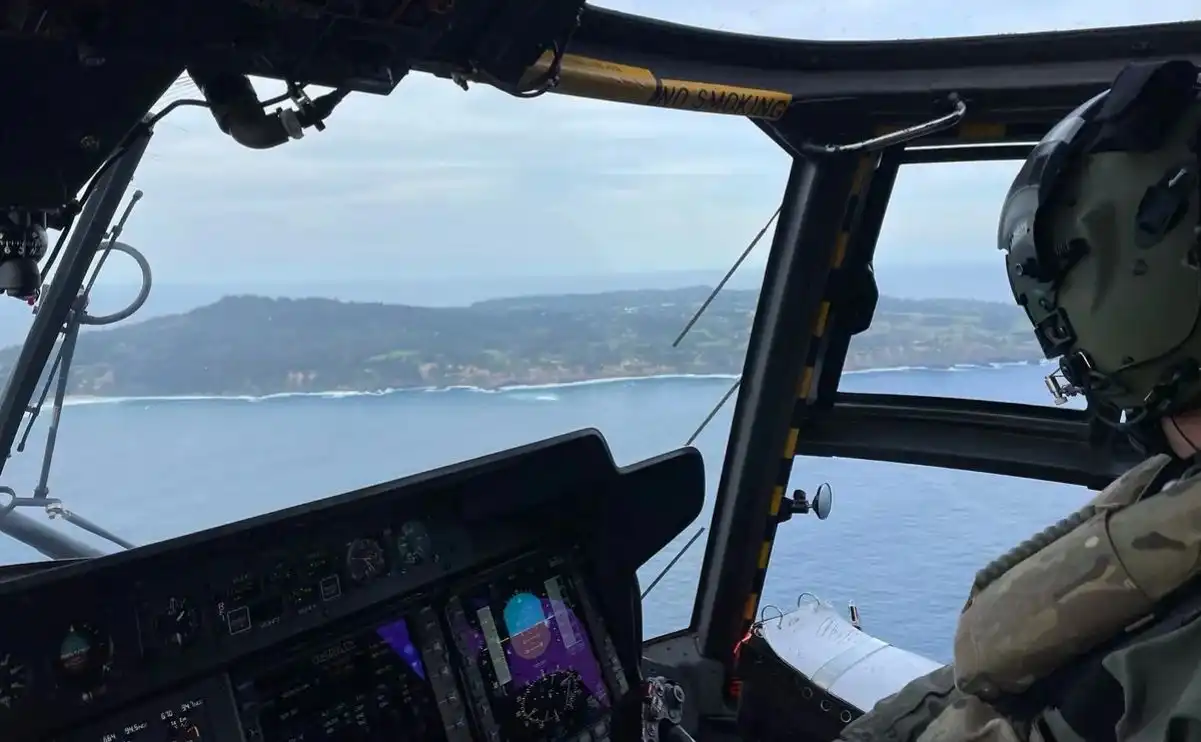
For Johnston, the record-breaking aspect of the mission is less important as the opportunity to increase operational agility and employment of the NH90 system: “This capability ultimately gives us a bit more autonomy and allows us in the future to respond quickly and get to the islands within a matter of days.”
Tactical air mobility operations for New Zealand’s Defence Force
Royal New Zealand Air Force has eight NH90 helicopters in its fleet, which are operated by No. 3 Squadron and have been in full service since 2015. They are a twin engine medium utility helicopter featuring a fly-by-wire flight control system, full ice protection system, and fibre-glass composite structure.
The NH90’s central role is to provide tactical air mobility operations for New Zealand’s Defence Force. This includes support to special operations, casualty evacuation, and movement of troops and equipment. Additionally, the NH90 provides a range of support services to government agencies including search and rescue, police operations, disaster relief, and counter-terrorism response.
The NH90 is built around shared systems, optimising cost efficiency throughout its lifespan. Both the NFH and TTH variants utilise a common suite of systems, embracing the “design once, use many times” approach. This strategy minimises the design footprint and streamlines Integrated Logistic Support. A unified training system for pilots and maintainers, a standardised maintenance and spares network, and a single core design system collectively contribute to significant cost reductions over the aircraft’s service life.
The NFH (NATO Frigate Helicopter) is the ultimate maritime helicopter, designed to provide unparalleled superiority in any maritime environment. With its advanced Naval Mission System, the NFH is able to integrate its sensors, sub-systems and tactical computers into a single robust avionics architecture, giving it the ability to communicate over long distance with other aircraft, ships and ground based unit providing unmatched situational awareness and coordination capabilities.
The NH90 TTH (Tactical Transport Helicopter) is an outstanding helicopter featuring unrivalled agility and a state-of the-art mission system for mission success.
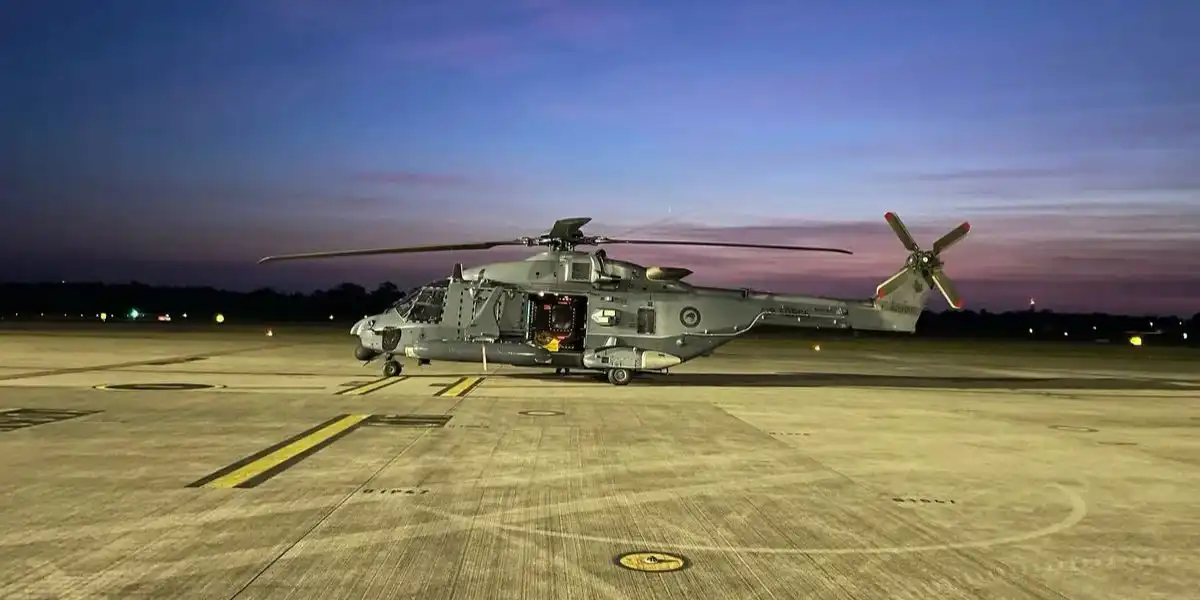
Photo credit: Royal New Zealand Air Force