
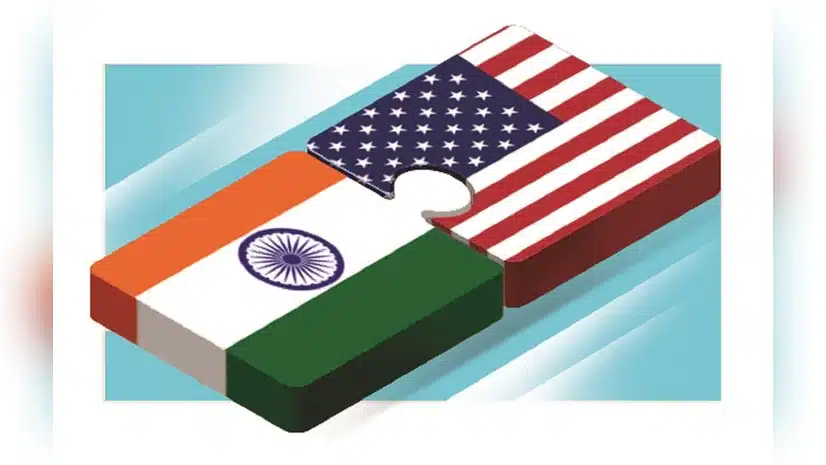
India’s goods exports to the United States experienced a notable rebound in October, marking a 14.5% increase from September. This surge comes despite the ongoing impact of steep tariffs imposed by the Trump administration, including a significant penalty on Russian oil imports. The rise in exports is attributed to new agreements between Indian state-run oil firms and the U.S. for liquefied petroleum gas (LPG) imports, alongside exemptions for certain agricultural products from reciprocal tariffs. As negotiations for a trade deal progress, key aspects are reportedly nearing completion.
October Export Surge Amidst Tariff Challenges
In October, India’s exports to the U.S. rose for the first time in five months, signaling a potential shift in trade dynamics. This increase comes after a sharp decline in September, when exports were significantly affected by the implementation of 50% tariffs on various goods, including a 25% penalty for Russian oil purchases. Despite the overall decline in India’s goods exports, which fell by 11.8% year-on-year, the uptick in trade with the U.S. highlights the resilience of certain sectors. Ajay Srivastava from the Global Trade Research Initiative noted that sectors exempt from tariffs, such as smartphones and pharmaceuticals, may have contributed positively to this rebound, although this remains speculative.
Strategic Energy Agreements with the U.S.
In a significant development, India has finalized a major agreement that will see its state-run oil companies sourcing approximately 10% of the country’s annual LPG needs from the United States. Petroleum Minister Hardeep Singh Puri hailed this decision as a “historic development,” emphasizing the opening of India’s rapidly growing LPG market to U.S. suppliers. This move aligns with the Trump administration’s ongoing efforts to encourage India to reduce its reliance on Russian oil, especially in light of the sanctions imposed on Moscow following the Ukraine conflict. India has emerged as a major market for Russian crude, purchasing $52.7 billion worth last year, which accounted for 37% of its oil imports.
Progress in Trade Negotiations
Despite the complexities surrounding energy imports, trade negotiations between India and the U.S. appear to be gaining momentum. A senior government official recently indicated that the first phase of the trade deal is “more or less near closure.” This progress comes after months of stalled discussions, primarily due to India’s reluctance to cut back on Russian oil imports. Additionally, the U.S. has announced plans to roll back reciprocal tariffs on certain agricultural products, including tea, coffee, and spices. Analysts suggest that this move could exempt around $1 billion worth of India’s agricultural exports from duties, further enhancing trade prospects.
Looking Ahead: Diplomatic Balancing Act
As India navigates its energy import strategy, it faces a diplomatic balancing act. Russian President Vladimir Putin is expected to visit India next month to finalize several agreements, adding another layer of complexity to the situation. While India has not officially confirmed any reductions in Russian oil purchases, the ongoing trade talks with the U.S. signal a potential shift in its energy sourcing strategy. The evolving trade landscape between India and the U.S. could reshape economic relations, particularly as both nations seek to strengthen their ties amidst global uncertainties.
Observer Voice is the one stop site for
National,
International
news,
Sports,
Editor’s Choice,
Art/culture contents,
Quotes and much more. We also cover
historical contents. Historical contents includes
World History,
Indian History, and what happened
today. The website also covers
Entertainment across the India and World.
Follow Us on
Twitter,
Instagram,
Facebook,
& LinkedIn