
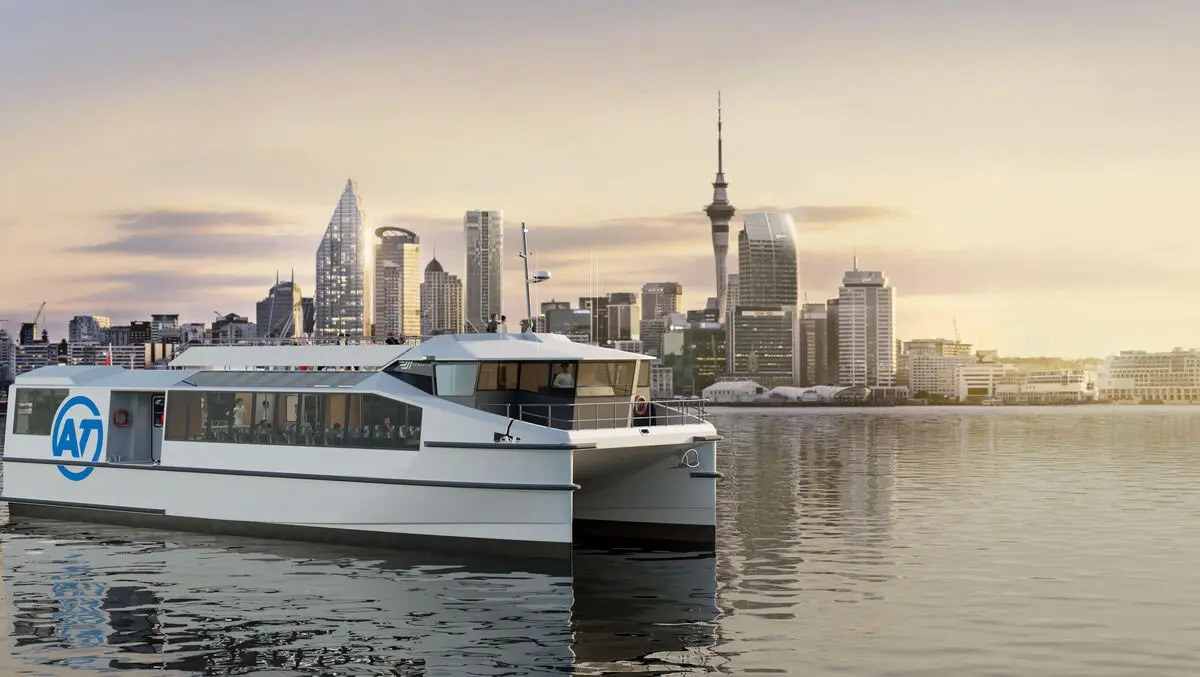
Auckland has become the first city in New Zealand to commission a Megawatt Charging System (MCS) for electric ferries, marking a move towards cleaner maritime transport. The new infrastructure, located at Half Moon Bay, forms part of a wider electrification programme aiming to reduce emissions from the city’s ferry network.
Emission reduction
The city’s ferry fleet currently emits about 15,000 tonnes of CO2 annually. The new charging system is designed to support electric ferries as a scalable, zero-emission alternative to conventional diesel-powered vessels. Electrification is expected to provide lower emissions, reduced noise levels, and new efficiencies in ferry operations.
The project focuses initially on two charging locations: Half Moon Bay, now operational, and the Downtown Ferry Terminal, set for completion in the coming years. Together, these sites will provide the infrastructure backbone needed for Auckland’s first electric passenger ferry service connecting East Auckland with the city centre.
Technical details
The system uses ABB’s Megawatt Charging System technology, featuring two 1.65MW charging plugs and offering a combined 3.3MW of capacity. This enables rapid charging of ferries, reducing turnaround time at the terminal. Singer Electric led the engineering and local delivery, including the design, installation, compliance, and ferry-side interface.
Central to the installation is a pre-fabricated, containerised eHouse built by Entec. The eHouse houses transformers, rectifiers, switchgear, and cooling systems in a weatherproof, secure setting. This pre-assembled unit arrived fully tested and ready for installation to minimise disruption at the site.
“It’s all pre-tested and wired up before it arrives. From an install perspective, you just crane it in, connect the feeds, and you’re good to go. That means faster installs, less disruption to the site, and much less risk,” said Finn McLaren, Head of Sales & Marketing, Singer Electric.
The eHouse design incorporates input from the local Iwi, Ngāti Whātua Ōrākei, ensuring that lighting and aesthetic elements align with the wharf environment and public expectations.
Partnership approach
The project brought together several organisations. Auckland Transport is the commissioner and owner, ABB provided the MCS hardware, while Singer Electric handled integration and installation. Entec constructed the eHouse, and Zinus supplied onboard charging systems for the ferries.
Singer Electric and ABB have previously worked together on other major electrification projects in New Zealand such as electric bus depots. Their partnership supports a complete offering-from design and engineering to installation and ongoing support-for high-voltage systems in operational settings.
“ABB’s gear is world-class – and they’ve led the charge in MCS technology globally. But bringing that into a real port environment takes local know-how. That’s where we come in,” said McLaren.
He added that integrating all steps of the process within a single team can streamline project management for businesses and public sector clients aiming to decarbonise their transport assets. “For a business or council trying to decarbonise, there’s already a lot to navigate – networks, standards, marine rules, engineering, procurement, build… Our goal is to make all of that simple,” said McLaren.
Future expansion
The Half Moon Bay charger is undergoing real-world testing to assess performance factors such as thermal regulation, component durability, and power demand. The modular, containerised approach is attracting overseas interest, including from Spain, and is considered adaptable for other ports or commercial settings.
The Downtown Terminal is scheduled to receive additional chargers in 2026 and 2027. Testing of the Half Moon Bay site is underway, providing practical insights for expanding electric ferry operations.
“The Half Moon Bay deployment has proven that this system is both technically robust and operationally practical,” said Nathan Cammock, Programmeme Director, Low Emission Ferry Programmeme, Auckland Transport.