
Public consultations will be open until December 19 on the council’s new residential
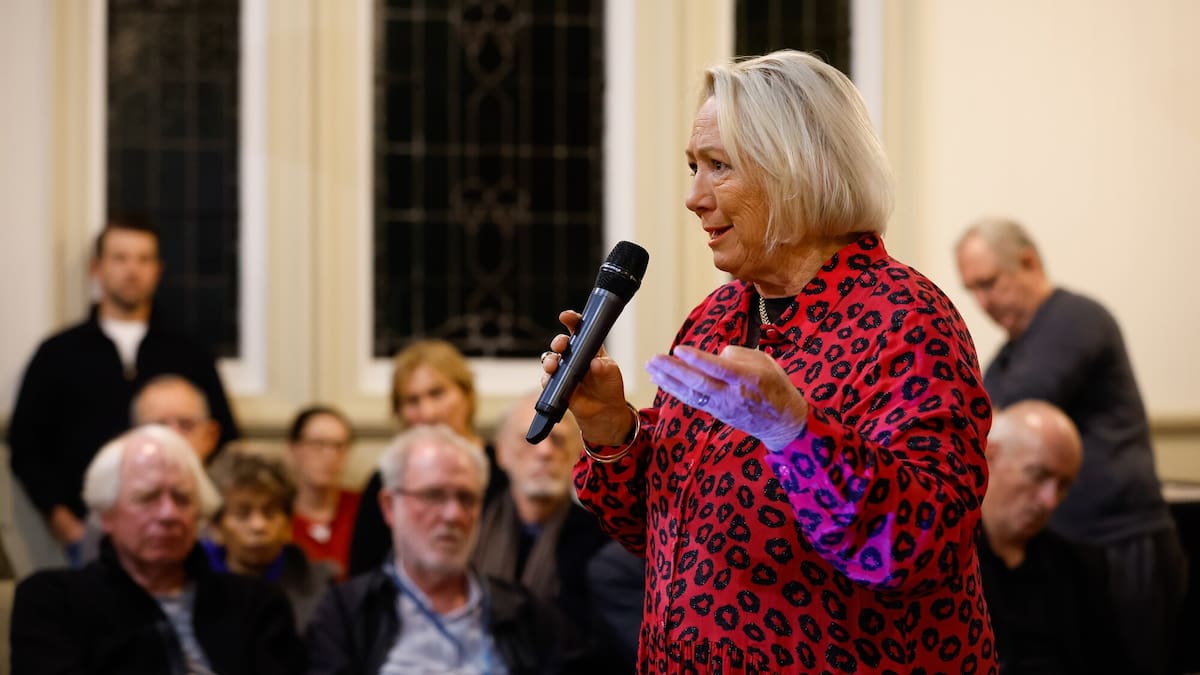
zoning proposals, known as Plan Change 120. Councillor Christine Fletcher has been posting on community Facebook pages urging people to have their say. Good idea.
In the posts, she says; “In all the years I have represented Auckland in various roles, I have never seen a more devastating proposal for Auckland than PC120, for the potential to destroy what many of us in Auckland hold dear”.
Hmm. Never? PC120 replaces PC78, which introduced the previous Government’s Medium Density Residential Standards (MDRS). PC78 allowed sections to be subdivided in three, with three-storey dwellings built on each, throughout most of suburban Auckland.
During a council meeting in 2021, Fletcher described PC78 as “gang rape” of the city, withdrawing the remark only after repeated appeals by other councillors.
And back in 2015, at a public meeting in Kohimarama I attended and reported on, she said that if the draft Auckland Unitary Plan (AUP) was adopted, there would be “civil war in Auckland for the next 20 years”.
Fletcher consistently says she supports greater density in the city, but done in the right way and in the right places. But equally consistently, she has opposed every plan for density.
The city has proceeded with more density anyway, but not really at pace. What’s happening far more quickly is sprawl: to the north, south, east and west.
Because there are no neighbours to object, it’s easier to sprawl than build up. But it’s not cheaper or better for the city.
All that sprawl puts appalling pressure on the transport network, especially the motorways, and it costs the council (that is, us) a lot more in the provision of services. The new wastewater plant at Snells Beach near Warkworth has a $450 million pricetag.
PC120, the “devastating proposal” Fletcher is now campaigning against, addresses this. It allows development to focus on town centres, train and busway stations, and along arterial routes.
It abandons the MDRS. Most of suburban Auckland will retain its single and two-storey zoning. And it introduces, for the first time, tough regulations for building on land at risk of coastal erosion and flooding.
I asked Fletcher why she was opposed to a plan that really does appear to focus growth in the right places. Why does she keep catastrophising each new plan? I asked why she thinks PC120 is worse than the “gang rape” of PC78 and “civil war” of the AUP. And given that she says she supports density when it’s done well, is there any density proposal she has ever supported?
She responded that she would “decline to comment or participate in your story on this topic”.
To be fair, the density focus is squarely on Fletcher’s own ward, which includes Mt Eden, Kingsland, Sandringham and Mt Albert.
But there’s a reason for this. It’s close to town, has good water infrastructure with better coming, there’s scope for more schools, and most of all there are five railway stations.
If density makes the rail network popular, it will be frequent and well maintained, and that will do more than anything else to ease the city’s road congestion and lower carbon emissions.
Fletcher’s ward also has a lot of “character housing”, mainly villas, bungalows and cottages that are at least 100 years old. But while PC120 doesn’t protect all of them from development, it does protect most.
And the valuable views of Maungawhau/Mt Eden, Ōwairaka/Mt Albert and Puketāpapa/Mt Roskill? They’re protected too, by special legislation.
In my view, after the city centre, Auckland doesn’t have a better place for density.
Council planner John Duguid told a public meeting in Mt Eden last week that public interest in PC120 is high. The council has been running webinars to explain it, and will also host four big public meetings in different parts of the city in the coming days.
West: Monday November 24, 6.30pm, Te Manawa, Kohuhu Ln, Westgate. South/East: Tuesday November 25, 6.30pm, Te Puke ō Tara Community Centre, Newbury St, Ōtara. To attend, please register here prior: Info session – SOUTH / EAST North: Wednesday 26 November, 6.30pm, North Lounge, North Harbour Stadium. Central/East: Monday 1 December, 6.30pm, Aotea Centre.
They’re asking people to register prior to attending:
The mayor’s satellite phone
Wayne Brown in his office the day after his re-election. Photo / Sylvie Whinray
Mayor Wayne Brown revealed at a council meeting last week that he was given a satellite phone on his first summer break and told to keep it with him at all times. So he dutifully took it out on his boat.
“It was only when I got back that I discovered it had no batteries,” he said. “And I had no idea how to use it.”
Probably all good now.
Getting bigger but not all over
The city that hasn’t stopped growing – but not all over. Photo / Chris Tarpey
New data from Statistics NZ reveals Auckland is the fastest-growing part of New Zealand, because of international immigration and births.
In the year to June, the city grew by a net 17,700 people: far ahead of Christchurch, the next biggest grower, with a net change of 3980.
The biggest growth occurred in Howick and other eastern suburbs, Papakura and the westie epicentre of Henderson-Massey.
But the Auckland number is not as high as it might have been, because more people are leaving the city than arriving from other parts of the country.
The two wards losing the most people are Waitematā, which extends from Herne Bay across Ponsonby and the central city to Parnell, and the eastern suburbs of Ōrākei, from Remuera to St Heliers.
In the whole country, only Wellington is losing more people than them.
What’s going on? Wealthier people – or their children – leaving for overseas, leaving behind expensive housing that recent arrivals can’t afford?
‘Something fishy’: Voter fraud allegations
Vi Hausia, former deputy chair of the Ōtara-Papatoetoe Local Board, who has petitioned the court for a review of the results.
Allegations of voting-paper theft, intimidation of voters and other voting irregularities during last month’s Auckland Council election were presented to the Manukau District Court on Friday.
And in a separate exercise, the police have revealed they are investigating 16 complaints of alleged fraud. These complaints were referred to them by Election Services, the company that ran the election.
Both matters relate to the election of the Ōtara-Papatoetoe Local Board.
The court case concerns a petition of inquiry under the Local Electoral Act 2001, which has been lodged by Lehopoaome Vi Hausia. If successful, it could result in a judicial review of the Papatoetoe results.
The police investigation will determine whether anyone should face criminal charges.
Hausia was deputy chair of the board in the 2022-2025 term, but lost his seat in the recent election. All four seats in the board’s Papatoetoe subdivision were won by members of a new group, the Papatoetoe Action Team.
The successful candidates were Kunal Bhalla, Kushma Nair, Sandeep Saini and Paramjeet Singh. None has any previous political experience in New Zealand.
Hausia is a member of the Labour Party and the board has previously been dominated by Labour members. But in previous years self-declared “centre-right independents” have also won selection.
Since the election, social media has carried many complaints about the result, from across the political spectrum.
Hausia’s petition alleges; “Statistics and turnout anomalies [were] inconstant with historic and current voting patterns in Papatoetoe”.
It also alleges there were “irregularities in the handling and verification of special and duplicate votes, … an unprecedented surge in special voting [and] discrepancies and inaccuracies in the list of persons from whom voting documents were received”.
He notes that the total votes for the local board rose in Papatoetoe but fell everywhere else. Also, that while candidates who were standing again received similar voter support compared to 2022, the Action Team candidates received at least 50% more votes than all the rest.
In Hausia’s own case, 3117 votes were enough to get him elected in 2022, but despite growing that to 3254 this year, he was still far short of the 4500+ recorded by the successful candidates.
The Papatoetoe subdivision of the Ōtara-Papatoetoe Local Board was the only area in Auckland where voting numbers rose in this year’s election.
The Action Team says it did well because it ran a good campaign.
Bhalla says; “Our campaign placed considerable emphasis on community outreach, door-to-door engagement, and voter education, encouraging residents to enrol and take part in local elections”.
It’s clear the Action Team did very well to engage a large number of new voters, and that’s something our local body elections really need, nationwide. Is that all it is?
Hausia is not convinced. “You don’t need to be a data scientist to know when something fishy is going on,” he says.
He points to an anomaly that emerged in the final, official count, which includes special votes: the Action Team all lost votes from the earlier count.
This can happen when voting papers are stolen. If your voting papers fail to arrive in the mail, you can apply for new papers, and the votes you cast with these will be counted as special votes.
Organisers will then discover if you, or someone using your name, has voted twice. Where they find two sets of voting papers under one name, they count the special vote and discard the ordinary one.
The initial complaint referred by Election Services to the police included allegations of “severe electoral malpractice”, including “nightly vote stealing by a team of young boys”, voters being instructed how to vote “inside the polling booths”, and other instances of voters “in places like temples and churches” being told how to vote.
The successful Papatoetoe-Ōtara Action Team.
Bhalla says the Action Team “categorically deny any involvement in unlawful or unethical conduct”.
“I can only emphasise that we have not been presented with any credible evidence whatsoever to support the claims you mention.”
Although the police have told the Herald they are investigating, Bhalla says; “No agency has contacted me or the Papatoetoe-Ōtara Action Team in relation to these accusations”.
The police say; “Enquiries remain ongoing and we are working through the complaints”.
They will “be in contact with people in due course”.
Hausia says the district court has reviewed his petition and “found cause to proceed to a hearing”.
The presentation on Friday was expected to be procedural, with the substantial hearing to come on December 8.
Get on the grass
Grassman: The yeti-like creature grown from grasses in the nursery of the Auckland Botanic Gardens, in collaboration with English grass artist Ashley Peevor.
What about this guy? The Botanic Gardens in Manurewa have set themselves the task this summer of persuading us that grass in not “boring”. And they’ve employed Grassman, a performance artist in a living grass costume grown onsite at the Gardens.
Grassman is the work of English grass artist Ashley Peevor and the whole show, called Tangled Roots, is an exhibition that explores “the tangled relationship between grass and humanity”.
“Discover the astonishing links between grasses – like wheat, rice and maize – and everything from the rise of civilisations and the Great Pyramids, to breakfast and even house cats,” the organisers say.
Curator Greg Meylan calls it; “An epic underdog story when it comes to the plant world, one we’re excited to share with Aucklanders through this exhibition, which is part natural history, part cultural exploration, and part summer festival — all rooted in grass.
“You won’t regret stopping by and you certainly won’t look at the grass family in the same way.”
Tangled Roots runs until late February.
It takes an Aussie
Marvel Bar & Grill at 1 Jellicoe St, North Wharf, is among Auckland waterfront’s most popular venues. Photo / Supplied
It’s official. Well, official according to the Daily Mail in Australia, at least. Their head of lifestyle correspondent Laura House visited Auckland recently and proclaimed it the most underrated place in New Zealand.
“Like so many Australians, my imagination had always been captured by the South Island: mirror-still lakes, rugged peaks and road trips,” she wrote.
“I was not prepared for Auckland to be the first New Zealand city to steal my heart.”
What did she like? All the usuals: the mild climate and “long beach days in summer, winery wanders in autumn, winter festivals and spring hikes”.
“The City of Sails has it all: waterfront espresso bars, volcanic lookout points, island wineries, hidden oyster shacks and late-night brasseries. It feels both local and effortlessly cosmopolitan … and perhaps that balance is its magic.”
So there. Now you know.
To sign up for Simon Wilson’s weekly newsletter, click here, select Love this City and save your preferences. For a step-by-step guide, click here.