

Opinion: In a fiendishly clever article for Newsroom all about cursed wish-granting monkey’s paws and discount rates, Dr Eric Crampton believes he has uncovered a devilish unintended consequence of environmental do-goodism.
And, as one who questioned the use of discount rates that heavily discounted the future, I am supposed to now be ruing the day I ever raised the issue because it helped some marginal motorways over the line.
I’m not in the slightest bit surprised that the new Treasury discount rates have improved the benefit cost ratios for new roads. And why should I be wishing they hadn’t? As a rural landowner, I use roads a lot. Without them we couldn’t get products to market. Neither could I get to the airport – or visit all those miraculous stretches of remote New Zealand that make this such a special place.
Without roads we wouldn’t have much of an economy – an economy that affords me the standard of living to enjoy the environment I have devoted much of my professional life to protecting.
Crampton’s monkey paw seems to be exercising some malign occult influence. Being of good free-market stock, he knows better than most that people’s preferences are complex and unpredictable.
Economics has traditionally dealt with this messiness by assuming that property rights are complete, everyone is perfectly rational, perfectly knowledgeable and can allocate money across their preferences accordingly. In this world, a single discount rate makes complete sense.
Unfortunately, that simple view doesn’t bear any resemblance to the real world. Property rights are incomplete; we live in a world of externalities and public goods; people’s discount rates change across time and across different goods and services. Most importantly, people use different discount rates for some goods that exhibit market failure (externalities, public goods or common pool resources) than they do for purely private goods.
It is all rather messy stuff.
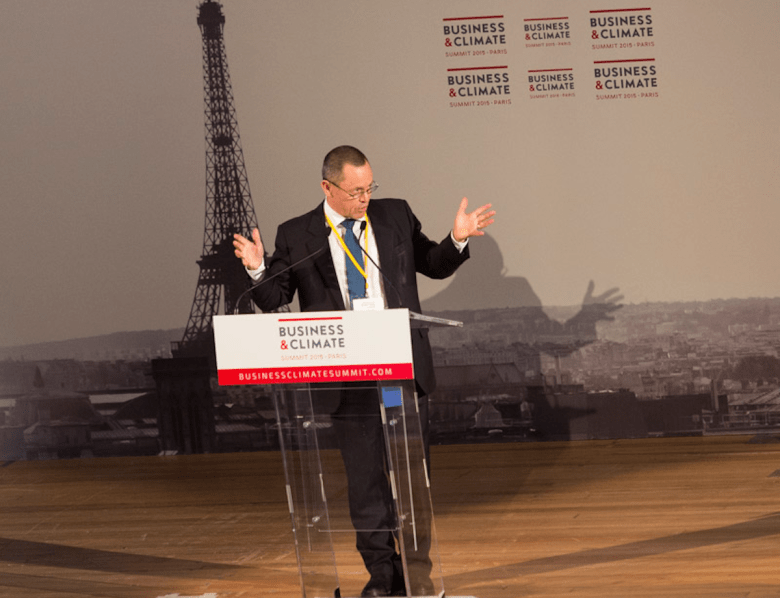 Parliamentary Commissioner for the Environment Simon Upton addresses an OECD summit in Paris. Photo: Supplied

Start your day informed. Make room for newsroom’s top stories. Direct to your inbox daily.
Some economists – like Crampton and Dieter Katz – would prefer we keep things simple. The Government should use a discount rate similar to that used by decision-makers in business. In other words, public sector decisions should aim to mimic market decisions. Don’t open Pandora’s Box by questioning the value judgments embedded in that discount rate. Let’s all just accept the results that models give us and pretend it is all evidence based rather than a normative judgment.
Unfortunately, other economists disagree. This little revolution has been fomenting for a while, most famously raised by Nick Stern in his work on climate change almost two decades ago. He shockingly suggested that future generations might not be happy with the fantastic economy they inherit if it came with the side effect of an uninhabitable planet.
The issue reared its head when we started looking at the last government’s ill-fated wellbeing budgets.
But others were also on the case, most notably Dr Arthur Grimes – an authority with more than a monkey’s paw in his quiver. The Treasury, to its credit, engaged the economics community and came up with a different approach.
It turns out that discount rates unavoidably internalise normative judgments. There is nothing ‘neutral’ about their use or application. Which is fine – we just have to be upfront about that. It appears that many people believe we should think differently about investing in, say, saving endangered species and building new nightclubs. And I think they are right.
Of course, it is a continuum, and the hard part is working out where to draw the line. Personally, I’m happy for infrastructure investment with wider public benefits to attract a lower discount rate. There’s nothing wrong with roads and, provided we haven’t built them in places that make them vulnerable to coastal erosion or extreme weather events, they’ll likely go on giving and giving.
And just in case you think road advocacy is strange from someone who is concerned about greenhouse gas emissions, that should all be dealt with through proper carbon pricing (not the ersatz variety currently on offer).
Lacking a monkey’s paw of my own, I may be missing some subtleties in Crampton’s argument. So, it would be helpful if he could spell out how he thinks benefit-cost ratios are used by decision makers.
He writes as though benefit-cost ratios make decisions. That isn’t the case; not even remotely. Ministers make decisions and they take many things into account, not just benefit-cost ratios. If their manifesto made childcare centres a higher priority than motorways, I doubt whether an adverse benefit-cost ratio for the former would be allowed to get in the way.
Even within the transport budget, there is no magical benefit-cost threshold over which a project gets funded. There used to be a rule of thumb that a benefit-cost ratio of three was needed for a project to pass. That means that the benefits had to be three times the costs.
This hurdle no longer applies. By deeming a project to be a Road of National Significance it goes straight to the front of the queue. Calculating benefit-cost ratios in these cases is a rubber-stamping process. If the Rons came back below one, would they stop being Rons? History suggests otherwise.
The Infrastructure Commission is working on an infrastructure investment pipeline.
Hopefully, in some utopian future, all projects in the pipeline will have a consistently calculated benefit-cost ratio and will be prioritised accordingly. I look forward to that day, because it will mean our scarce infrastructure investment dollar will be invested more rationally (and that includes ‘green’ infrastructure).
I’m sure some roads will still make the list, but the fact is that all long-lasting infrastructure investments with wider public benefits will have their benefit-cost ratios improved by the discount rate change.
Will this change the priority order? It will certainly help the projects that deliver longer term benefits, and that seems sensible to me for a country with an infrastructure deficit.
Will it mean more roads compared with other transport modes or other infrastructure types? Not necessarily.