
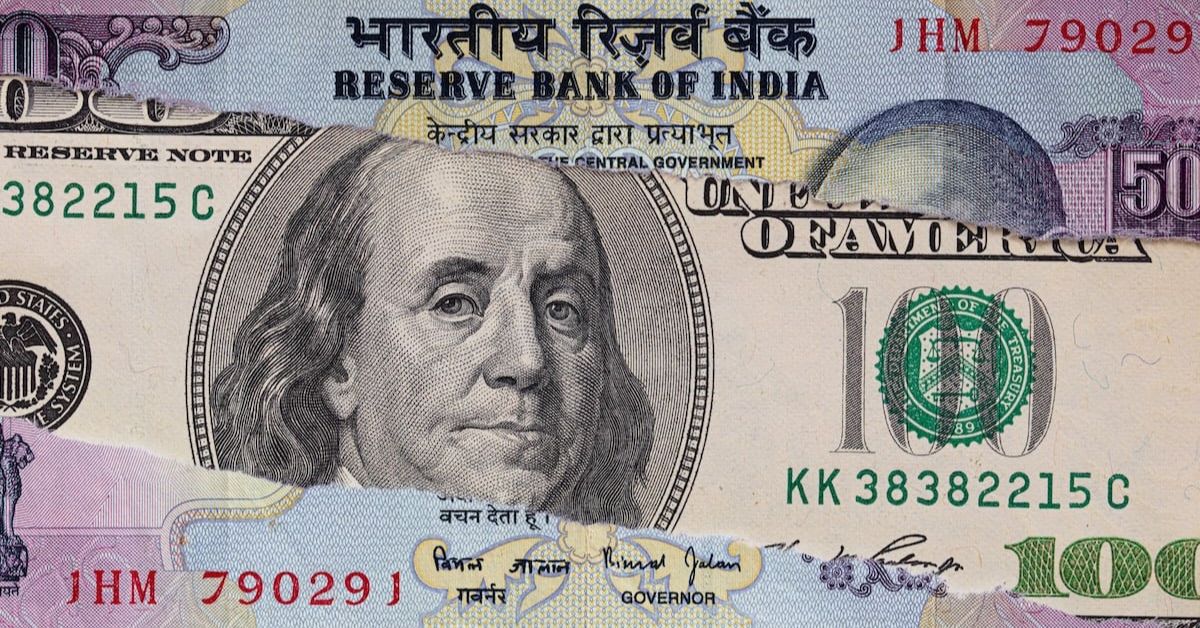
The Indian rupee extended its decline on Friday, November 21, plunging to an all-time low of 89.48 against the US dollar. The sharp fall comes amid weakening global risk sentiment and dwindling hopes for a US Federal Reserve rate cut, factors weighing heavily on emerging-market currencies like the rupee.
The rupee fell nearly 80 paise from Thursday’s close of 88.68. It briefly touched 88.83 in early trade, breaking multiple previous lows, before slipping further on the interbank order-matching platform.
Market participants said the slide accelerated after the rupee breached the long-held support level of 88.80. Analysts noted the Reserve Bank of India (RBI) appeared to scale back recent interventions to support the currency. A lack of strong dollar supply from exporters and steady hedging demand from importers added to the downward pressure.
The rupee has been under sustained pressure since the US imposed significant tariffs on Indian exports in late August. Foreign investors have pulled out $16.5 billion from Indian equities year-to-date, making the rupee one of Asia’s weakest currencies in 2025.
A trader at a private-sector bank observed, “Volumes spiked sharply once 88.80 gave way,” indicating increased trading activity after the key support was breached.
Mitul Kotecha, Head of FX & Emerging Markets Macro Strategy Asia at Barclays, commented that the movement reflected “pent-up demand for dollars” arriving in the market.
“We have seen the RBI holding a line just below the 89 level, but today that line was broken. The question now is whether the RBI will intervene to reverse or dampen this move,” Kotecha said.
He added that a “tough risk-off session in US markets” and broad demand for the dollar contributed to the rupee’s weakness. “The sudden loss of the cap surprised many, catching investors off guard,” he noted.
The rupee’s historic low underscores the challenges facing emerging markets amidst global uncertainties, raising concerns about inflation and import costs in India in the coming months.