
“We don’t expect the RBNZ to cut further next year (barring a global shock),” said ANZ chief economist Sharon Zollner.
“But it would be politic to leave the door open to that possibility in order to head off a potential U-turn in monetary conditions over the summer.”
The market would look at the tone of the statement and the OCR track as well as the decision, she said.
“In our view, the RBNZ is likely to be hesitant to deliver anything that looks like a commitment to further easing, with the economy turning, inflation at the top of the band, the February meeting so far away, and a new Governor arriving to boot. ”
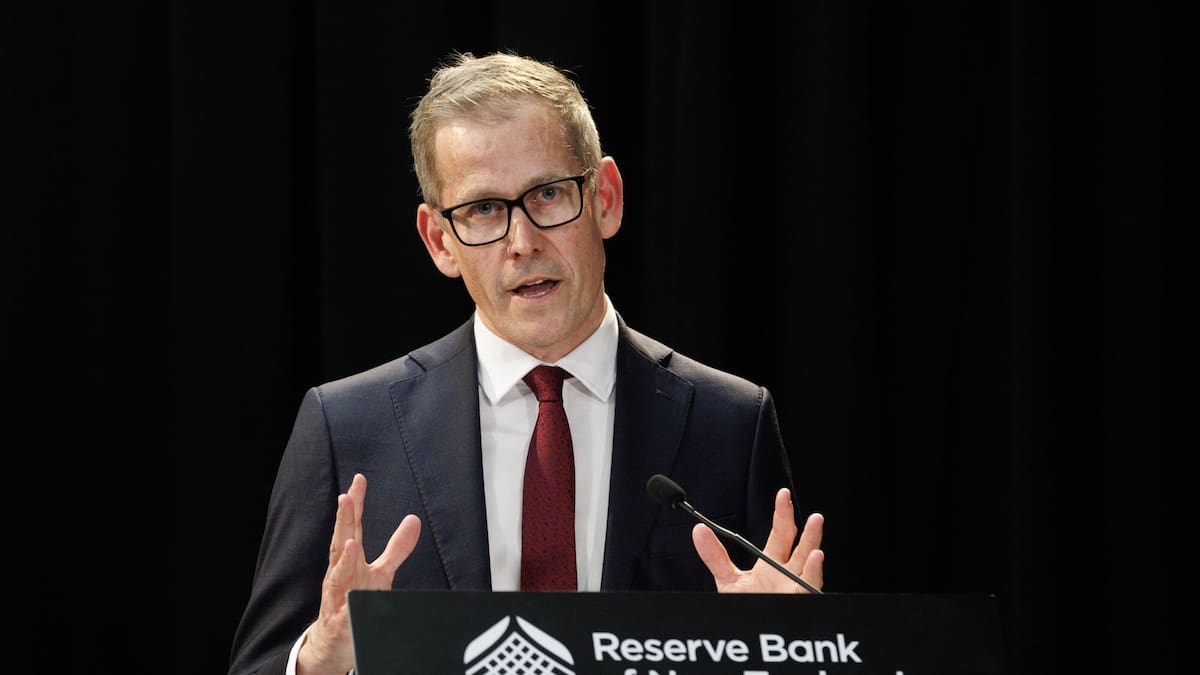
The call on Wednesday will be the last for acting Governor Christian Hawkesby, with new Governor Dr Anna Breman starting in early December.
“Turning points are hard to diagnose in real time, and the recovery this year has certainly been disappointing,” Zollner said. “However, the delay does not suggest that monetary policy is broken, and the RBNZ will be wary of oversteering again.”
The economy was now clearly responding to the easing delivered, she said.
However, it was off a low base.
BNZ head of research Stephen Toplis believes the Monetary Policy Committee will bake in some chance of a further cut in February.
“Given that things appear to be panning out broadly as the bank has anticipated, then consistency would dictate that the bank (a) simply has to cut at the November meeting and (b) must keep the door open to a further move,” he said.
“The point of interest is whether the bank leaves the door ajar or widely open.”
A rate track troughing at around 2.15% would be appropriate and suggest that the bank was very ready to act again, had a modest easing bias, but would prefer not to do so, he said.
“A smidgen lower at 2.10% would mean the bank would need to find an excuse not to cut again.”
The BNZ team remained of the view that the balance of risk to economic activity was to the downside, Toplis said.
“But we can’t condone significantly more easing because: inflationary pressures are not dead, the impact of past cuts still has some way to play out.”
The global central banking environment also seemed to be turning more hawkish.
Current rate settings were already stimulatory, and few were saying that the level of interest rates was problematic, suggesting that even lower rates might have minimal impact on the factors that were constraining growth, he said.
Nick Tuffley, ASB chief economist. Photo / Supplied
ASB chief economist Nick Tuffly is also picking the possibility of another cut in February will be left on the table.
“The statement’s forecasts and commentary will leave the door wide open for further easing if it is needed,” he said.
“Doing so will keep a lid on wholesale interest rates, given financial markets are pricing in a 50:50 chance the RBNZ will cut the OCR to 2% over time.”
It would also give the RBNZ plenty of room to respond to how well (or not) the economy recovered over the nearly three months until the next meeting.
“While this may or may not be the last OCR cut of the cycle, it is certainly the final one presided over by outgoing Governor Christian Hawkesby,” Tuffley said.
“Will things at the RBNZ ever be the same again? A new Governor starts next month who is likely to bring about a greater focus on transparency of the decisions made by the Monetary Policy Committee. We’ll see in February – OCR cut or not.”
Liam Dann is business editor-at-large for the New Zealand Herald. He is a senior writer and columnist, and also presents and produces videos and podcasts. He joined the Herald in 2003.Stay ahead with the latest market moves, corporate updates, and economic insights by subscribing to our Business newsletter – your essential weekly round-up of all the business news you need.