
But the ASA said those complaints had now been “settled”.
“As part of the self-regulatory process, advertisers have the option of amending or removing their advertising after receiving a complaint,” said the ASA.
“In this case, the advertiser confirmed they had removed the advertisement.
“Given the advertiser’s co-operative engagement with the process by removing the advertisement, the chair ruled the complaint was settled.”
‘Hack’ specials still remain as menu items on KFC’s website today and the fast-food chain still features the hacker character at the top of its Facebook page, but the ad campaign itself is over.
The KFC hacker still appears on top of the fast-food chain’s Facebook page – but the ad campaign has been removed.
KFC has been approached for comment.
The ASA said complaints were based on various concerns, including that the advertisements:
Gave the impression to some consumers that they had actually been hacked;Were placed inappropriately in the TVNZ+ app;Were scary for children, young people and older people;Caused fear and were offensive for people who had been scammed;Glorified/made humour of hacking.
The campaign was extensive, featuring on billboards, websites and television (including on demand) and direct email.
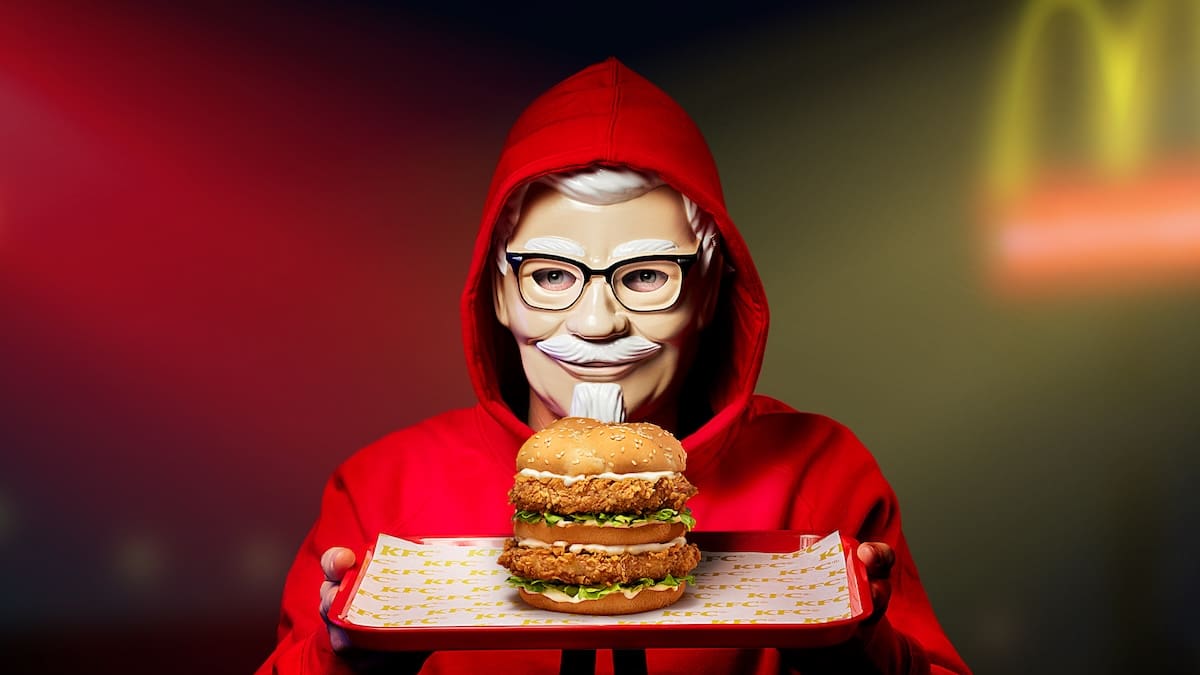
“The advertisements featured a mysterious figure disguised as Colonel Sanders, the founder of KFC,” said the ASA.
“He is wearing a red hoodie and a face mask. The theme for the advertising campaign is summarised by the ‘Colonel’ when he says: ‘Hello New Zealand, I am the Colonel Hacker. I’ve intercepted your ad break, but don’t panic, this isn’t a ggglitch, it’s a gift, and hacking the prices on the KFC menu, here’s a taste of what I’ve uploaded…’”
The ASA said that the hacker also appeared on the opening, “splash screen” of the TVNZ+ app. “The Colonel Hacker figure appeared and said, ‘Hello, this is just a taste of things to come’.”
The complaints fell under several principles and rules of the Advertising Standards Code, including decency and offensiveness, fear and distress and identification, said the ASA.
As Media Insider analysed earlier this month, the campaign was one which tends to lead to a lot of mutual backslapping and awards in the advertising world, but might miss the mark with much of its intended audience. The very fact that it is controversial would please some agencies.
The ad is ubiquitous, with the character even popping up on the TVNZ+ app’s opening screen recently.
“What on earth is that creepy KFC ad in the TVNZ App, the Colonel in a hoody acting like some V for Vendetta doppelganger,” wrote one Reddit user. “Enough already.”
“It’s so bad,” said another user. “And scared my kids when I opened the app on the TV (admittedly, they are young and very sheltered lol).
“I also don’t get why TVNZ is littering their clean opening page with shitty branded stuff. I get they want every ad dollar, but it makes it feel like a tacky/compromised product instead of premium (which I think TVNZ app actually is).”
The concerns extended further, based on the scourge of hacking and cybercrime.
“It is deeply irresponsible to see a global brand like KFC using hacking as a sales hook and trivialising an issue that causes so much online harm, and at a time when the need to educate and warn of cyber crimes has never been higher,” said one Media Insider source.
“Banks and governments are driving campaigns to warn against this very behaviour.”
The Colonel Hacker campaign featured on billboards, television and websites.
One of the agencies behind the campaign, Special, has previously described the campaign as “disruptive and distinctive”.
KFC, which is owned by Restaurant Brands, said earlier this month that the campaign was intended to be lighthearted and tongue-in-cheek.
“It was not our intention to make light of cybercrime,” a KFC spokeswoman said.
“Every advertisement was clearly identifiable as coming from KFC itself. As is the case with all our campaigns, we do not target children in our advertising.
“We recognise that cyber harm is a serious and growing problem globally and understand that the campaign’s theme may have been interpreted differently by some viewers. We regret if any part of the campaign has caused offence or concern.”
She said the company was reviewing all feedback “carefully”.
“We have already made adjustments to the campaign as part of our commitment to being a responsible advertiser. We are also continuing to monitor and assess future campaign activations.”
Asked for more specifics, she said KFC had ensured its content was classified as GXC (general except children’s programming). It had also “reviewed and pressure tested” its programmatic advertising campaign and, where possible, adjusted the “creative to be more product-focused and removed use of the Colonel”.
Editor-at-Large Shayne Currie is one of New Zealand’s most experienced senior journalists and media leaders. He has held executive and senior editorial roles at NZME including Managing Editor, NZ Herald Editor and Herald on Sunday Editor and has a small shareholding in NZME.