
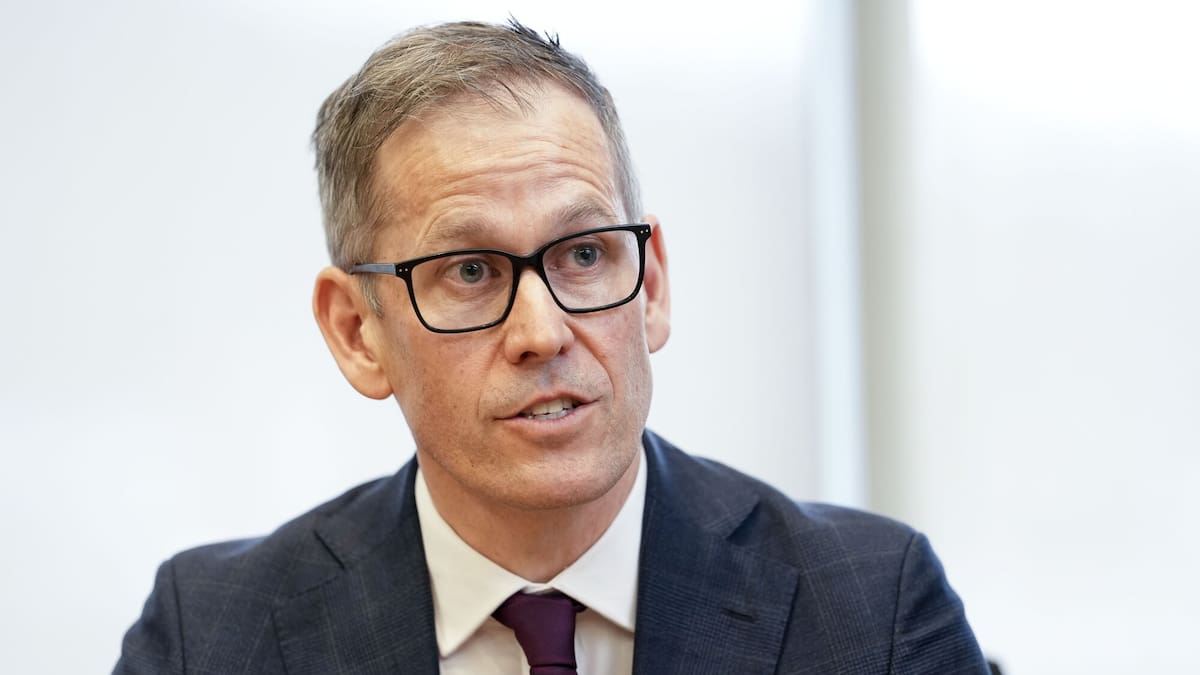
Asked on Thursday morning what he made of swap rates rising, Hawkesby told the Herald, “I think we had an awareness of what the market reaction might be to our decision…
“We always have our markets team brief us on the likely reactions to different decisions we make. So it sort of fell in the ballpark of what we expected.”
Hawkesby also commented that a thing he had learned in his role was that you could “absolutely tie yourself in circles if your objective is to achieve zero market reaction”.
He doubled down on the message that sent swap rates higher, saying, “It’s a nice place to be as a central banker with inflation falling and growth lifting and [the Reserve Bank] being able to step back into the background a bit.”
Hawkesby also made the point the bank had to stay focused on its mandate of getting the annual inflation rate to 2% in the medium term.
“I literally have a piece of paper in front of me which says bring it back to our mandate,” he said.
ANZ senior strategist David Croy said one conclusion people could come to was that the Reserve Bank believed the big 50-basis-point OCR cut it made in October provided the economy with too much stimulus.
“One conclusion you could draw is that the Reserve Bank did not condone the sharp easing and financial conditions that occurred in October, and that they thought that the fall in interest rates and the New Zealand dollar had perhaps gone too far,” he said.
However, Keane didn’t buy Hawkesby’s narrative, and believed the Reserve Bank simply bungled its communications.
He said that if the bank’s intention was for swap rates to rise, it would not have cut the OCR at all.
“We still think that the economic recovery will become more apparent as we move through 2026, but the start will now be unnecessarily delayed with mortgage rates moving higher than they really needed to be,” Keane said.
Consultant and former Westpac treasurer, Jim Reardon, believed the economy still needed more support from the Reserve Bank.
“The evidence strongly contradicts the assertion that the economy has bottomed,” he said.
“A continued bias to monetary easing would reduce the risk of a prolonged recession, stabilise household finances, and support business activity…
“A sustained halt to the easing cycle now holds the inherent risk or the requirement for deeper cuts later, increasing volatility and economic damage.”
Jenée Tibshraeny is the Herald’s Wellington business editor, based in the parliamentary press gallery. She specialises in government and Reserve Bank policymaking, economics and banking.
Stay ahead with the latest market moves, corporate updates, and economic insights by subscribing to our Business newsletter – your essential weekly round-up of all the business news you need.