
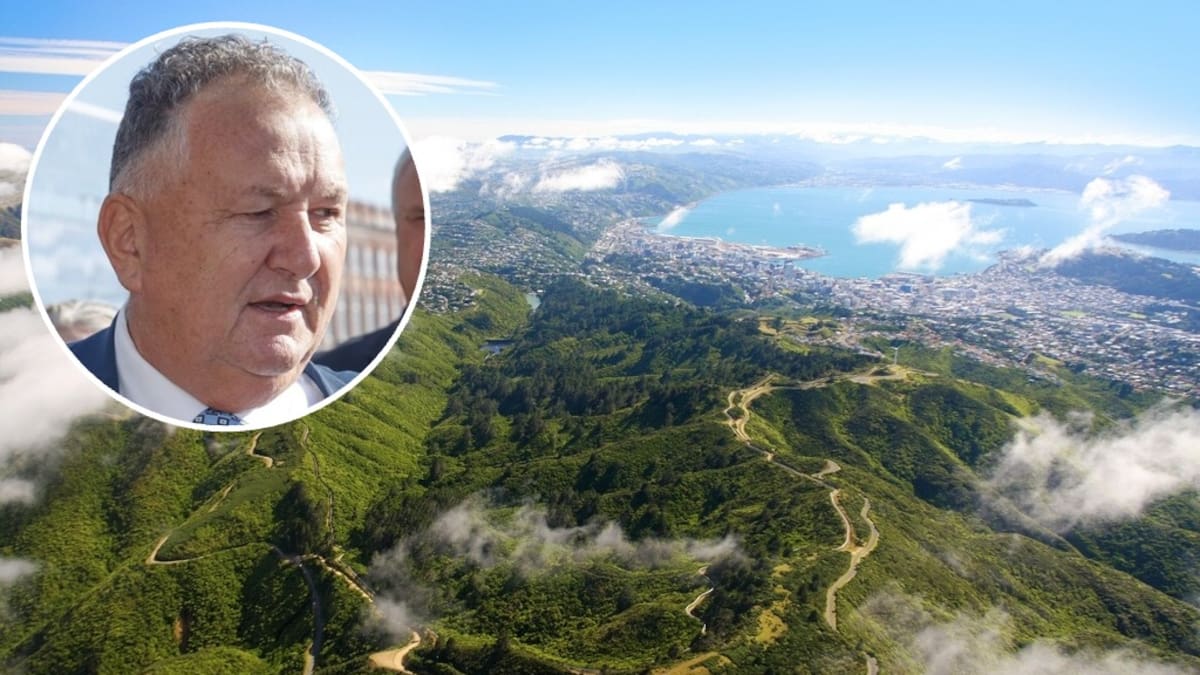
Two sites have already been granted permits.
Application documents provided to the Herald under the Official Information Act state “there has been recent discoveries of gold on neighbouring land”.
Those gold discoveries were enough to prompt four operators to pursue prospecting, with three planning to spend $53,000 and the fourth anticipating $80,000 for works.
Steve Watson, who has owned Long Gully Station for more than 30 years, would not share details of the recent find, but said “what has been discovered has given us a reasonable amount of confidence”.
“I’m not saying that we’re overconfident, I’m just saying that we’re confident enough to spend that amount of money, to do any more it would have to be substantiated,” Watson said.
Watson’s application said the family has found traces of gold during their years owning the property.
He said new technology would allow for any potential mining on the land to be of low impact, and he stressed that the environment and the land the family have owned for over three decades is important to them.
“You don’t have to be open-cast mining, and we wouldn’t be proposing it anyway.”
One site under consideration for prospecting borders Zealandia ecosanctuary. Photo / Mark Taylor
He said the prospecting work they have applied for would simply involve gold panning, and further permits would be required for anything more than that.
None of the permits applied for involve mining, but rather a range of other activities permitted under prospecting.
“Prospecting is the very first step in exploring for mineral deposits and typically involves activities of minimal impact,” MBIE said in an earlier statement.
“These can include literature searches, geological mapping, hand sampling and/or aerial surveys.”
The applications show a number of individuals listed as undertaking the prospecting, including specialist contractors and a geologist.
“The objective is to identify land within the permit area likely to contain exploitable gold deposits, enhance understanding of gold distribution in the greywacke, and assess mineral potential using modern techniques that improve on historical methods,” it stated.
Another application by Travis McKay, who owns a mining business, said he planned to involve a qualified civil engineer to oversee works.
That application has been approved.
“Ultimately we plan to inform a revisit of commercial viability of mineral extraction in the area,” McKay’s application said.
It also indicated McKay planned to use an excavator as part of taking samples, before MBIE wrote telling him this was not allowed.
The Long Gully area had been the site of limited prospecting and mining activities around the late 1800s to early 1900s, an application said.
Jones excited by gold find
Resources Minister Shane Jones said the news of a discovery was “exciting” and “exactly what we want to unleash in New Zealand, people engaging with their environment”.
“If they find evidence of important minerals, providing they’re operating within the guardrails, I think by and large Kiwis need that sort of spirit as opposed to being afraid to engage with Mother Nature for fear of being fined or hauled off to court.”
Regarding the fact the applicants do not appear to be merely hobbyists, as he had previously suggested, Jones said mining is a capital-intensive industry, and while to many “a couple of $100k is a mammoth sum of money, it’s relatively insignificant in the bigger scale of mining”.
Resources Minister Shane Jones has been known to wear a hat embroidered with the words “Make NZ great again” and Drill baby drill”. Photo / Mark Mitchell
“I’m sure the applicants are simply prospecting and it’s a long way forward before anyone’s going to be able to fully commercialise a positive prospecting experience, that would require an extensive RMA process.”
Jones described potential gold deposits in the gully as “tiny little geographical pimples” and “just wee beauty spots”, urging people not to ”leap into bogs of uncertainty and anxiety” over the possibility of extraction.
Having spoken to land owners around Wellington, Jones said he has heard that early ancestors were confident gold existed underfoot around the region.
“It remains to be seen whether it’s of a commercial quantity.”
Ethan Manera is a Wellington-based journalist covering Wellington issues, local politics and business in the capital. He can be emailed at ethan.manera@nzme.co.nz.