
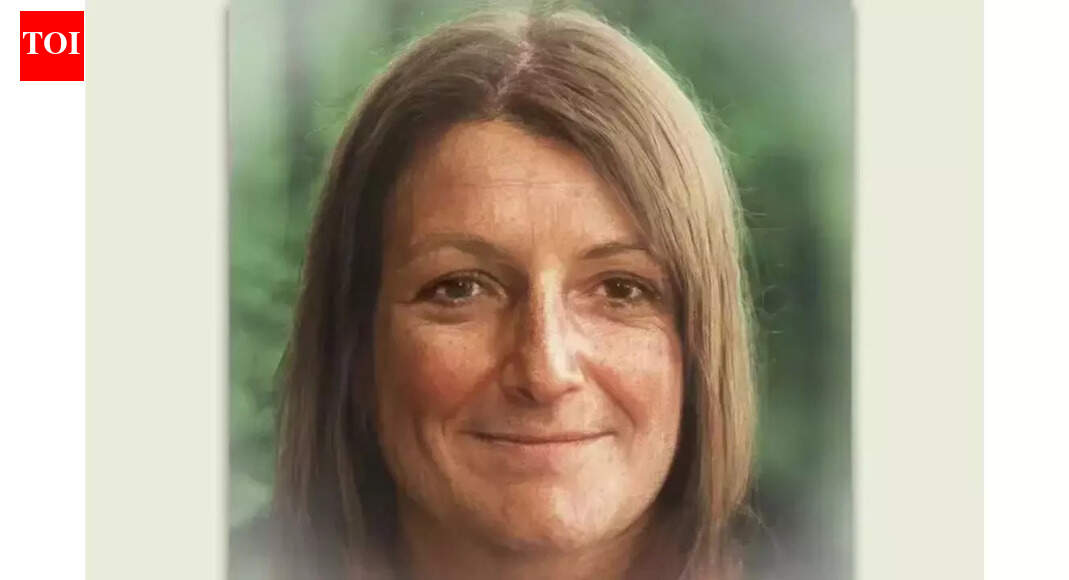
 For the first time in years, the face of missing York woman Claudia Lawrence has been brought back into the public eye, not through memory but through technology. A newly unveiled AI-enhanced, age-progressed image shows how Claudia might look today at 51, 15 years after she mysteriously vanished. The release of this striking reconstruction has stirred a wave of emotion, hope and renewed urgency, offering perhaps the strongest chance in years to revive one of Britain’s most enduring cold cases.
A disappearance that froze a family in time
Claudia, a University of York chef, went missing on 19 March 2009. Her disappearance triggered one of the most extensive and complex investigations in North Yorkshire Police history. Despite major searches, televised appeals, dozens of interviews and a series of arrests, no trace of her has ever been found. The case has long been haunted by false leads and unanswered questions, leaving her family waiting for answers that never arrived.Fifteen years later, the release of this new image feels like an emotional jolt. It reminds the public that while time passes for the world, it stands frozen for those still searching for her.
The cutting-edge image brings Claudia Lawrence back to life
The facial reconstruction was created by the International Investigation Missing Persons (IIMP) in collaboration with forensic specialist Marcel van Adrichem. He combined advanced modelling, familial ageing markers, manual artistry and AI-driven facial analytics to produce one of the most detailed likenesses ever made of Claudia.Van Adrichem said the goal was not simply technical accuracy but emotional resonance. He explained that a face can reconnect people with a missing life and that a reconstruction is an invitation for recognition, remembrance and for someone, somewhere, to come forward.The result is a portrait marked by subtle signs of natural ageing such as softened lines, genetic traits echoing through her parents and a calm expression designed to reflect who Claudia may still be today.
A mother’s hope strengthened by technology
Claudia’s late father, Peter Lawrence, fought tirelessly to keep her name alive and became a prominent advocate for missing persons. Since his passing in 2021, Claudia’s mother Joan has carried that emotional weight alone.For families like hers, age-progressed imagery is both hopeful and devastating. It opens old wounds but also widens the possibility of new leads and offers a chance for recognition, however small.North Yorkshire Police maintain that Claudia’s disappearance is still treated as a suspected murder, although the investigation has been in a reactive phase since 2017. Detectives continue to insist the case is solvable even after two major investigations, nine people questioned, a large-scale search of sand pits in 2021 and hundreds of leads examined.Yet no definitive answers have emerged.The release of this new image offers something the investigation desperately needs which is fresh public attention.
Why this reconstruction matters now
In cold cases, time is usually the enemy, but technology is becoming an ally. AI-enhanced ageing images have been increasingly used across Europe to resolve decades-old disappearances. In several cases, they have generated crucial breakthroughs.This new portrait of Claudia could do the same. It may jog a memory, spark recognition in passing strangers or remind the public that Claudia’s story is far from finished.Van Adrichem said that every missing person deserves to be seen.
A face returned, and a question that remains
As the Claudia Lawrence case enters its 16th year, the AI-enhanced image stands as both a technological achievement and a sombre reminder. It captures a future she never had the chance to live publicly yet may still be living somewhere in silence.One question lingers above all:Will this new image be the breakthrough that finally reveals what happened to Claudia Lawrence?