
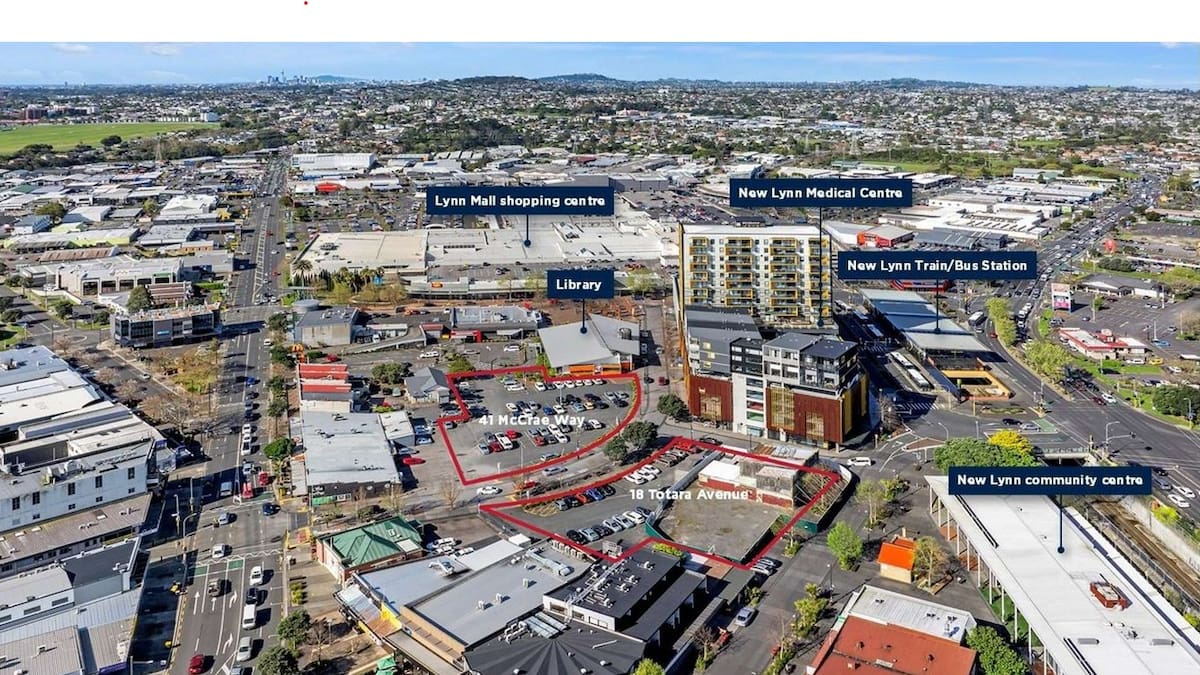
“It’s really in the perfect location … right next to the train station … It’s a perfect place to be building public housing,” she said about the Totara Ave site.
The Government came to power focused on slashing Kāinga Ora’s spending.
In June, the Herald reported the agency was axing more than 200 social housing projects because they “no longer represent value for money”.
The agency conceded that canning the projects meant it would take a hit of up to $180 million already spent on scoping and planning work.
It also decided to offload 20% of its vacant land and intended to move out of more expensive suburbs.
Data from Kāinga Ora’s website shows 186 Auckland properties have so far been sold, along with 129 in Wellington and 124 in Canterbury.
Wellington sales have moved so quickly that 91% of all properties listed for sale in the region have now sold.
Auckland’s Northwest was one of the regions with the most Kāinga Ora properties still for sale – 77 homes on the market and 53 sold.
Cole said her team was not picketing the sale of 18 Totara Ave, which is being marketed along with vacant land across the road at 41 McCrae St, but instead trying to start a community discussion.
“This community action is less of a picket and more of a chance to connect to the community around this issue,” she said.
The group believed there was strong community support for neighbours to be housed in decent, stable homes.
The sell-off of such significant tracts of land came as the high-needs wait list for social housing sat at more than 20,000.
Cole said people in the West were living in cars and crowded conditions while struggling to pay rent.
Campaigners hope to get the community talking about Kainga Ora’s fast-paced sell-off of public land while many Aucklanders remain on the social housing wait list.
The Totara Ave site would have helped bring vibrancy to New Lynn and met the new up-zoning requirements by housing a large number of people close to public transport, shops and restaurants, she said.
The Government “has been talking about the need for more homes near public transport hubs – this was a perfect example”.
“We need equitable transit-oriented development, so that everyone can afford to live near infrastructure and services.”
Cole believed the Government still had the resources to build in ways that benefited the community, but was instead putting private profit first.
“Land is one of our biggest assets as a country … the more public land that goes into the private market in our communities means the less collective resources we all hold.”
However, Kāinga Ora’s acting general manager for urban development and delivery, Nick Howcroft, defended the sale, saying the original project plans simply didn’t stack up.
“The 2000sq m property was originally earmarked for a nine-storey, 81-unit social housing development,” he said.
“Following a review of our delivery pipeline, the project was cancelled as it was no longer financially viable.”
Howcroft said money raised from the sale would be put back into the agency’s coffers for delivering housing elsewhere.
The agency had delivered 142 homes in Northwest Auckland since July last year and owned 2523 homes in the area, he said.
It had also sold 512 ”older or unsuitable homes, and vacant land sites nationally” since July this year, generating more than $210m.
He said that was being used to build new homes and upgrade older ones.
The sell-off has moved fast, meanwhile.
Analysis of Kāinga Ora’s listings shows that for every property currently sitting on the market, the agency has already successfully sold two.
In Canterbury, 124 homes have sold; just 25 are left on the market.
Nationally, the “big three” centres of Auckland, Wellington, and Canterbury account for 79% of all sales.
While 27 vacant land sites are up for grabs, the vast majority of the sell-off – about 90% – consists of existing homes rather than bare land.
Prime state housing
Back in April, the Herald identified 841 state homes in prime Auckland locations that were each worth more than $1.5m.