
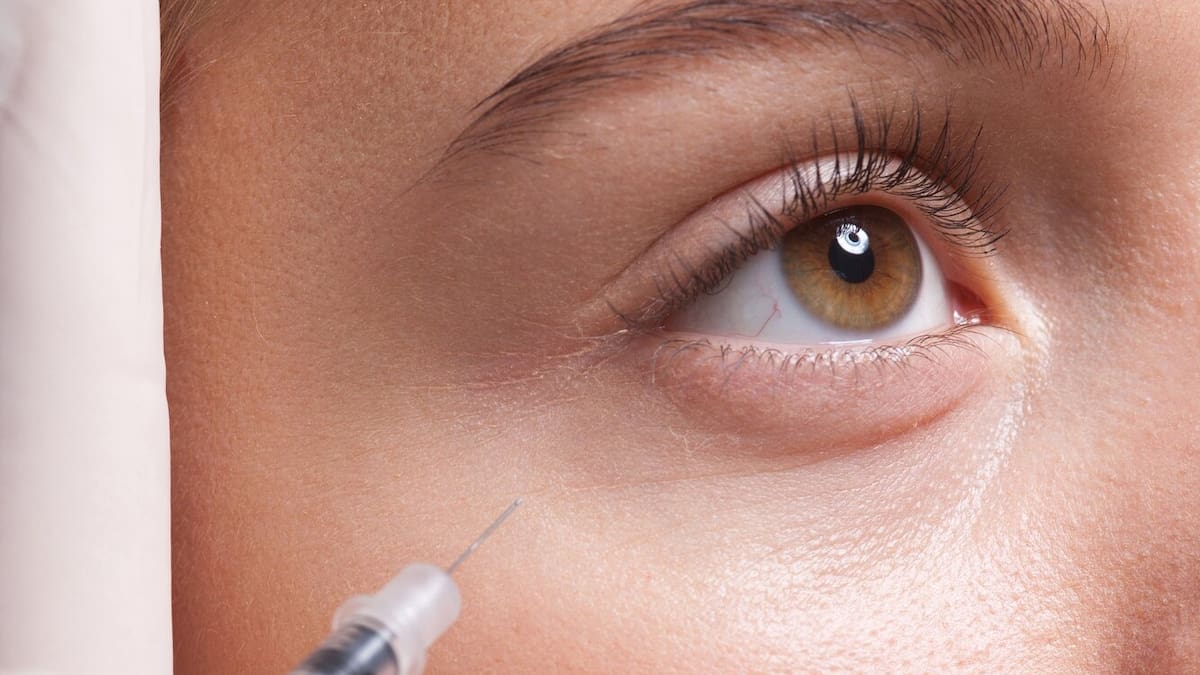
Injectable treatments are on the rise. But how do you know if they’re safe? Two appearance medicine doctors want to remove the confusion.
A recent episode of the new season of Selling Sunset caused controversy when the show’s realtors/reality stars gathered to have injectable gel Rejuran administered into their
faces under the guise of a Valentine’s Day party.
The injector barely prepped every heavily made-up star before reaching for vials filled with salmon sperm (polynucleotides) and administering them around their faces.
The casualness with which these women were being injected raised questions around both hygiene and safety.
It’s not just a concern for reality TV stars. Some New Zealand injectors are offering treatments without the specialised training required to confidently administer injectables.
Where Botox is classified as medicine, and must be administered by a doctor or trained professional, substances injected into the face to create volume, smooth wrinkles or hydrate skin are classified as medical devices, meaning regulations around their use are much looser.
In response, two aesthetic doctors have established LA Aire, a cosmetic medicine consultancy and training organisation to help govern the proper use of injectables, including Botox and dermal fillers.
Founded by seasoned cosmetic doctors Dr Nameer Wadea and Dr Peter Aspell, LA Aire is raising the bar for appearance medicine by providing a new benchmark for safety, professionalism and accountability in the industry.
It’s the first time an accreditation of this kind has been available in Aotearoa, and Wadea says using a practitioner accredited by LA Aire can reassure patients their injectable treatments are being performed under stringent safety protocols.
“We’re dedicated to providing quality and ethical clinical oversight to medical practitioners across New Zealand. We offer services nationwide, including cosmetic oversight, training and standing orders for registered clinicians who want to practice safe and expert injectables,” Wadea says.
“With our focus on education and support, we are raising the standard for the industry.”
Dr Nameer Wadea. Photo / Supplied
What are the issues in the appearance medicine industry?
Wadea says a lack of standardisation and oversight in the industry meant inconsistent outcomes for patients and compromised safety. He believes the accreditation he and Aspell have created will “lift the bar for safety, ethics and professional development”.
Wadea says the LA Aire accreditation process includes thorough vetting, including an application, document and policy review, clinic and competency assessment and ongoing compliance checks.
Dr Ellen Selkon, a senior cosmetic physician and partner at Clinic 42, says this lack of standardisation means different bodies regulate different practitioners with different requirements.
She explains how, currently, the Medical Council of New Zealand regulate doctors who have trained via an authorised two-year diploma run by the New Zealand Society of Cosmetic Medicine (NZSCM).
“This is the only recognised training programme that will allow a doctor to practice Cosmetic Medicine without a collegial relationship or some form of oversight. The NZSCM then performs a triennial practice visit ensuring that all systems and knowledge of the practitioner are up to date,” Selkon says.
The standards are different for nurses, the Nursing Council having what Selkon describes as “no official training programme and no authorised governing society”, but they can join networks like the Clinical Aesthetic Network New Zealand (CANN) or the New Zealand Aesthetic Nurses Association (NZANA).
Oral hygienists and pharmacists can also inject, but Selkon adds there’s no training and no supervised society to govern them.
“Even though they are under standing orders from a doctor or nurse practitioner, their training is provided mostly by pharmaceutical companies in the industry,” she says.
Independent from accreditations like LA Aire, Selkon says the Medical Council is looking to tighten regulations, “to ensure everybody is qualified and has undergone sufficient and adequate training prior to being able to inject”.
LA Aire founders Dr Nameer Wadea and Dr Peter Aspell. Photo / Supplied
How do Aotearoa’s appearance medicine standards compare to international ones?
Wadea says New Zealand should follow Australia in terms of regulation and standards.
“[There are] some strong frameworks that we can learn from as an industry,” he says.
Selkon adds Australia has one governing body for all injectors – the Australian Health Practitioner Regulation Agency (AHPRA) – ensuring a benchmark for cosmetic injectors across the board.
“They govern all practitioners and, in Australia, only doctors and nurses can inject. All patients have to undergo some mental health questionnaire prior to receiving treatment and all patients are assessed by a doctor as well as a nurse, even if the nurse is the primary injector,” she says.
“It is much more tightly regulated and you can’t just decide one day you are going to become a cosmetic injector.”
Sol Lim training for La Aire. Photo / Supplied
Do New Zealand clinics operate under medical supervision?
Wadea says medical supervision varies in accredited New Zealand clinics, with some having a dedicated provider and others contracting the service. When choosing a clinic, the key is to ensure supervision is external and independent, he says.
“There are requirements on who can provide cosmetic oversight,” Wadea says, “and it’s important to have a doctor with cosmetic experience for the right support with experience managing complications.”
Selkon warns that before you allow anyone to come near you with a needle, it’s important to ensure your practitioner is adequately qualified and can confidently provide information on what training they have received.
“The NZSCM Diploma consists of over 500 hours of training in cosmetic medicine, which is incomparable to a few industry-run courses,” Selkon explains.
“Part of this training is how to manage complications and emergencies when they do occur.”
Miriam O’Sullivan, of Refine Room. Photo / Supplied
What safety measures exist in clinics?
While many clinics may have their own internal policies or standards in agreement with their overseeing medical doctor, Miriam O’Sullivan, a registered nurse and cosmetic injector at Clevedon’s Refine Room, says there are a handful of common safety protocols that people should be aware of before booking an appearance medicine treatment.
Medical oversight and registered clinician (ensuring that treatments are being administered by a registered health professional with medical standing orders and oversight);Formal training and certification to perform the treatments or procedures; Informed consent and documentation processes that outline risks, alternative treatment options, expected outcomes, and documented treatment plans and any complications. This is also important in regards to the Code of Rights and Code of Conduct; Infection control and clinic hygiene practices, including cleaning protocols, sharps management and sterile or antiseptic techniques; Product authenticity and quality – using only products that have been approved by MedSafe and administered in the correct way; Emergency preparedness (escalation pathways, up to date CPR training, emergency and complication equipment, anaphylaxis management etc).
Wadea says for a clinic to be registered with LA Aire, safety requirements include robust infection control protocols, emergency plans (including access to reversal agents and emergency equipment) and strict product tracking and usage logs.
Dr Ellen Selkon, of Clinic 42. Photo / Supplied
What should I do if my treatment has gone wrong?
In the event of an injectable mishap, Selkon recommends getting back in touch with your practitioner as soon as possible to rectify the situation under the guidance of their overseeing doctor.
“If they are an NZSCM doctor, they will have a support system to help them manage the complication if needed. If it is a nurse, pharmacist or oral hygienist, they should have a doctor providing standing orders for them, and they should be informing that person immediately for advice or help managing the complication,” she says.
“We all know that things can go wrong but it is essential to recognise when that has happened and to deal with it speedily and appropriately.”
According to Consumer NZ, many appearance medicine treatment injuries are covered by ACC; a recent article stated that ACC accepted 144 claims related to appearance medicine and cosmetic surgery in one year.
Under the Consumer Guarantees Act, all services, including cosmetic treatment, must be carried out with reasonable care and skill. In the event of a complication that can’t be addressed by the practitioner, or a refund isn’t offered, some matters can be taken to the Disputes Tribunal to recover costs.
Otherwise, you can report any adverse reactions or complications to the New Zealand Pharmacovigilance Centre (CARM) which is monitored by Medsafe, or lodge a complaint with the Health and Disability Commissioner.
Will this new accreditation put an end to ‘botched’ procedures in Aotearoa?
Wadea acknowledges that while the accreditation process can’t eliminate all risk, he believes it reduces the chances of poor outcomes.
“[It ensures] clinics meet strict safety and training standards,” he says.
“LA Aire clinicians have access to a range of medical specialists, so in the event of a ‘botched’ treatment, the patient would be well cared for.”
O’Sullivan agrees, saying: “No single private body will completely eliminate the risk of ‘botched’ procedures on its own, but organisations like LA Aire significantly reduce that risk, and the frequency and severity.”
She explains that the standards, oversight, training and communication provided by LA Aire ensure injectors practice safely within their scope, and are supported by their medical doctor for clinical decisions and complication management.
“LA Aire improves early recognition of complications for the effective and safe management of complications,” she adds.
More beauty
A go-to guide to party season glamour, the best new season beauty buys and more.