
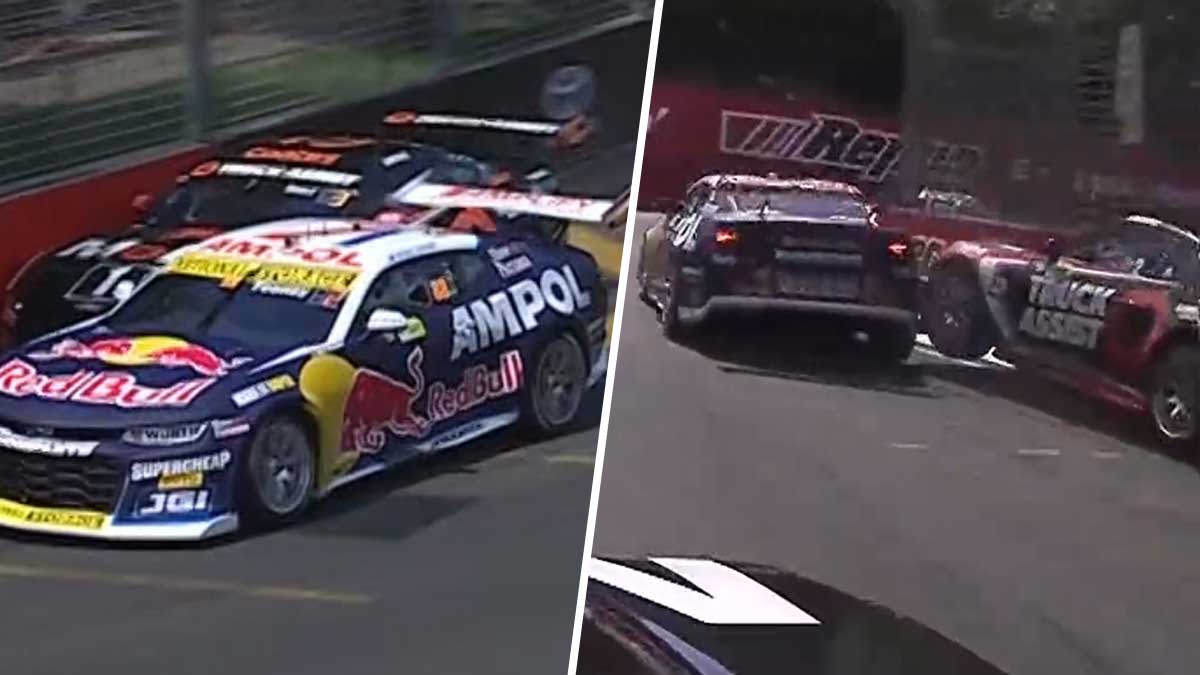
A KEY factor that exacerbated the contact between Ryan Wood and Broc Feeney in the final race of the Supercars season is set to be a thing of the past.
A revised version of the control Gen3 wheel has been approved for use in the hope of eliminating the scenario of cars interlocking wheels during battles.
In the post-Adelaide episode of Will Brown and Brodie Kostecki’s Lucky Dogs podcast, the latter highlighted that a wheel interlock amplified the outcome of the contact between the two cars.

“To be honest, I think everyone’s looking at the outcome like it was huge, but it’s because the wheels are shit,” Kostecki said on the podcast.
“Broc’s car was airborne from wheel-to-wheel contact.”
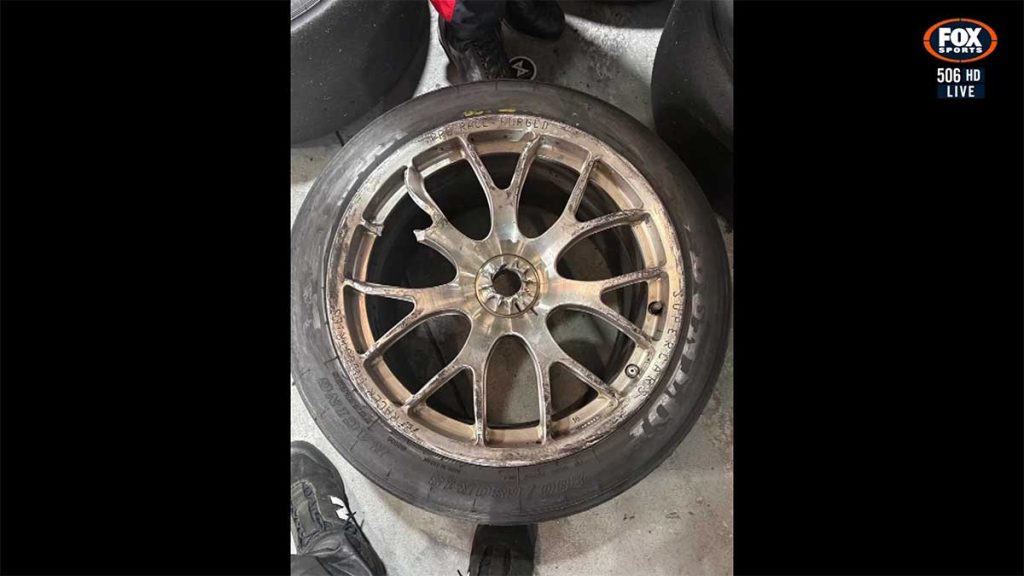 Contact with Wood ripped a spoke out of Feeney’s right-rear wheel. Pic: Kayo Sports
It marks the latest time Kostecki has taken aim at wheels this year, having labelled them a “safety concern” after his dice with Chaz Mostert over the win of the second Saturday race at Taupō in April.
The trouble point is that the Gen3 wheel design features spokes that protrude out beyond the wheel rim, making them prone to interlocking when two cars come into wheel-to-wheel contact.
It had been a problem with the Gen2 era’s control wheel and was fixed in the initial design for Gen3, only for the design to be revised via a ‘captain’s call’ from then Supercars CEO Sean Seamer.
Earlier this year, Supercars commissioned a revised version of the Gen3 wheel that retained the same style but with spokes that remained inboard of the rim.
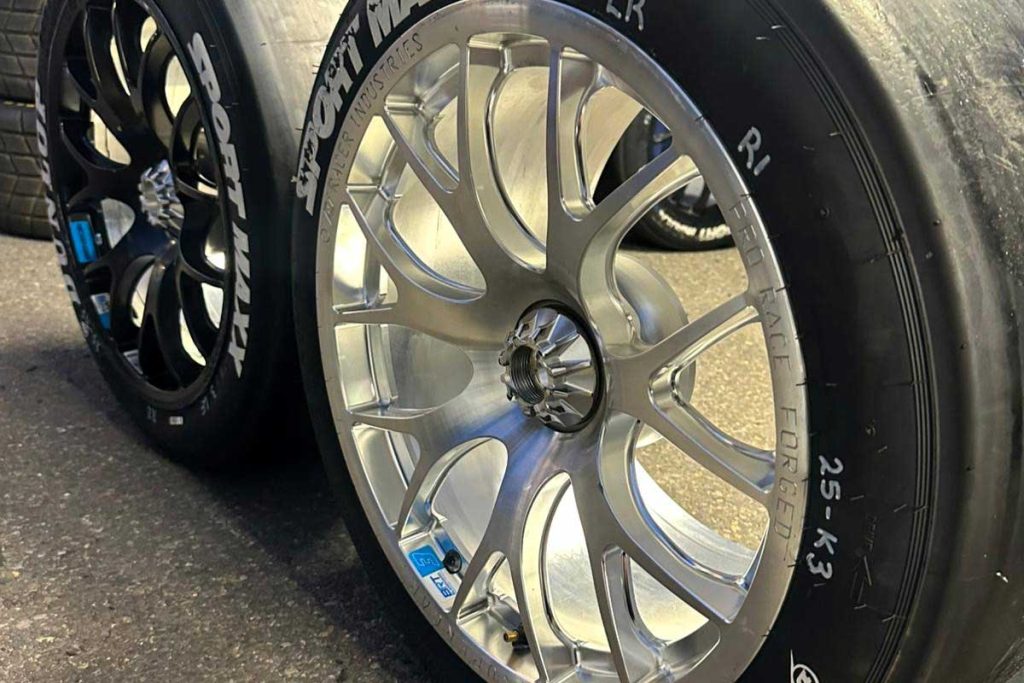 One of the revised wheels (silver) next to an original-design Gen3 wheel (black) at The Bend. Pic: Supercars
The wheels have received approval for use and all future batches of Gen3 rims will be produced to that design.
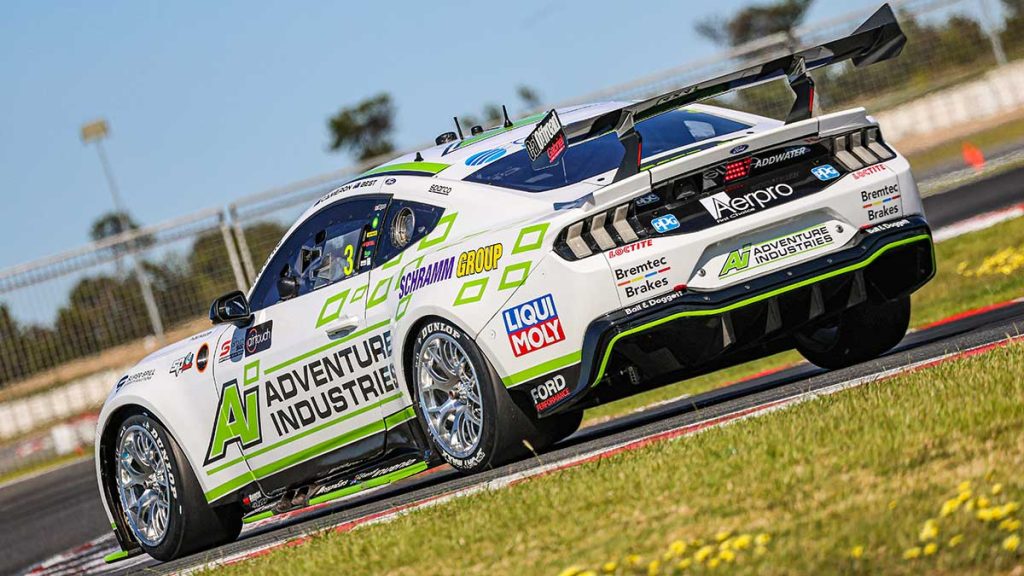 The revised wheels on the #3 Cameron/Best Mustang during Saturday at the Airtouch 500 at The Bend. Pic: Mark Walker
Supercars is still awaiting confirmation on when the wheels will be available, with a large initial batch set to be sea-freighted to Australia from control supplier Rimstock Wheels in England.
Teams will be allowed to start using the revised wheels as soon as they arrive, although it’s expected that most will progressively phase in the new rims.