
State’s $5 million fund aims to address problem gambling as experts anticipate a spike in demand for mental health services.
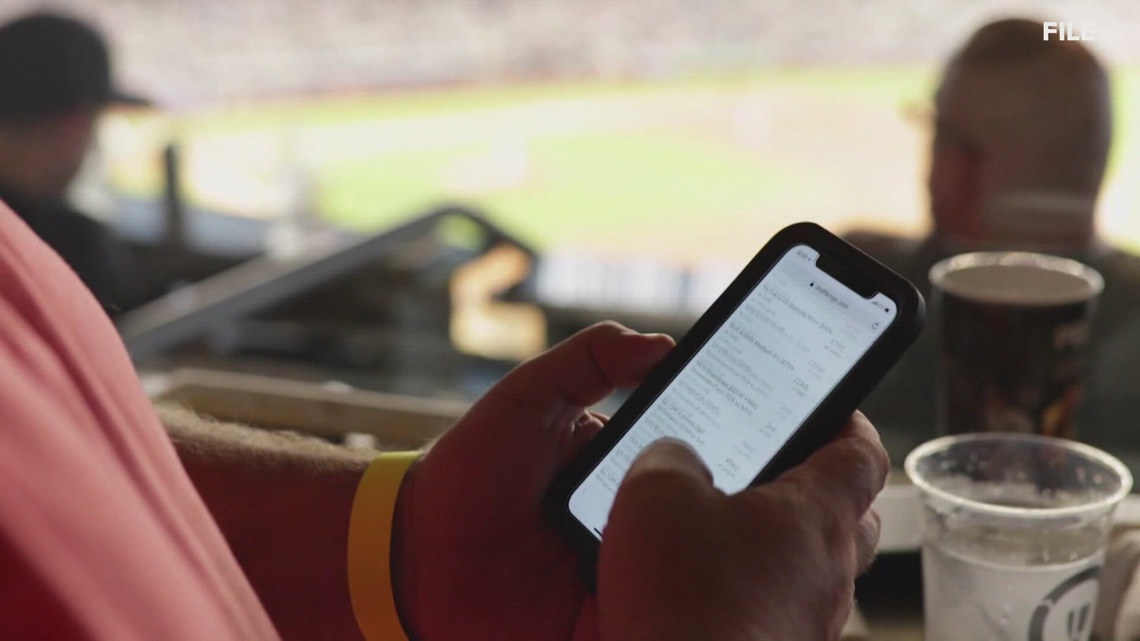
ST. LOUIS — For days now, Missouri residents have been able to legally place wagers on sporting events from their mobile phones, a development that officially launched Monday. It was celebrated by proponents as a long-awaited economic boon. The new law, which permits remote, online sports betting, arrives in the state after a $43 million campaign funded primarily by major industry players DraftKings and FanDuel.
The introduction of mobile wagering is anticipated to generate hundreds of millions of dollars in revenue for the state, capturing money that previously flowed across state lines to Illinois and Kansas, which had already legalized the practice.
The excitement surrounding the launch was evident in statements from high-profile figures. Blues Hall of Famer Brett Hull and Blues broadcaster Chris Kerber welcomed the change.
“A day that has been a long time coming,” Kerber said. “You can finally bet in the state of Missouri.”
Hull echoed the sentiment of local support but added a note of caution: “There’s no better sports fans than the people of Missouri. Do it responsibly, stay within your means and don’t chase your losses.”
A New Class of Risk
While the law is expected to be a financial win, it immediately raised concerns among mental health professionals about the increased accessibility to high-risk gambling. The law permits various types of wagers, including “prop bets,” which focus on player-specific statistics within a game, a practice that addiction specialists say carries a particularly high risk of developing compulsive behavior. The one major constraint on wagering is a ban on betting involving Missouri colleges and universities, a middle ground compromise that satisfied the Sports Betting Alliance.
Aaron Laxton, an addiction specialist with Assisted Recovery Centers of America (ARCA), said the shift to mobile betting will dramatically change the landscape of problem gambling, which currently affects an estimated 2% of Missourians, a figure he expects could rise as high as 10%.
“We see about a 5% rate of individuals coming in that report some type of gambling activity,” Laxton said, referring to the current annual volume of those seeking treatment. “Now with sports betting coming online we’re pivoting to anticipate the increase of indivudals.”
Laxton described the severe isolation and financial ruin that often accompany a gambling disorder.
“If you can think about an individual whose gambling, they’re gambling large amounts, and they start to use money they’re hiding that from their family, they’re hiding it from their friends, they start to isolate and that cycle of shame just begins to multiply,” he said.
The stakes can be devastatingly high for those who succumb to the addiction.
“It could be a college student who takes out all of their money,” Laxton noted, “or it could be someone who cashes out all of their retirement and they take out a second mortgage on their house.”
State Intervention and Safety Features
The state law acknowledges the social costs associated with expanded gambling, establishing a $5 million compulsive-gambling fund. This fund is intended to finance treatment and resources for those struggling with addiction.
Laxton noted that the betting apps themselves offer some preventative measures.
“Most of the sports betting apps have safety features that are built in to the app,” he said. “We like to think of this as a seatbelt. You can set limits on how much youre allowed. It can create barriers so that it’s not as easy to make that bet.”
For those with a predisposition to addiction, the initial experience of winning can be a dangerous trigger.
“The worst thing that can happen for someone who has a gambling disorder is to win the first time because they always want to go back and get that dopamine hit again,” Laxton concluded.
ARCA and other mental health organizations are preparing for a spike not only in gambling-related disorders but also in co-occurring issues, such as alcoholism, as the accessibility of betting increases. ARCA offers same-day appointments and you can call their hotline at 314-645-6840.