
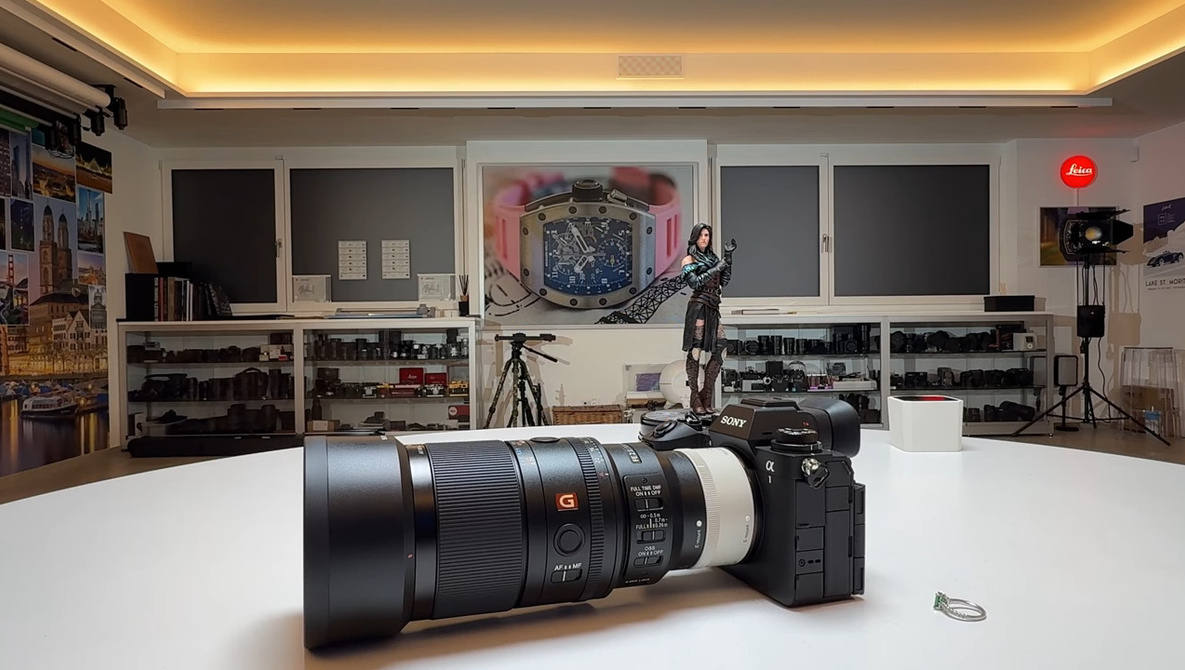
Pushing past the usual 1:1 macro limit changes how you see small subjects, from jewelry to tiny objects that normally look flawless at a glance. At 1.4x and even 2.8x magnification, every scratch, engraving, and tiny imperfection jumps out, so your lens and technique decide whether that detail works for you or against you.
Coming to you from mathphotographer, this detailed video centers on the Sony FE 100mm f/2.8 Macro GM lens and shows how its native 1.4x magnification and close 0.26 m minimum focus distance play out in real setups. You see the physical controls in use, not just listed: the autofocus/manual focus switch, the iris lock, and the clicky aperture ring that can be de-clicked when you want silent control. The direct manual focus mode gets a clear, practical explanation, where autofocus does the heavy lifting and you ride the focus ring to fine-tune tiny shifts at high magnification. The focus range limiter and optical image stabilization come into play when you want to stop the lens from hunting and keep the frame steady at slower shutter speeds. You also see the push-pull focus ring reveal the distance and magnification scale, so you can line up minimum focus and 1.4x without guessing.
The autofocus demo in the studio is a big part of why this lens feels different from older tele macro designs. The host snaps focus from the background to a figurine in the foreground and back again several times, and the lens responds with what is basically sports-level speed for a macro. That makes it realistic to think about using it beyond careful tripod work, including tighter portraits or quick detail shots where you do not have time to wait for a slow focus throw. The way autofocus ties in with the direct manual focus mode matters at very close distances, where you want the camera to get you close, then nudge focus manually by a few millimeters on the subject. How that looks in real time, including how smooth the focus transitions appear, is something you only get a feel for by watching the video.
Key Specs
Focal length: 100mm
Maximum aperture: f/2.8
Minimum aperture: f/22
Lens mount: Sony E
Lens format coverage: full frame
Minimum focus distance: 10.2 in / 26 cm (from sensor plane)
Native magnification: 1.4:1 macro reproduction ratio (1.4x magnification)
Optical design: 17 elements in 13 groups
Aperture blades: 11, rounded
Focus type: autofocus with direct manual focus option
Image stabilization: built-in optical stabilization
Filter size: 67 mm (front)
Dimensions: approx. 3.2 × 5.8 in / 81.4 × 147.9 mm
Weight: 1.4 lb / 646 g
The shooting part of the video takes things from spec talk into real product work. A diamond ring goes into a small automated lighting dome, and the lens runs tethered through Sony Imaging Edge on a laptop so you can watch the live view and adjustments. The host works at the 0.26 m minimum focus distance until the ring almost fills the full frame at 1.4x, then walks through how each LED panel in the dome changes reflections and contrast on the metal and stones. You see how a tiny change on one panel creates harsh hotspots or deep shadows, and how dialing it back brings a clean, even sheen across the ring. The focus is then shifted step by step manually for a full focus stack, which turns a razor-thin depth of field into a ring that looks sharp from bottom to top once the images are combined.
There is also a look at how this lens behaves when you add a teleconverter to chase more extreme magnification. With a Sony FE 1.4x Teleconverter or Sony FE 2x Teleconverter mounted, the magnification can reach up to 2.8x, enough for a small stone on a ring to almost fill the vertical frame. The host shows how that boost costs you light and depth of field, so an aperture like f/8 effectively behaves more like f/16, and focus stacking becomes even more important. Another heavily worn ring is shot this way, and at 2.8x magnification, you see every scar and scratch that you would never notice with the naked eye. There is also a practical warning tucked in: if you accidentally pull the focus ring into the manual position, autofocus is completely blocked even if all the switches say AF, so you need to push the ring back toward the front of the lens to get the system working again. Check out the video above for the full rundown.