
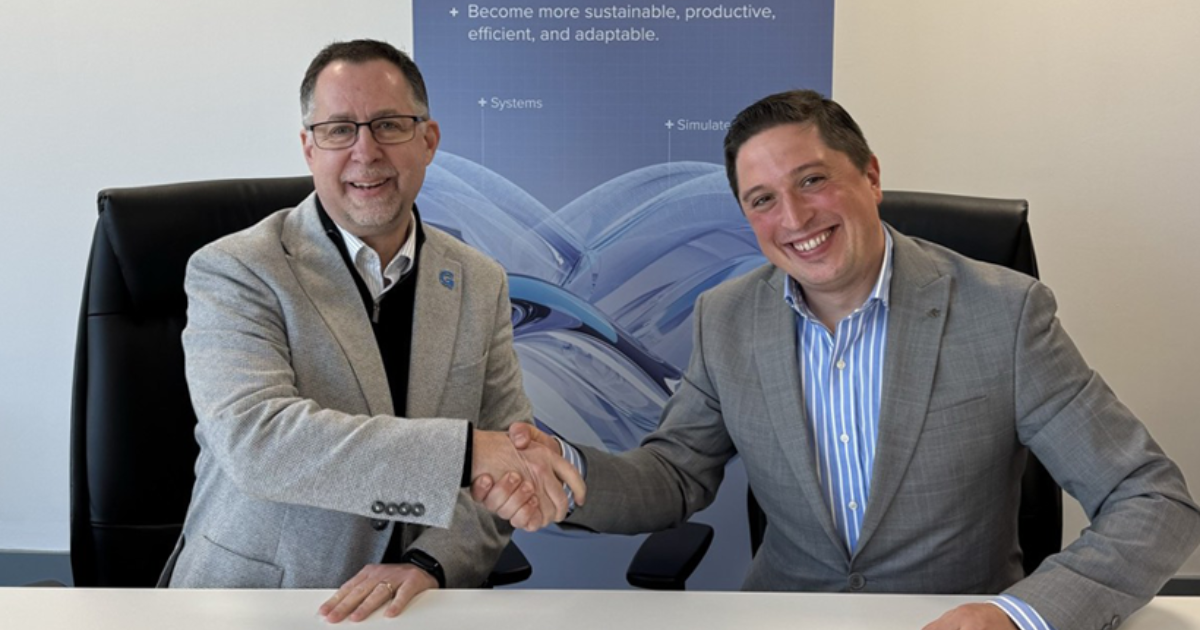
Glass Futures has partnered with the University of Liverpool for an Artificial Intelligence (AI) project to optimise glass production and reduce emissions.
The ‘AI Glass’ initiative involves the English university’s Virtual Engineering Centre (VEC).
The digital twin project is designed to help industry partners accelerate decarbonisation efforts, improve efficiency, and adopt new low-carbon fuels and materials.
The initiative is part of a wider £1.5 million project funded by UK Research and Innovation (UKRI), a non-departmental public body of the UK Government.
Justin Kelly, CEO of Glass Futures, said: “Working with the VEC on AI Glass shows the power of collaboration in tackling global challenges.
“By combining digital twin technology with AI, we’re creating a virtual environment that accelerates decarbonisation and gives manufacturers the confidence to innovate without risk – optimising processes, improving efficiency, and cutting costs while maintaining quality and sustainability.”
Located at Glass Futures’ Global Centre of Excellence in St Helens, UK, the project builds on the site’s pilot furnace and research labs.
AI-Glass will deliver a virtual replica of the glass manufacturing process, integrating advanced physics modelling and AI for sustainable technology development.
The digital environment aims to encourage manufacturers to experiment with specific variables in the process, such as transitioning to hydrogen or biofuels.
It will also allow them to adjust batch compositions without disrupting production or risking equipment.
The system can instantly predict the impact on energy use, emissions, melt quality, and operating costs, which will enable fast, evidence-based decision making.
AI-Glass also features a 3D digital twin of the entire Glass Futures site, crafted through a combination of BIM data, LiDAR scanning, and UAV photogrammetry.
This photorealistic model will be instrumental in training, safety planning, remote walkthroughs, and visualising live process insights.
In addition, the project builds on the Glass Futures’ previous research, which demonstrated that sustainable biofuels could reduce carbon emissions by up to 80% compared with high carbon natural gas.