
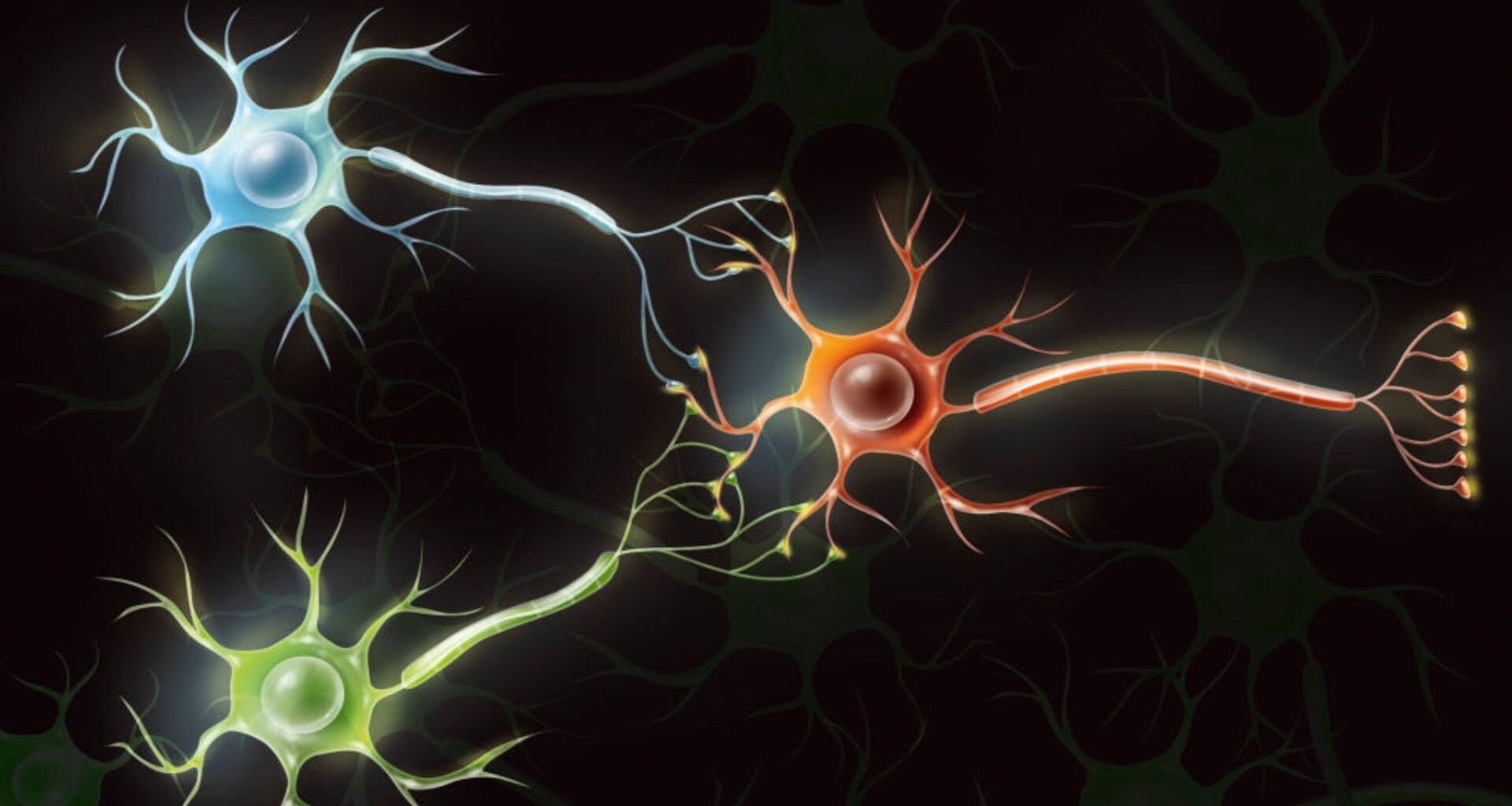
Though it may seem like fiction, we may one day see computational hardware constructed from living human brain cells rather than traditional silicon.
A biocomputer harnesses biologically derived materials, such as DNA, proteins, or living tissue (e.g., lab-grown neurons), to perform computational tasks.
The process involves growing neurons, developing them into small clusters called organoids, and then connecting these clusters to electrodes to use them as tiny computers. And interestingly, these biocomputers use less energy than conventional ones.
At present, the technology remains very new. Right now, these biocomputers can only manage simple activities.
In 2022, the Australian company Cortical Labs made headlines by successfully getting artificial neurons to play the classic computer game Pong. Another example is the “Brainoware” biocomputing system, which links living brain cells to a computer to achieve basic speech recognition.
And recently, in August, a University of Bristol team reported that they successfully used human brain organoids containing neurons to recognize Braille letters.
The current focus in several academic and commercial labs is on growing human neurons and converting them into functional systems comparable to biological transistors.
Tapping into brain power
Experts are striving to match the astonishing power efficiency of the human brain, which operates on under 20 watts while performing the equivalent of one billion mathematical operations per second.
In contrast, the most powerful supercomputers, though able to match the brain’s speed, require a million times more energy.
In the Conversation article, expert Bram Servais, PhD Candidate in Biomedical Engineering at The University of Melbourne, wrote that the foundation for biocomputing began nearly 50 years ago.
Neuroscientists began by growing neurons on tiny electrode arrays to study their firing patterns.
By the early 2000s, rudimentary two-way communication between neurons and electrodes planted the idea for bio-hybrid computing, but progress was slow until the 2013 breakthrough of brain organoids.
These organoids were 3D, brain-like structures grown from stem cells. Standard research practice now involves using organoids, often integrated with “organ-on-a-chip” technology, for both drug testing and developmental studies.
The ethical challenges
The field entered a high-profile phase in 2022, when Cortical Labs published a study showing that cultured neurons learned to play Pong. It gained notoriety less for its science than for its use of the controversial term “embodied sentience.”
This led researchers to introduce the term “organoid intelligence,” which is catchy but risks suggesting equivalence with advanced AI despite the functional differences.
Critically, ethical governance is lagging, as current frameworks treat organoids only as biomedical tools. The author states that this has prompted urgent calls for updated ethics guidelines to keep pace with the rapid pace of commercialization.
“While complex network behavior is beginning to emerge even without much external stimulation, experts generally agree that current organoids are not conscious, nor close to it,” the article noted.
Global development
Companies and academic institutions across the globe (including the US, Switzerland, China, and Australia) are working to build biohybrid platforms.
Commercial ventures like FinalSpark (offering remote organoid access) and Cortical Labs (shipping the CL1 desktop biocomputer) anticipate customers beyond the pharmaceutical industry, particularly AI researchers.
Reportedly, academic ambitions are also high, such as UC San Diego’s proposal to use organoids to predict the Amazon oil spill by 2028.
In this field, immediate work priorities involve consistently advancing, reproducing, and scaling up prototype systems.
Notably, many teams are investigating organoids as an alternative to animal models in neuroscience and toxicology research.
A practical framework has been proposed to assess how chemicals affect early brain development. Separately, combining neurons and electronic systems has shown promise in better predicting brain activity associated with epilepsy