
Support CleanTechnica’s work through a Substack subscription or on Stripe.
Oh the irony, it burns. The full weight of federal policy has been working against renewable energy, only to be foiled by the humble electricity meter. The ubiquitous household devices have been getting a clean tech makeover from the US startup ConnectDER, helping to cut the cost of rooftop solar, home energy storage, and EV charging stations. In the latest development, ConnectDER has just gotten a big thumbs-up from two leading US utilities, putting it on track to cover a territory that includes more than 50 million households.
Goliath, Meet The Meter Socket Adapter
To be clear, the rise of the electricity meter will not counterbalance the Goliath-sized monkey wrench that has been thrown into the energy transition, with the nation’s offshore wind industry suffering a particularly cruel hit. However, US innovators like ConnectDER can and will continue to support renewable energy at the granular level, from house to house, until peace and sanity are restored to the White House.
ConnectDER launched in 2011 with a plan to retrofit electricity meters for the energy transition. At a relatively modest cost, the company’s suite of meter socket adapters (also called meter collars) can help make clean tech — rooftop solar, storage, and EV charging stations — more affordable for the owners of older homes, which would otherwise require full, expensive electrical upgrades.
If the “DER” in ConnectDER is beginning to ring some bells, that’s no accident. DER is short for distributed energy resources, meaning energy producing devices that fall outside of the standard centralized power generation model, such as rooftop solar and home energy storage. Energy-consuming devices — thermostats and EV chargers, for example — can also play a significant DER role. When connected in a virtual power plant, they can dial down to smooth out peak demand periods on the grid, helping to avoid excess strain. In a best case scenario, virtual power plants reduce or eliminate the need to construct costly new gas peaker plants and other expensive infrastructure.
That’s all well and good, but for many households in older homes, the cost of an electrical system upgrade is just one more obstacle getting in the way of EV adoption and other clean tech. That’s where ConnectDER can make a difference. The company’s meter collars enable solar arrays, batteries, and Level 2 EV chargers to plug directly into a meter socket.
ConnectDER surfaced on the CleanTechnica radar in 2022, when it hooked up with Siemens to market an EV charging adapter. “By bypassing a home’s electric service panel, the adapter will save an estimated 60 to 80 percent of the charger installation cost by avoiding the need for electric panel upgrades,” Siemens explained, adding that the installation only takes about 15 minutes (see more ConnectDER background here).
Another Boost For Renewable Energy In Illinois
ConnectDER’s latest venture provides a broader picture of the potential for meter socket adapters to help propel more households into the connected, renewable energy-enabled world of the future. On December 3, the company announced that ComEd and Ameren, the two biggest utilities in Illinois by territory, have both approved its products for use in homes.
“These approvals immediately streamline the installation process for DERs, enabling installers to cut costs and timelines for the majority of residents across the state,” ConnectDER enthused in a press statement, in which the company also note that the median age of owner-occupied homes in Illinois is 41-50 years old.
According to the company’s information, many pre-1980 homes still sport the original 100-amp or 125-amp electrical service. These homes would require a substantial upgrade to take advantage of today’s rooftop solar, storage, and EV technology.
“A straightforward main panel upgrade costs around $2,000 on average in Illinois, but can get as high as $25,000 depending on your home’s existing wiring and electrical setup, and add 1-3 days of work to a solar, storage, or EV charger installation,” ConnectDER elaborates.
With Ameren and ComEd in hand, ConnectDER has assembled approvals from utilities with a collective service territory encompassing more than 30 million households. An additional pipeline of approvals is in the works, bringing the number over the 50 million mark in 2026.
The Virtual Power Plant Connection
The approvals from Ameren and ComEd are timely. The federal tax credit for home clean tech upgrades is coming to a premature end, as desired by the current occupant of the White House and the Republican-controlled Congress. However, state lawmakers still have the power to support the energy transition with new incentives and requirements, and Illinois is a case in point.
In October, Illinois Governor JB Pritzger signed the new Clean and Reliable Grid Affordability Act into law. Among other provisions, the new law provides incentives for households that volunteer to enroll their rooftop solar and energy storage systems in a virtual power plant. A VPP can enable participants to maximize opportunities to use renewable energy from the grid, and contribute (or sell) energy from their home systems to help relieve the grid from excess strain.
“Looking ahead, ComEd and Ameren have been tasked with proposing more robust VPP program structures by 2027, following the lead of other investor-owned utilities (IOUs) like in California, that provide significant financial incentives for homeowners to sell stored energy back to the grid,” ConnectDER notes.
Speaking of California, no mention of virtual power plants would be complete without including the leading US solar and storage installer Sunrun. The company has been instrumental in pushing the VPP envelope, one recent highlight being the coordination of 100,000 home storage systems in California.
As may be expected, Sunrun has enthusiastically endorsed the ConnectDER solution. “Sunrun is proud to work with innovative companies like ConnectDER to bring solutions that help us delight our customers,” enthused the company’s Director of Hardware Engineering, Brad Ingram.
In particular, Ingram drew attention to ConnectDER’s “IslandDER” product, which is engineered for compatibility with any home battery. “The IslandDER™ by ConnectDER allows us quicker and cleaner installations, and we are excited to continue expanding its use in many of our markets,” Ingram said, hinting at more activity to come from one of the nation’s most active clean tech firms (see lots more Sunrun background here).
Keep an eye on local green businesses, too. ConnectDER cites A.J. Biango, owner of the Illinois firm Sparc Solar & EV Solutions, who underscores how the meter collar solution can help accelerate the energy transition. Compared to time-consuming panel upgrades, meter collars enable installers to scoot from one job to another more rapidly while conserving precious skilled labor. That’s an especially important consideration for states like Illinois, where the electrician shortage looms large.
“By avoiding main panel upgrades, we save hours per job and significant labor costs, which lets us quote the homeowner a lower price,” Biango emphasized.
For all the hot air blowing against renewable energy from 1600 Pennsylvania Avenue in Washington, the energy transition continues apace at ordinary households across the US. Sooner or later, something’s gotta give — hopefully, sooner.
If you have any thoughts about that, drop a note in the comment thread. Better yet, find your representatives in Congress and let them know what you think.
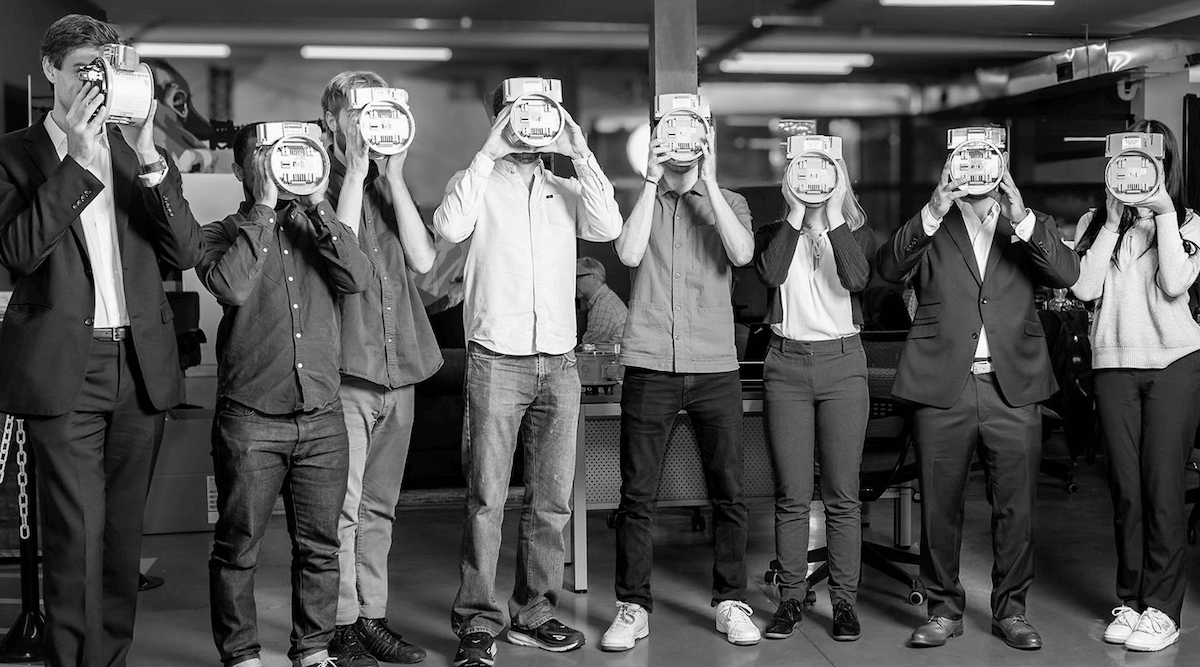
Photo: The US startup ConnectDER is bringing its meter socket adapters to millions of households, helping to reduce the cost of rooftop solar, home energy storage, and EV charging stations (cropped, courtesy of ConnectDER).
Sign up for CleanTechnica’s Weekly Substack for Zach and Scott’s in-depth analyses and high level summaries, sign up for our daily newsletter, and follow us on Google News!
Advertisement
Have a tip for CleanTechnica? Want to advertise? Want to suggest a guest for our CleanTech Talk podcast? Contact us here.
Sign up for our daily newsletter for 15 new cleantech stories a day. Or sign up for our weekly one on top stories of the week if daily is too frequent.
CleanTechnica uses affiliate links. See our policy here.