

A woman who complained that a doctor did not wear gloves while conducting a pap smear has criticised Australia’s health regulator for taking “no further action” against the practitioner.
Sexual assault support lines:
A south-east Queensland doctor supported Jackie Drake* through some of her darkest moments.
She disclosed multiple sexual assaults by a former partner to the GP and was later diagnosed with post-traumatic stress disorder (PTSD).
So, when she saw he was not wearing gloves while conducting a pap smear on her, she completely “froze”.
“I was in complete shock and could not move,” she said.
Jackie Drake* made a complaint after her doctor conducted a pap smear without wearing gloves.
“I wanted to ask him to stop, but nothing came out.
“I could not believe what was happening.”
She, and another patient of a different doctor, told the ABC they believe the regulator is failing to acknowledge the power imbalance between doctors and patients, and is not providing complainants with enough support.
Do you know more?Contact Eden Gillespie at Eden.Gillespie96@proton.me or Gillespie.Eden@abc.net.au
Around 91 per cent of “closed” notifications to the national health regulator resulted in no further regulatory action, according to the Australian Health Practitioner Regulation Agency’s (AHPRA) latest annual report.
But AHPRA told the ABC it focuses on managing future risks, and just because no regulatory action is taken, it does not mean nothing has been done.
No formal action taken against doctor
When Ms Drake received an outcome letter from AHPRA, she said she was “gobsmacked” by what the doctor disclosed.
In documents seen by the ABC, he claimed he did not use gloves as he believed it would appear more “normal or routine” to the patient.
He said Ms Drake was not offered a chaperone for the appointment — despite being a sexual assault survivor — because he did not routinely provide them unless he was attending to a new patient.
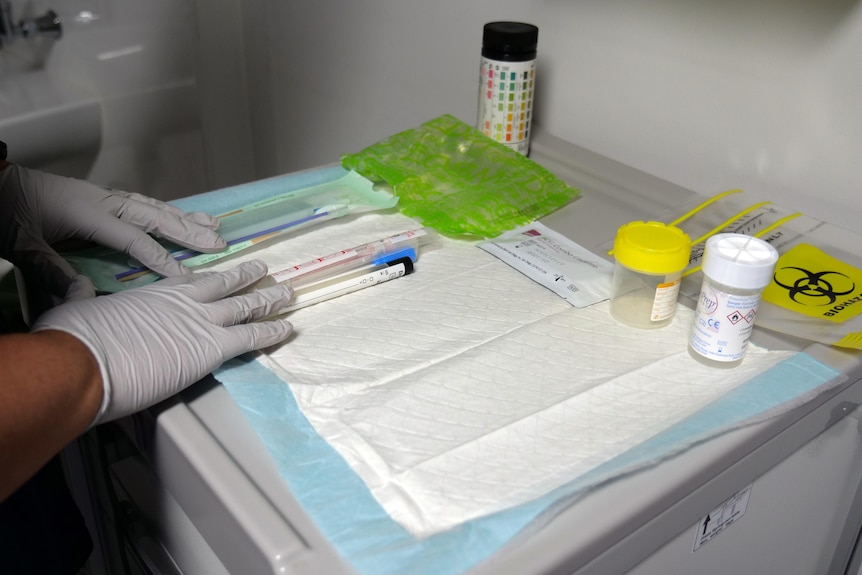
The doctor has committed to wearing gloves for all future intimate examinations.
He said if he had identified any discomfort, he would not have proceeded, the documents state.
ABC News attempted to contact the doctor but was told by his practice manager that he was “unable to comment on patient-related matters”.
Documents show AHPRA found the doctor was in breach of his obligations under the code of conduct and relevant guidelines.
AHPRA also found the doctor’s respect towards Ms Drake’s personal boundaries and hygiene practices were unsatisfactory, but took no further action against him.
The regulator said the doctor had given a genuine apology and committed to changes in his practice, such as offering a chaperone and wearing gloves for all future intimate examinations.
Ms Drake believes the outcome was not good enough.
“He can continue performing gynaecological procedures on women,” Ms Drake said.
“They are letting practitioners get away with doing things like this to patients without consequences.”
Two women told the ABC they believe AHPRA is letting patients down. (ABC News: Lisa Batty)
AHPRA noted that “in circumstances where [Ms Drake] consented to the procedure and did not withdraw that consent at any time, there is no indication that his conduct was inappropriate or sexual in nature”.
But the regulator acknowledged that “[the doctor] nonetheless placed his hands on an area that would generally be considered as intimate”.
Ms Drake said she felt AHPRA had not stood by its commitment to trauma-informed practice.
“It is not a patient’s job to hold that level of responsibility,” she said.
“It felt like a knife to my heart. AHPRA has all this additional support for … misconduct claims — I was never offered it.
“Regardless of what they found down the track, I should have been offered that support.”
Patient felt ‘violated’ at appointment
Elise Day* told the ABC she felt “uncomfortable” and “unsafe” when a Queensland doctor inserted an ultrasound probe inside her vagina last year.
She had asked the doctor if she could insert it herself, but said he replied, “No, that’s okay”, before immediately inserting the probe in a quick and hard movement.
“I felt violated,” she said.
“There was no opportunity to respond.”

AHPRA has the power to suspend or cancel the registration of practitioners, caution them or impose conditions. (Flickr: Alex Proimos)
Ms Day said she complained to the Office of the Health Ombudsman (OHO), but they referred the complaint to AHPRA, which took no further action.
She said the trauma from the event and AHPRA’s lack of action had resulted in her having to take time off work.
In documents seen by the ABC, AHPRA said despite Ms Day’s claims, it was “not possible to form a reasonable belief that [the doctor] engaged in unsatisfactory professional performance”.
The doctor told AHPRA he felt that “he adequately explained … he generally finds it more effective to insert the transvaginal probe”.
He said this was because “the biomechanics of the body tensing up can lead to more painful insertion”, and he “obtained her consent” to insert the ultrasound.
The doctor apologised and said he felt “this conversation may have been confused”. He said it was “not his intention to refuse her the option to self-insert the device”, according to the documents.
But Ms Day said the conversation did not happen, the insertion was immediate, and that she did not consent at any time.
“A guy shoved a foreign object inside me immediately after I told him not to, that is what happened. There are no mitigating factors,” she said.
“Everybody seems to think because he’s a doctor, he can do that.”
The women say the regulator has failed to acknowledge the power imbalance between patients and doctors. (ABC News: Lisa Batty)
She believes AHPRA should have done more and said they did not conduct a full interview with her or her chaperone after the doctor responded.
“I think it is astounding that [the doctor] apparently took my question [to self-insert] as an offer to assist and not an expression of preference and a clear withdrawal of any implied consent for him to be the one to insert the device,” she told ABC News.
The spokesperson said while they could not comment on individual matters, “AHPRA takes all allegations of sexual boundary violations seriously and investigates all complaints”.
Regulator focused on ‘potential future risk’
AHPRA has the power to suspend or cancel the registration of practitioners, caution them or impose conditions, such as requiring them to complete further education or training or to practice under the supervision of another practitioner.
But 91.5 per cent of “closed” notifications resulted in no further regulatory action, according to AHPRA’s 2024-25 annual report.
Complaints categorised as no further action included where they were referred to another organisation, or the practitioner “addressed the issue”.
A spokesperson for AHPRA said its role was protective and focused on managing “potential future risk that a practitioner may present”.
“A decision to take no further regulatory action means that in a particular case, further regulatory action is not required to manage ongoing risk to patients,” they said.
“This may be, for example, because the practitioner or an employer has already taken action to mitigate that risk.”

Professor Marie Bismark says AHPRA notifications should be taken seriously. (Supplied)
Professor Marie Bismark, a public health physician and health lawyer from the University of Melbourne, said AHPRA often acts on patterns of behaviour.
“If other women come forward, if there are patterns of behaviour, that can really help the regulator to take stronger action.”
Professor Bismark said receiving an AHPRA notification was a “significant and stressful experience for any doctor”.
“Even if there is no finding of professional misconduct, I would like to think that hopefully doctors would learn and reflect,” she said.
Complaints against regulator
Meanwhile, the number of complaints made against AHPRA by health practitioners and patients is on the rise.
Complaints against AHPRA increased from 430 in 2022/23 to 691 in the latest financial year, according to the National Health Practitioner Ombudsman’s (NHPO) annual report.
The time taken to investigate notifications was one of the key frustrations.

The Australian Health Practitioner Regulation Agency investigates claims against doctors. (ABC News: Keane Bourke)
AHPRA said notifications about practitioners had increased by 19 per cent in 2024/25 — the largest increase since the National Registration and Accreditation Scheme began in 2010.
“Despite the increase in notifications, AHPRA resolved more complaints sooner.”
Patients who have made complaints to Queensland’s OHO have also faced lengthy delays in outcomes.
The agency took five years from an initial notification to refer a disciplinary matter to a Queensland tribunal against a Brisbane doctor now accused by more than a dozen women of inappropriate touching and excessive intimate exams.
The matter is still ongoing, with QCAT member Julie Dick telling the tribunal in September, “it’s indefensible how long it’s taken”.
Professor Bismark said the timeframes for health regulators to reach an outcome were “dreadfully slow”.
“The doctor will have this matter hanging over their head for years, then similarly for the patient or complainant,” she said.Patient ‘could not believe’ response from regulators
Ms Drake said while she was traumatised by the pap smear, the response by both the national and state health regulators was even worse.
It took her two years to muster the courage to call the practice and make a formal complaint before reporting to the OHO.
The OHO advised her that the complaint did not fulfil its requirements to investigate, and instead referred the matter to AHPRA last year.
“I could not believe it,” Ms Drake said. “What does a practitioner have to do for it to be deemed a risk to the public?”
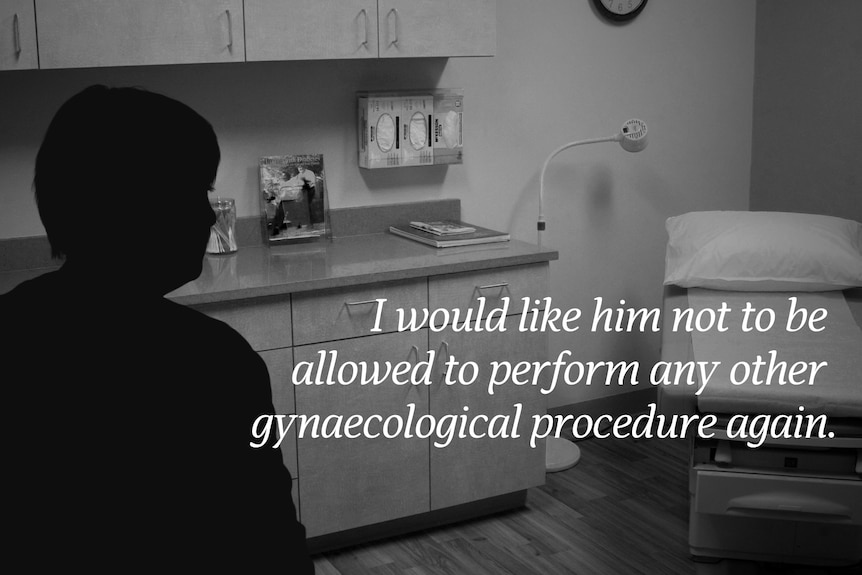
The women were disappointed their doctors did not face regulatory action after their complaints. (ABC News / Peter Mullins)
“I would like him not to be allowed to perform any other gynaecological procedure again.”
A spokesperson for the OHO said they were “unable to comment on the decision-making process in this case”.
But they said the OHO was “deeply concerned if anyone experiences additional trauma while making a complaint”, and has processes in place to “minimise potential distress” and “can assist with access to support services”.
The spokesperson said in Queensland, the OHO shares regulatory responsibility with AHPRA and the 15 registered practitioner National Boards.
“Complaints regarding registered practitioners and students are jointly considered with AHPRA, and both entities collectively decide which agency should manage the complaint,” they said.
The spokesperson said investigations were generally completed within 12 months, but timelines may be extended “due to the size, nature or complexity of the matter”.