
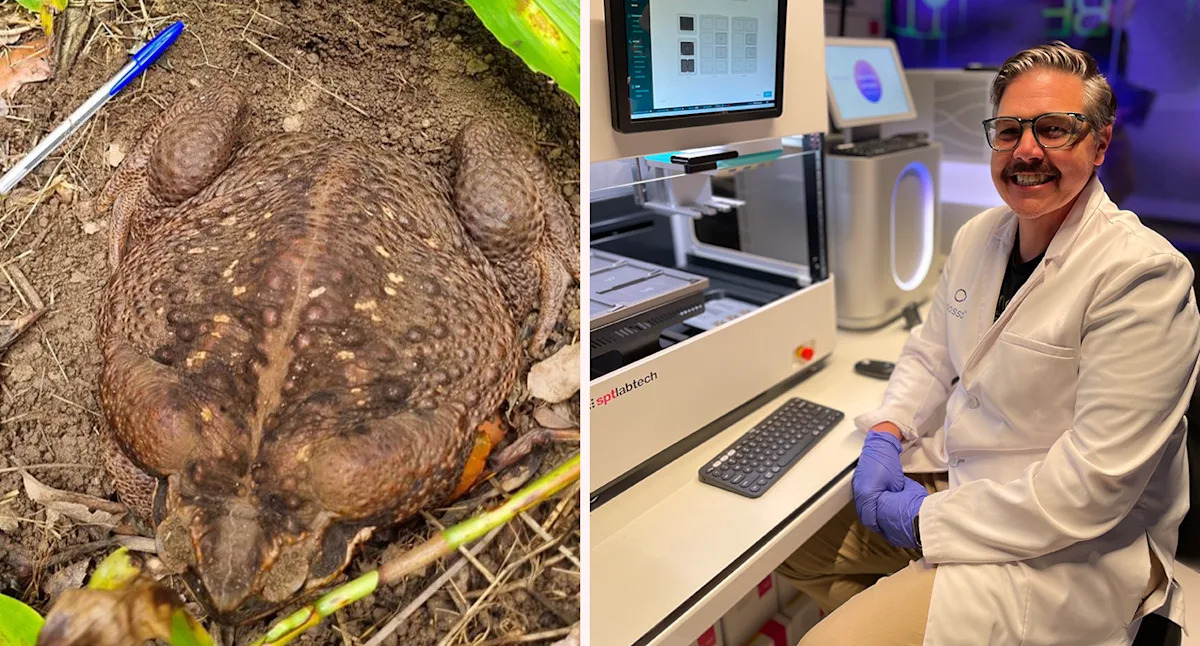
Scientists have announced a breakthrough in a plan to turn Australia’s native predators against invasive cane toads. Gene-technology company Colossal Biosciences is on the verge of birthing a northern quoll that’s been engineered to resist the poison contained in its toxic glands.
Its chief biology officer, Professor Andrew Pask, explained his team in Australia now has a definite pathway to achieving this incredible goal.
But time is running out as the toads spread west, killing off the northern quolls that have called the outback home for millions of years.
“The quicker we can get there, the better,” he told Yahoo News.
“This isn’t a 10-year plan; in 2,3,4 years, we should have the birth of a cane toad-resistant quoll.”
How long does the northern quoll have left?
It’s predicted the northern quoll could be extinct in the wild in just 10 years as the cane toad continues to conquer new territory.
Australia’s native animals evolved more than 13,000km from the toad’s Central American homeland, and see the newly arrived invaders as an easy meal.
But they’re oblivious to the danger posed by its poisonous glands, which exude a milky liquid when agitated, that rapidly causes death.
Australia’s wildlife has no natural immunity to the toads, so they’ve decimated populations since they were introduced in the 1930s.
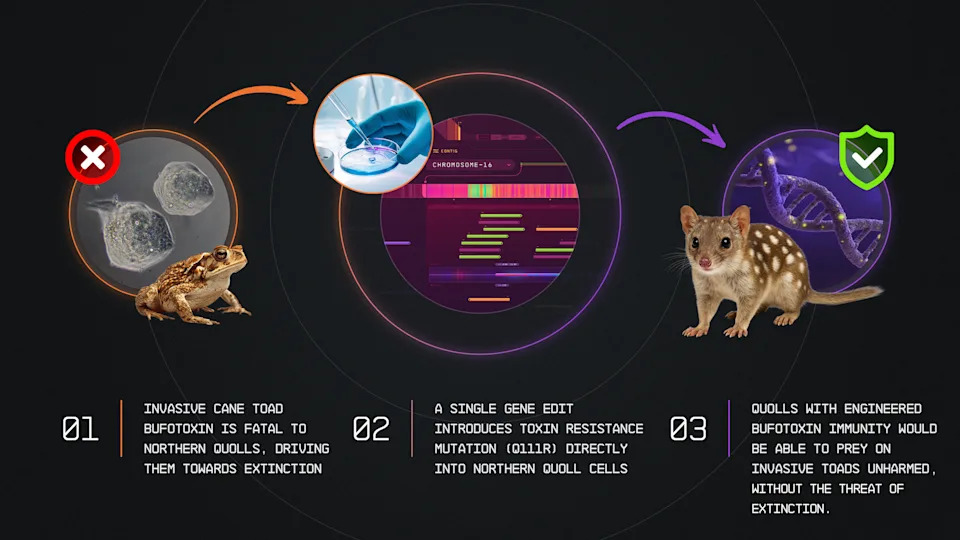
By editing a single gene, Colossal hopes to make northern quolls resistant to cane toads. Source: Colossal
Plans by Colossal to re-engineer extinct species like the Tasmanian tiger, moa, dodo and mammoth are time-consuming and expensive.
But it’s not trying to make any dramatic changes to the northern quoll.
Its scientists are simply “speeding up evolution”, so the species isn’t wiped out before it can build up resistance to the cane toad’s poison.
“It’s something that exists in nature that would evolve over time,” Professor Pask said.
How the quoll could fight back against the toad
Colossal is now able to rapidly grow and introduce mutations into quoll stem cells, key steps ahead of creating embryos.
And it has successfully introduced poison resistance edits into a gene of the fat-tailed dunnart, a process that could soon be transferred into its close relatives, including the quoll.
“We’ve developed tools to really efficiently gene edit marsupials, and a lot of the pipelines that we need to turn those cells back into a full living animal,” Professor Pask said.
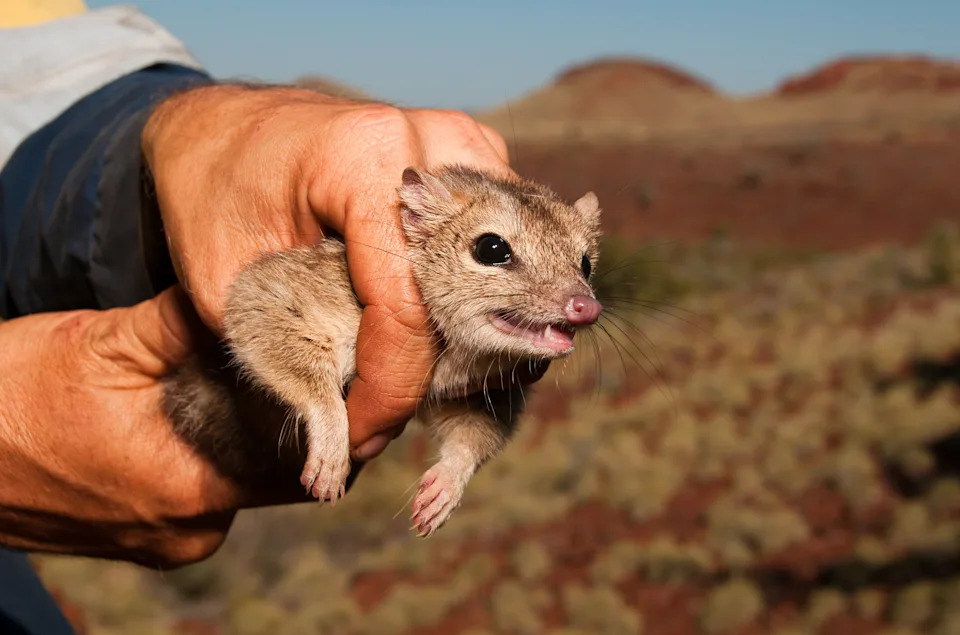
Mutated northern quolls could begin to eat quolls without being poisoned. Source: Getty
The ideal outcome of the work would be if the northern quoll became a super-predator that could turn the tide against cane toads and protect other animals in the ecosystem from encountering them.
But the company hopes to also use the technology to alter the genes of other species it threatens.
Will the quoll be changed forever?
If successful, the Colossal plan will be the first genetic engineering of an animal for conservation purposes.
Original versions of the quolls will be kept in captivity because they’re not threatened by toads.
Because marsupials with the gene mutation will have an advantage in the wild, it’s expected that their resistance will spread quickly.
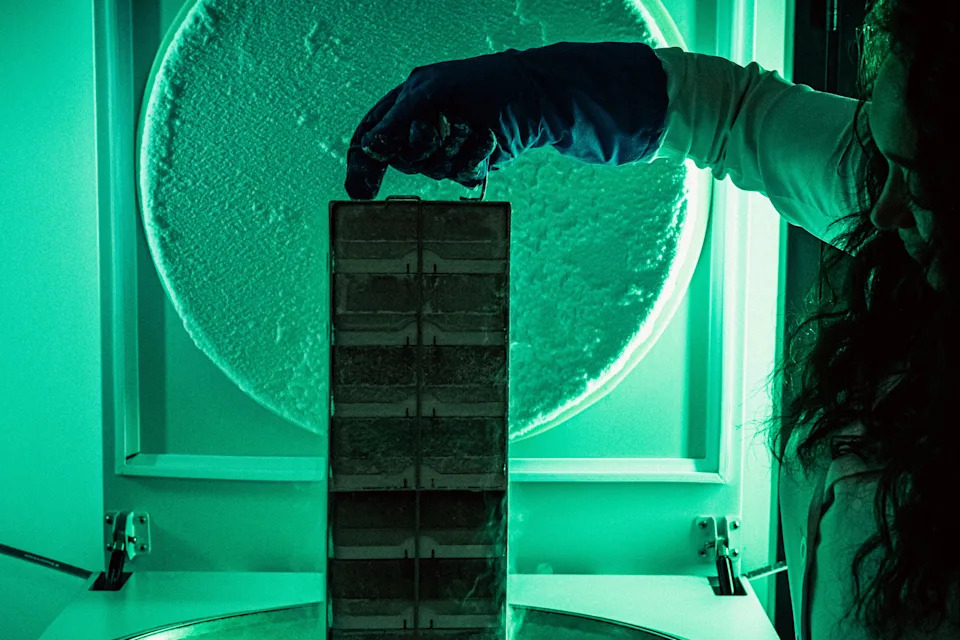
Colossal has established its biovault (depicted) to freeze down living cells of the most threatening species.
Before the edited quolls are released into the environment, negotiations will take place with First Nations people and government, but Colossal does not expect negotiations to be complicated because the change to the animal is minimal.
“Ultimately, it would be great to think that at some point in the future, all cane toads are gone from Australia,” Professor Pask said.
“Then the [mutation] would revert back naturally, because… there’s no need to retain it.”
Love Australia’s weird and wonderful environment? 🐊🦘😳 Get our new newsletter showcasing the week’s best stories.
