
In India, entrepreneurship is quickly becoming a typical goal for many students graduating from Indian colleges and universities. According to the 2023 Global University Entrepreneurial Spirit Students’ Survey (GUESSS) India report (published in 2024), 32% college students in India aspire to start their own ventures, compared to only 25% of students around the world.
The Stanford Graduate School of Business (GSB) has a long history of developing leaders in global business. As part of this legacy, Stanford Seed is a program of GSB that supports entrepreneurs in developing countries to grow their businesses. The Seed Transformation Network (STN) is the alumni network for graduates of the Seed Transformation Program. It is a purpose-based network of over 450 alumni from South Asia that incorporates the academic brilliance of Stanford with the practical coaching and support of peers within STN.
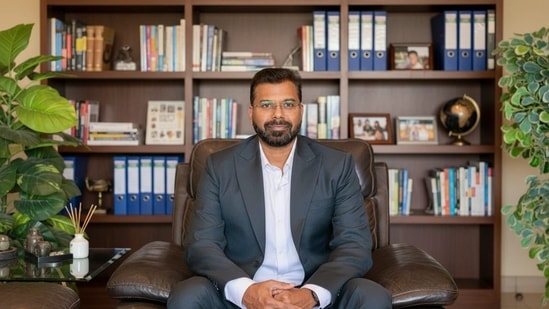
In an exclusive interview, Harish Arnezath, Regional Director, Stanford Seed South Asia, talks about the best pathways for budding entrepreneurs, Stanford Seed, and Stanford Global School of Business.
Is the demand for entrepreneurship-enabling programs gaining ground amongst students?
Although there is no long-term increase in data for students entering formalised entrepreneurship programs, numerous data points (e.g., student ambition, startup registrations, job creation) reveal a growing interest amongst students and institutions to pursue entrepreneurship. Data show that more than one-third (32.50%) of students have ambitions to become entrepreneurs. Between 2016 and now, more than 157,000 Startup India (S-I) registrations have been obtained throughout more than 750 districts within India, with Startups providing over 1,500,000 direct jobs (DPIIT statistics).
What is the best academic path for young graduates aspiring to become entrepreneurs?
There are many ways to pursue entrepreneurship; most will not follow a single academic path. While entrepreneurship rewards curiosity, the ability to solve problems and adapt quickly, a variety of educational experiences provide a base to build on as an entrepreneur:
● Engineering, Liberal Arts, Science and Technology.
● Postgraduate Management Programs offer an opportunity for entrepreneurs to refine their judgement regarding business opportunities through practical application of case studies, venture financing models and social impact considerations, among others.
● Short-Term Entrepreneurial/Executive Programs (6-12 months) are designed specifically for individuals who are currently exploring potential business concepts and offer exposure to other entrepreneurs and their networks as well as access to mentorship programs.
What are the programs offered by GSB to budding entrepreneurs?
While GSB’s core MBA is global, Stanford Seed offers programs tailored for entrepreneurs in emerging economies:
● Seed Transformation Program (STP): A 10-month hybrid program for founders/CEOs of for-profit small and mid-size businesses (typically US $300,000–$15 million revenue). It integrates faculty insights, scaling tools, peer learning, and advisor support.
● Spark Program: A 4-month online program for traction-stage startups, offered with accelerators and ESOs. It blends live sessions, toolkits, mentorship, and peer learning.
These programs expand access to practical, high-quality business education beyond traditional MBA pathways.
How does Stanford GSB’s academic framework transforms business education beyond the campus?
Launched globally in 2013, Stanford Seed has continued to learn and understand the significant challenges encountered by Small to Medium Enterprises (SMEs) in emerging markets. This knowledge has resulted in the development of an SME-centred framework that employs the strengths of the Graduate School of Business (GSB) in the areas of Leadership, Strategy, Value Chains, Finance, Marketing, and People Management.
Through Seed’s work, the GSB framework is brought to an entrepreneur’s regional context by leveraging the insight from GSB faculty, regional experts, and structured learning with their peers, using a local case study approach, creating excellent and applicable understanding of concepts to the participants. Each entrepreneur and their Senior Leadership work with Seed Advisors to develop their Transformation Plans based on these concepts, supported by practical coaching, consulting, and internships.
By using this innovative approach, Stanford Seed is taking Business Education beyond the classroom, to help Entrepreneurs build Sustainable Enterprises, strengthen Local Communities, and ultimately, achieve Seed’s Mission.
What about the growing importance of global executive education for Indian entrepreneurs?
India’s demand for executive education is rising, with the market projected to reach Rs. 2,090 crore by 2029 (as per India Executive Education Market Outlook to 2029 Report). Entrepreneurs seeking to scale often benefit from comprehensive programs such as the Stanford Seed Transformation Program (STP).
For specific or short-term needs, family business governance, leadership, digital skills, finance, or ESG, modular programs from ISB, IIMs, SPJIMR, and XLRI, along with short global executive courses, offer flexible, high-value learning while allowing entrepreneurs to continue running their businesses.
How does Stanford Seed bridge academia and entrepreneurship in South Asia?
Stanford Seed connects global business frameworks with real-world execution. Its value lies in:
● Targeted learning based on each company’s real business challenges.
● Holistic leadership involvement, ensuring the entire senior team learns, adapts, and drives change.
● Peer networks that enable shared learning and collaboration.
● Governance and discipline, teaching entrepreneurs to treat their business as a system with clear metrics and long-term planning.
● Impact orientation, ensuring growth strengthens communities, not just financials.
In South Asia’s context of volatility, regulatory complexity, and infrastructural constraints, Seed acts as a bridge between aspiration and scalable, sustainable impact.