
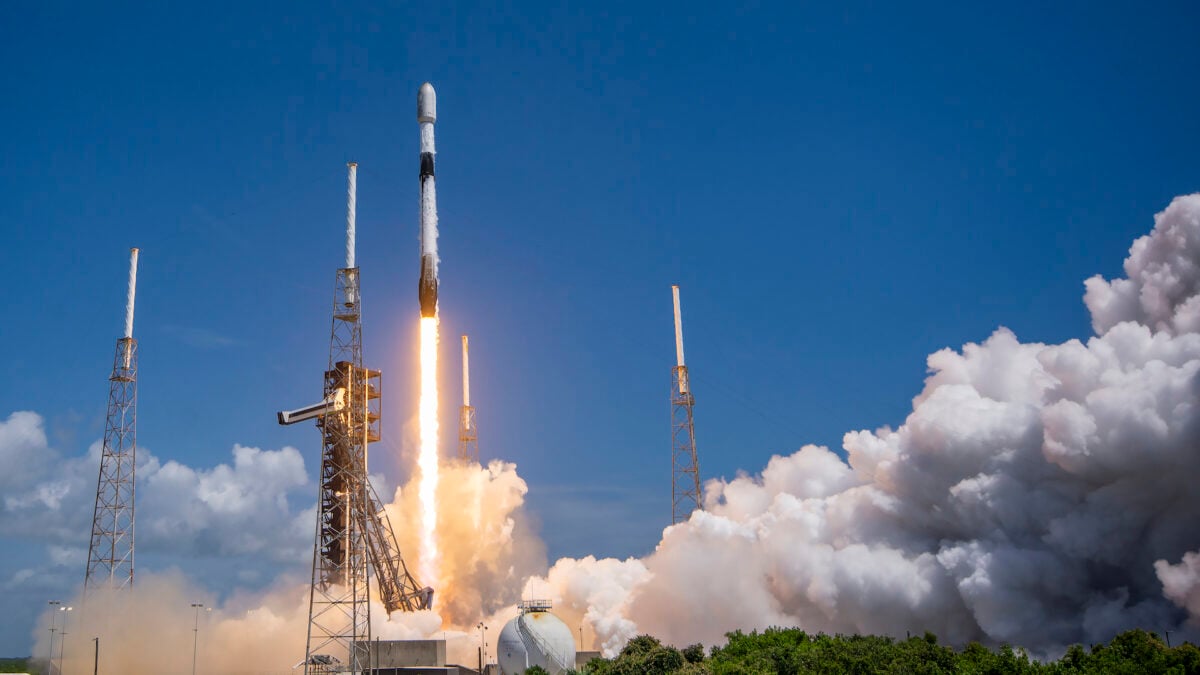
Elon Musk’s SpaceX has set ambitious goals for next year, aiming to roll out the next generation of Starship, launch its first uncrewed mission to Mars, and demonstrate key technical feats such as in-orbit refueling. Amid media reports of soaring valuation, Musk has shared new details about the company’s finances heading into fiscal year 2026.
Last week, the Wall Street Journal reported that SpaceX was initiating a secondary share sale that would raise the company’s valuation to $800 billion, doubling its mid-2025 valuation. Musk denied this in a Saturday X post but did not address the report’s claim that SpaceX is weighing a potential initial public offering for 2026.
“There has been a lot of press claiming [SpaceX] is raising money at $800B, which is not accurate,” Musk wrote, clarifying that the company has been “cash flow positive for many years” and does regular stock buybacks twice a year to provide liquidity for employees and investors. He did not share a more accurate valuation for SpaceX.
Gizmodo reached out to SpaceX for comment but did not receive a response by the time of publication.
There has been a lot of press claiming @SpaceX is raising money at $800B, which is not accurate.
SpaceX has been cash flow positive for many years and does periodic stock buybacks twice a year to provide liquidity for employees and investors.
Valuation increments are a…
— Elon Musk (@elonmusk) December 6, 2025
Big things on SpaceX’s horizon
While Musk’s post offers some clarity, it also raises more questions about SpaceX’s financial state. With the reported $800 billion valuation in question, it’s unclear how much the company is currently worth, and how much of a boost these stock buybacks could provide. In June, Musk said SpaceX’s 2025 commercial revenue would be roughly $15.5 billion.
The aerospace company is competing with OpenAI—currently worth about $500 billion—to become the world’s most valuable private company. But the question of whether SpaceX could go public in 2026 is perhaps even more tantalizing.
SpaceX has achieved dominance in the commercial spaceflight sector, securing its role as a critical launch provider for the U.S. government. It also operates the largest constellation of broadband internet satellites in low-Earth orbit: Starlink. An IPO would unlock enormous value for investors, but SpaceX has not officially announced any plans to go public.
2026: A potential landmark year for SpaceX
SpaceX may be NASA’s most active launch provider, but these contracts make up a surprisingly small portion of the company’s revenue. Musk followed up his Saturday X post by stating that Starlink is by far the company’s greatest revenue driver, and that NASA will contribute to less than 5% of SpaceX’s revenue next year.
“Some people have claimed that SpaceX gets ‘subsidized’ by NASA. This is absolutely false,” Musk wrote, adding that the company won its NASA contracts based on merit and affordability. “With regard to astronaut transport, SpaceX is currently the only option that passes NASA safety standards.”
He makes a valid point, but it’s also important to note that SpaceX has a lot to achieve in 2026 if it hopes to keep its largest NASA contract: the Artemis Human Landing System (HLS). NASA awarded SpaceX $2.89 billion in 2021 to build the spacecraft that will land the Artemis 3 astronauts on the Moon, but development is severely off-track for a launch target of mid-2027.
Acting NASA Administrator Sean Duffy reopened the contract in October, and now, SpaceX is racing against Blue Origin to provide a viable lunar lander. To win, SpaceX will first have to get Starship Version 3 off the ground, then demonstrate key capabilities such as full reusability, in-orbit refueling, and an uncrewed Moon landing.
It’s a tall order. Looking ahead to next year, SpaceX faces daunting technical challenges that could influence investor confidence and future valuations if the company decides to go public. While much remains uncertain, 2026 is shaping up to be a high-stakes year for SpaceX.