
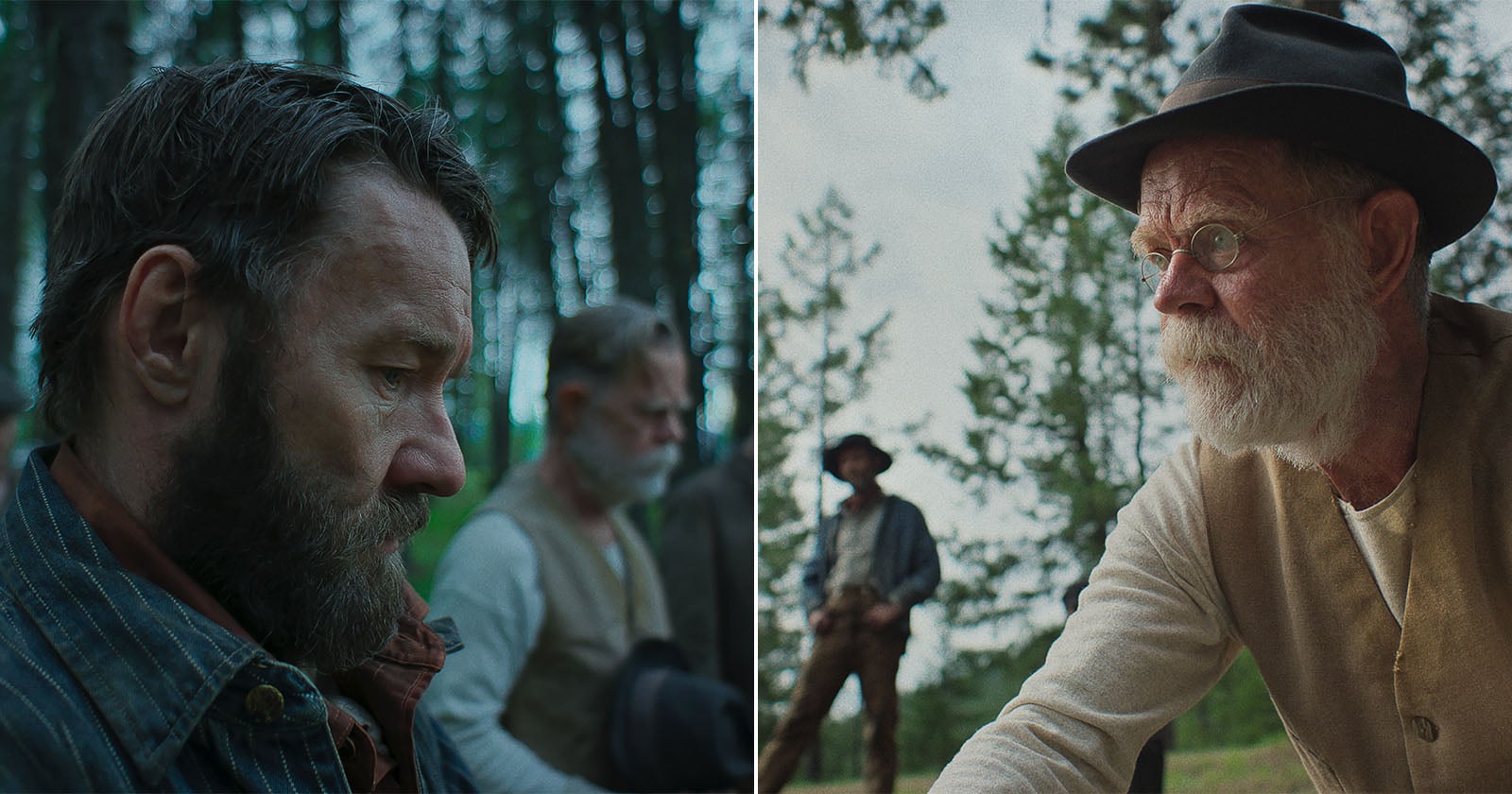
Based on the novella of the same name, Netflix’s new film “Train Dreams” is shot to look like photos from the era in which the movie takes place: the early 20th century. Although shot on modern Arri Alexa 35 cameras, the film employs a 3:2 aspect ratio, is almost entirely lit with natural light, and has an exceptionally filmic, beautiful appearance.
Netflix’s “Train Dreams” is a feature-length movie based on Denis Johnson’s 2011 novella of the same name. However, the original version of Johnson’s novella, “Train Dreams,” was published in the Summer 2002 issue of The Paris Review. The story follows American railroad laborer Robert Grainier throughout his challenging life in a rapidly changing Western American landscape.
Oscar-nominated filmmaker Clint Bentley directs “Train Dreams,” while also serving as a writer alongside Greg Kwedar (“Sing Sing”) and Denis Johnson, who, alongside being a novelist, is also a screenwriter and playwright. Cinematographer Adolpho Veloso helms the cameras on “Train Dreams.” Veloso, as he explains to Variety in the video above, previously worked with Bentley on 2021’s “Jockey.”
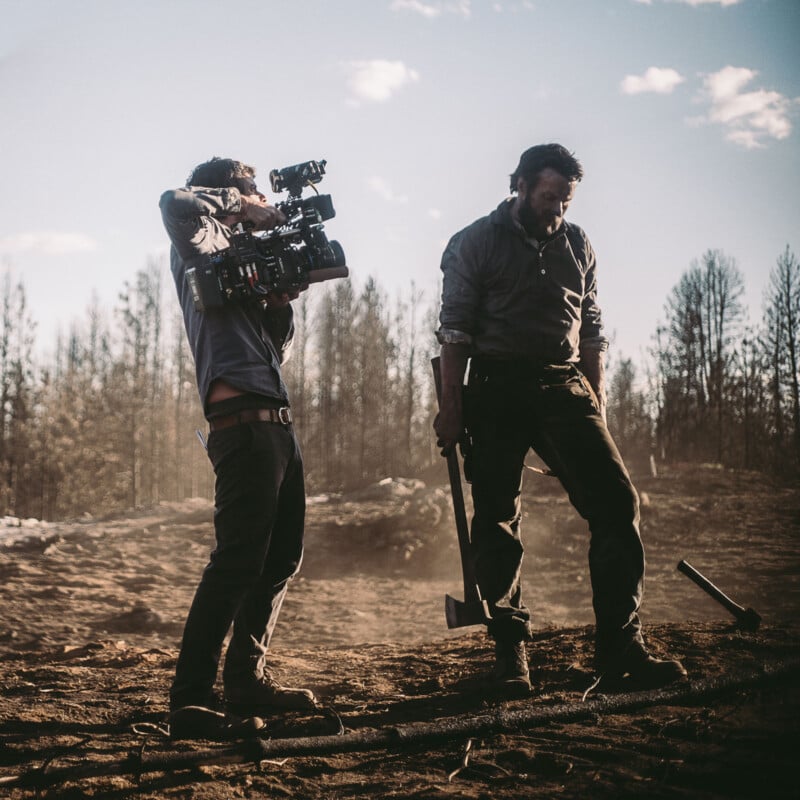 Train Dreams. (L-R) Director of Photography Adolpho Veloso and Joel Edgerton as Robert Grainier on the set of Train Dreams. | Credit: Daniel Schaefer/BBP Train Dreams. LLC. © 2025.
“It went great, we loved each other and it was a great collaboration,” Veloso tells Variety. “I was just really looking forward to working with him again. I was really lucky that he wanted to work with me again.”
“Our earlier conversations were about how to make this movie feel like you are watching someone’s memories,” the cinematographer explains. “It’s almost like you found that box full of pictures, old pictures of someone’s life and you’re trying to piece those pictures together to understand what life that person leads somehow.”
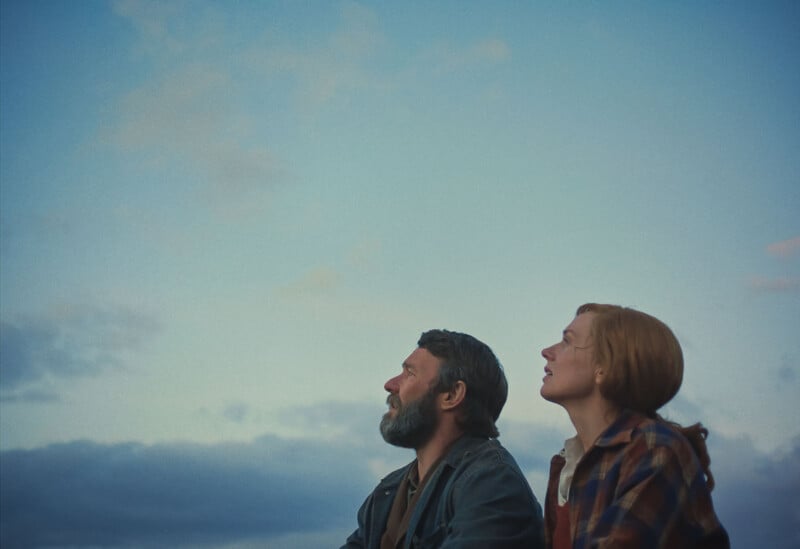 Train Dreams. (L-R) Joel Edgerton as Robert Grainier and Kerry Condon as Claire Thompson in Train Dreams. | Credit: BBP Train Dreams. LLC. © 2025.
 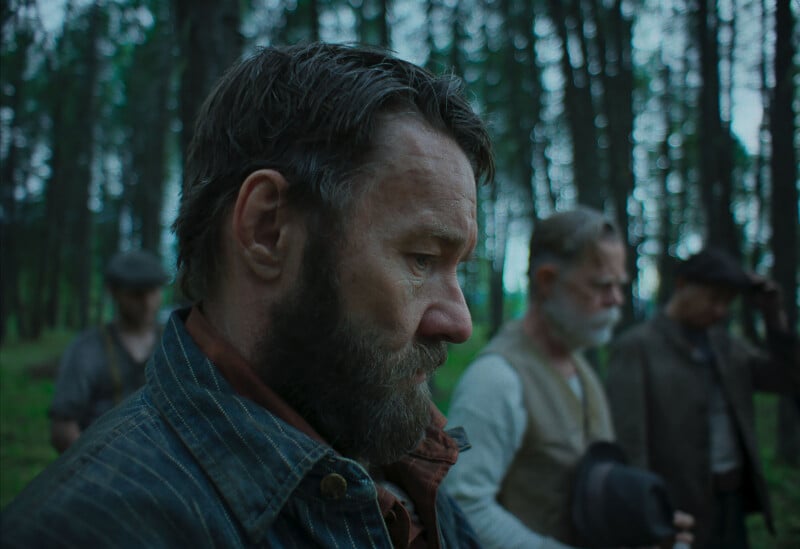 Train Dreams. (L-R) Joel Edgerton as Robert Grainier and William H. Macy as Arn Peeples in Train Dreams. | Credit: BBP Train Dreams. LLC. © 2025.
 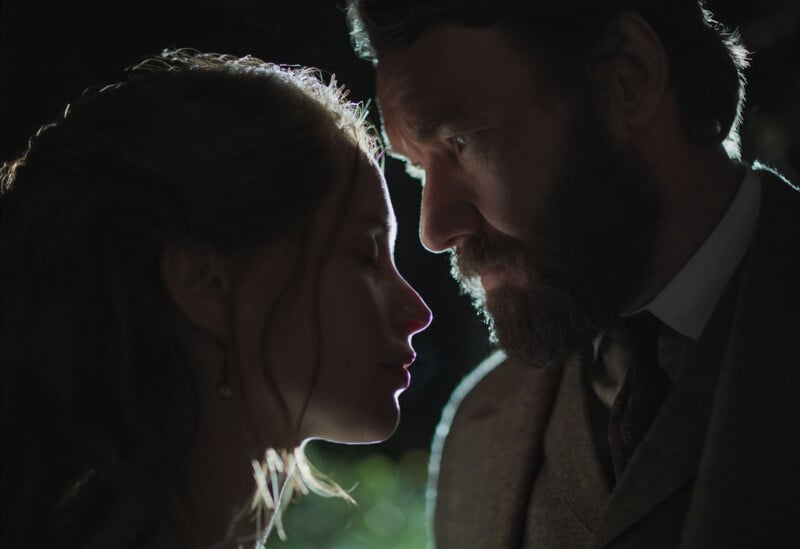 Train Dreams. (L-R) Felicity Jones as Gladys Grainier and Joel Edgerton as Robert Grainier in Train Dreams. | Credit: BBP Train Dreams. LLC. © 2025.
 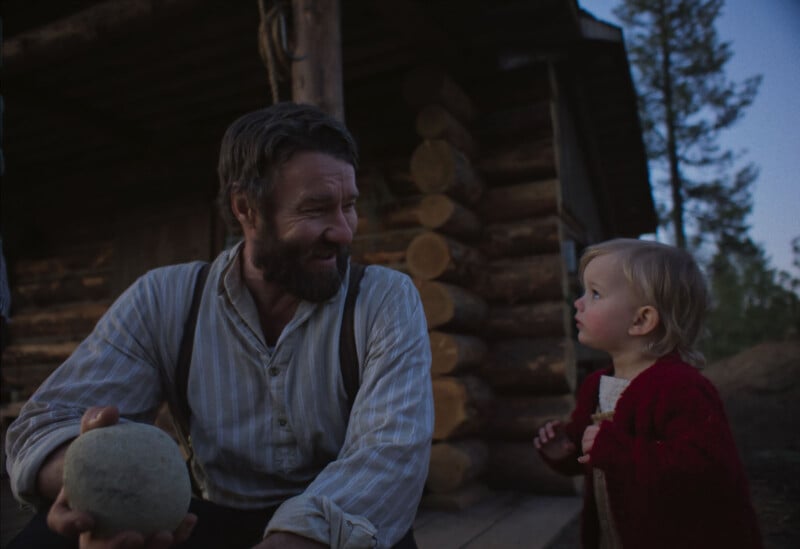 Train Dreams. (Featured) Joel Edgerton as Robert Grainier in Train Dreams. | Credit: BBP Train Dreams. LLC. © 2025.
 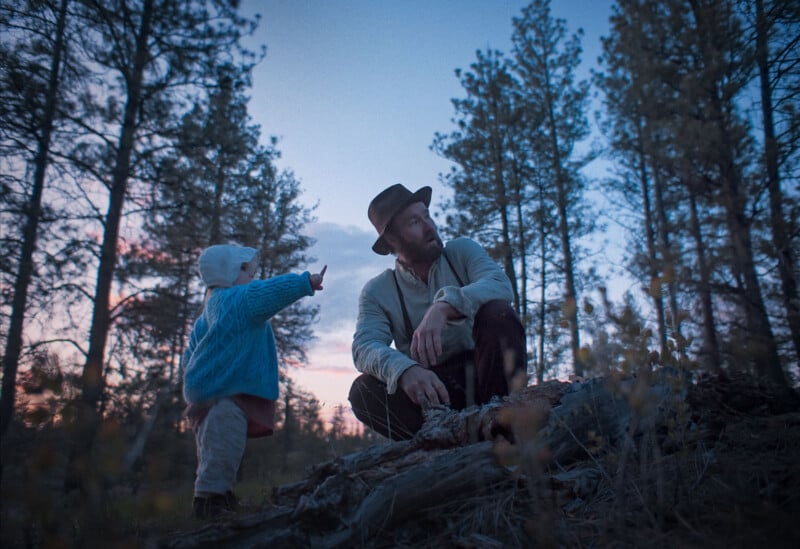 Train Dreams. (Featured) Joel Edgerton as Robert Grainier in Train Dreams. | Credit: BBP Train Dreams. LLC. © 2025.
Veloso and Bentley carefully developed the film’s look and aesthetic by going through countless old photos from the 1920s together, particularly images from the logging world in which the story takes place.
“Most of the pictures we were looking at were at 3:2 aspect ratio, and we just going back to this memory feeling. We were like, ‘Why don’t we just use that aspect ratio?’ It’s also going to be great for the trees, because we need a taller aspect ratio, and if somehow we can invoke that feeling you have when you see your old pictures, they’re basically in that aspect ratio,” Veloso continues.
To further embrace the appearance of a person’s old photos, which are seldom shot using professional artificial lighting, the team shot “99%” of “Train Dreams” using only natural light.
While the final look of the film is spectacular, and any number of frames can be paused to look like beautiful photographs, Veloso says that much of the pre-production effort was spent trying to convince everyone to get on board with the visual approach. It was essential to ensure everyone was on the same page, including the film’s stars, such as Joel Edgerton, Clifton Collins Jr., Felicity Jones, Kerry Condon, William H. Macy, and many more.
As Veloso explains, having the cast and crew excited about the approach matters because the team was routinely at the mercy of the light and weather. Sometimes they had a narrow window to nail the shot, which meant fewer takes and significantly less predictability than on many modern film sets.
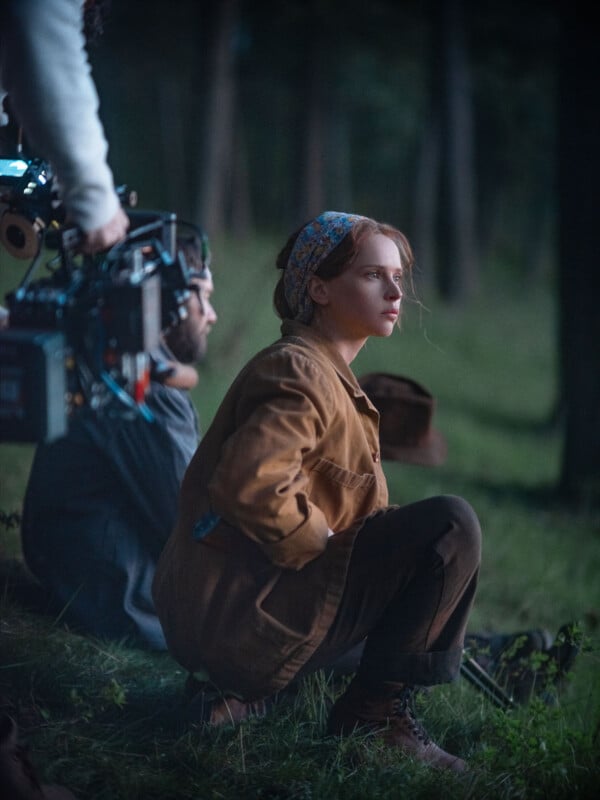 Train Dreams. (L-R) Joel Edgerton as Robert Grainier and Felicity Jones as Gladys Grainier in Train Dreams. | Credit: Daniel Schaefer/BBP Train Dreams. LLC. © 2025.
 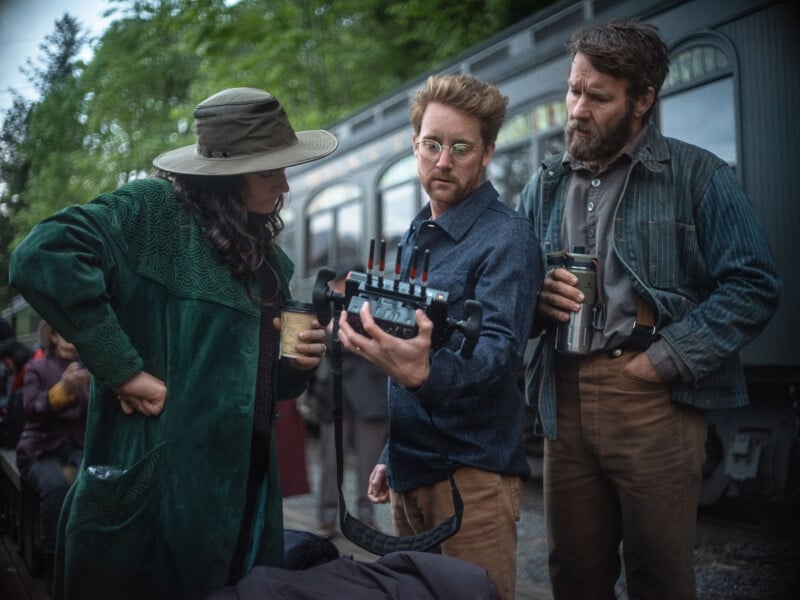 Train Dreams. (Featured) Director Clint Bentley and Joel Edgerton as Robert Grainier in Train Dreams. | Credit: Daniel Schaefer/BBP Train Dreams. LLC. © 2025.
The desired look and feel of “Train Dreams” necessitated smaller cameras that didn’t compromise image quality or dynamic range, so Veloso and his team settled on Arri Alexa 35 cameras.
“That camera just felt right,” Veloso says. “17 stops of dynamic range is just like amazing.”
Optics matter just as much, if not more, than the camera itself. Veloso says they had two sets of lenses. One set was rehoused Kowa Cine Prominars, Japanese cinema lenses from the 1960s that promise excellent central sharpness and medium to low contrast.
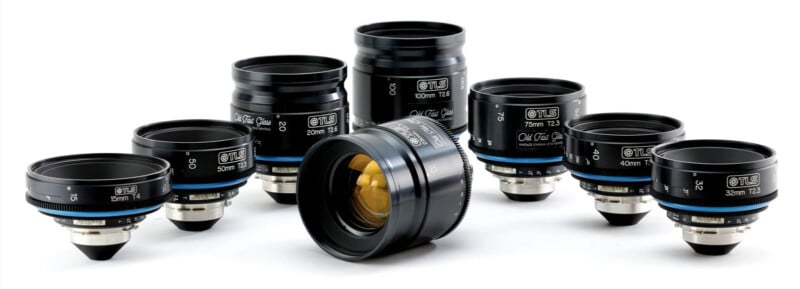 Credit: Old Fast Glass
“Their bokeh is very special, with enough character to make the lenses stand out from modern options, but not so busy that it distracts from your subject,” Old Fast Glass explains.
“I love the texture of that lens,” Veloso says of the Kowa cine primes. “But I also think it’s the most beautiful sun flare ever on a lens, and I knew we were going to have a lot of sun and we’re shooting a lot of the film outside.”
The team also needed faster lenses for the night scenes, as the Kowa Cine Prominars only reach T2.3 for select focal lengths and can be even slower.
“We knew we wouldn’t want to change the ISO, we just decided to have a different set of lenses,” Veloso says. The team settled on Zeiss Super Speed primes, all T1.3 except the 135mm T2.1.
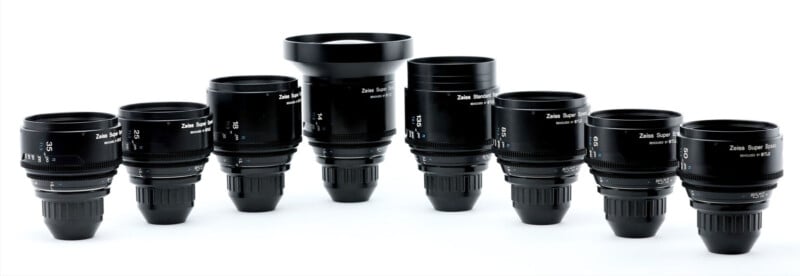 Credit: Old Fast Glass
“Zeiss Super Speeds are arguably the most capable and some of the most beautiful vintage lenses available. Their T1.3 maximum aperture is an obvious advantage and puts them in rare company. Whether you are wide-open or stopped down, the images they produce are magic,” Old Fast Glass says.
Veloso notes that they also shot with one separate zoom lens, the Angénieux Optimo Ultra 12x. As Veloso explains, zooming is an important way he depicted one of the film’s characters, Arn Peeples, played by William H. Macy.
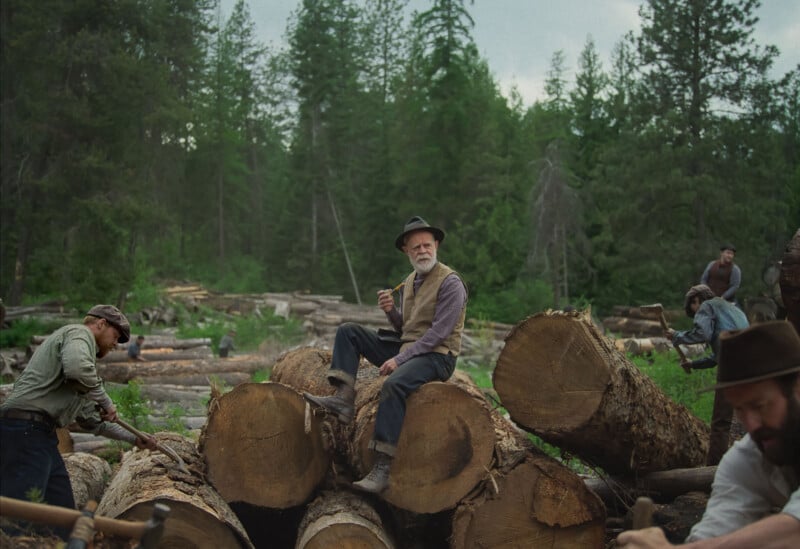 Train Dreams. (Featured) William H. Macy as Arn Peeples and Joel Edgerton as Robert Grainier in Train Dreams. | Credit: BBP Train Dreams. LLC. © 2025.
 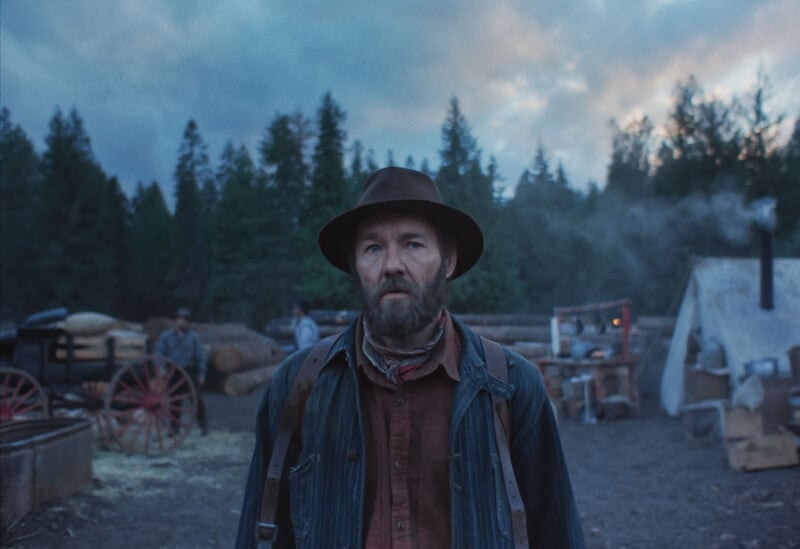 Train Dreams. Joel Edgerton as Robert Grainier in Train Dreams. | Credit: BBP Train Dreams. LLC. © 2025.
 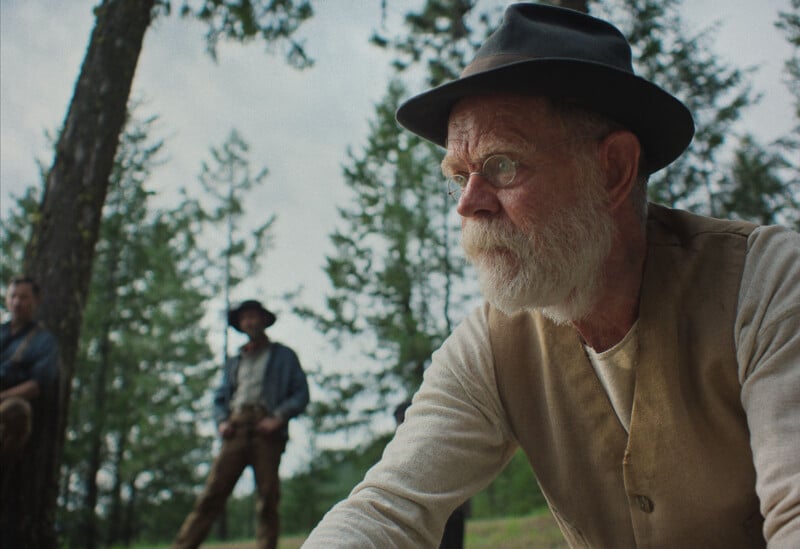 Train Dreams. (Featured) William H. Macy as Arn Peeples in Train Dreams. | Credit: BBP Train Dreams. LLC. © 2025.
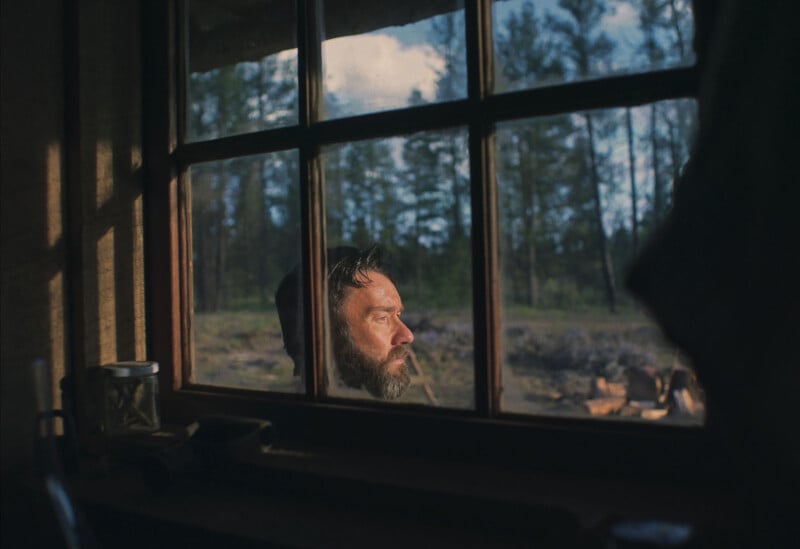 Train Dreams. Joel Edgerton as Robert Grainier in Train Dreams. | Credit: BBP Train Dreams. LLC. © 2025.
 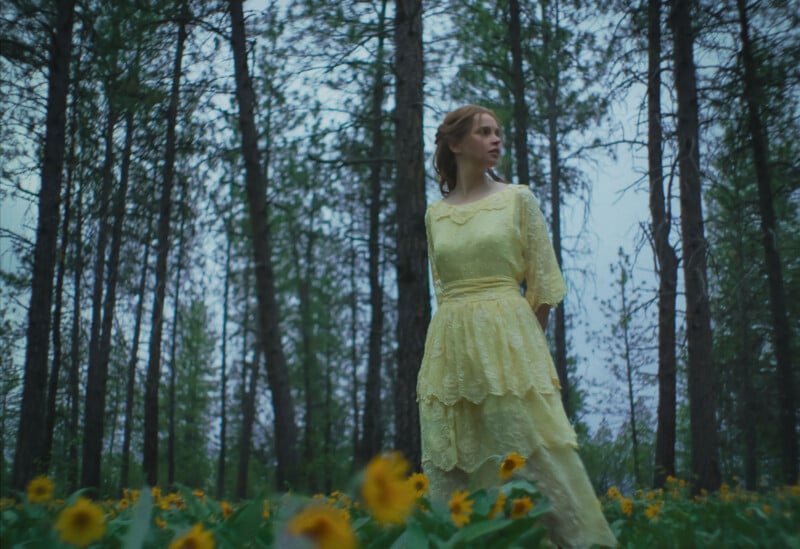 Train Dreams. Felicity Jones as Gladys Grainier in Train Dreams. | Credit: BBP Train Dreams. LLC. © 2025.
 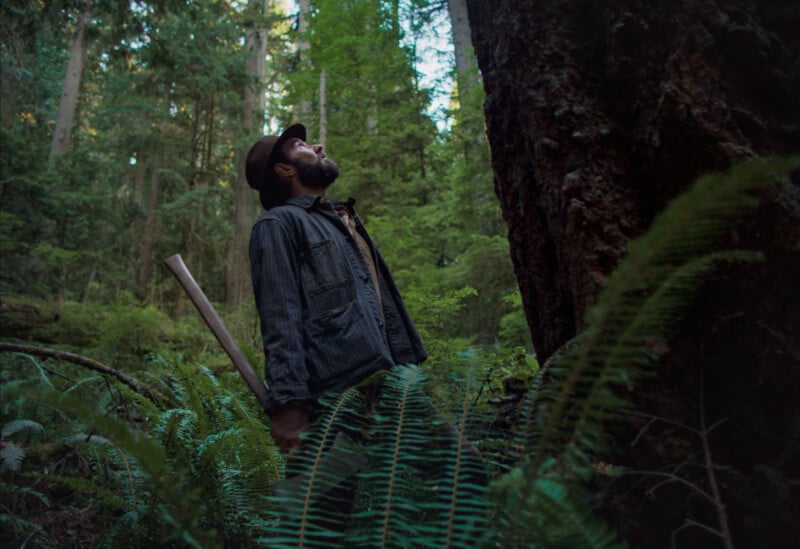 Train Dreams. Joel Edgerton as Robert Grainier in Train Dreams. | Credit: BBP Train Dreams. LLC. © 2025.
While the rest of the interview offers spectacular insight into the filmmaking process and how camera technology works alongside storytelling, it is worth noting how Bentley, Veloso, and the rest of the team treated nature as a character. Veloso notes that nature, particularly trees, is such an important part of the story that trees are, in a way, characters.
The crew routinely asked, “If this tree was a person, how would we shoot this scene?” This makes the decision to shoot in 3:2 even more important. Modern aspect ratios like 2.39:1 cut off so much of the top and bottom of the frame, which can be very powerful in most cases, but limits the impact of vertically anchored shots. When dealing with massive, tall trees, the shooting must be done in service of height rather than width.
“Train Dreams” is streaming now on Netflix and has already been nominated for Best Picture in the 2026 Critics’ Choice Awards. Adolpho Veloso has been nominated for Best Cinematography at the same awards, as well as the Independent Spirit Awards and the Astra Awards.
Image credits: Netflix, BBP Train Dreams. LLC. © 2025, unless otherwise noted.