
The reintroduction of elephant trophy hunting in Botswana in 2019, following a five-year moratorium, is likely severely depleting the number of large, older bulls, according to a recent report. This has put the country’s elephant population at risk and induced behavioral changes in the mammals, researchers say.
Since 2019, Botswana has permitted roughly 400 elephants to be hunted, about 0.3% of the country’s elephant population. Trophy hunters prefer tuskers, or elephants with large tusks, which they claim as “trophies.” These tend to be mature bulls, older than 30 years, the report by Elephants Without Borders (EWB), a Botswana-based nonprofit, notes. To find out how the quota and other factors affect bulls in elephant populations, the EWB researchers ran simulation models.
The models projected that as the hunting quota increases, the number of mature bulls in the population decreases. At the current level of 0.3%, trophy hunting can reduce the number of bulls older than 30 years by a quarter, and those older than 50 by half, when compared to populations where there’s no hunting.
Older bulls make up a tiny fraction of the elephant population, but play a big role in elephant society. These include breeding, teaching younger bulls social behavior, and retaining cultural memories that are essential for the survival of the herds.
Besides trophy hunting, elephant bulls also die from poaching, droughts, disease and human-elephant conflicts. The report notes that Botswana’s wildlife department doesn’t account for these other factors when setting its hunting quota.
Leon Kachelhoffer, deputy chair of the Botswana Wildlife Producers Association, which represents professional hunters, said the current annual elephant hunting quota is too high.
“Government won’t admit, but we need to reduce the annual hunting quota and allocate some bulls for population management,” Kachelhoffer told Mongabay by phone. “I have 10 bulls on quota, but I’m prepared to hunt only five because I need the other five for breeding. At its current offtake rate, bull hunting is unsustainable.”
Mark Chase, director of EWB, told Mongabay by phone that his team has observed the current level of hunting has also induced distinctive behavioral changes among elephants.
“Since the hunting reopened in 2019, elephants are more alert, more unpredictable, move at night to avoid people, and shift entirely out of areas where they are being targeted,” he said.
“Elephants are highly intelligent and quickly distinguish safe from unsafe landscapes,” he added. “As a result, fewer animals use hunting blocks now.”
This displacement creates what scientists call “landscapes of fear,” Chase said, “breaking up natural movement routes, weakening habitat connectivity and increasing the likelihood of human-elephant conflict.”
Speaking at the recent CITES summit on global wildlife trade, Wynter Molotsi, Botswana’s minister of wildlife and national parks said that “consumptive and nonconsumptive wildlife utilization continue to exist together” and that the country views them as complementary to both grow its economy and empower rural communities.
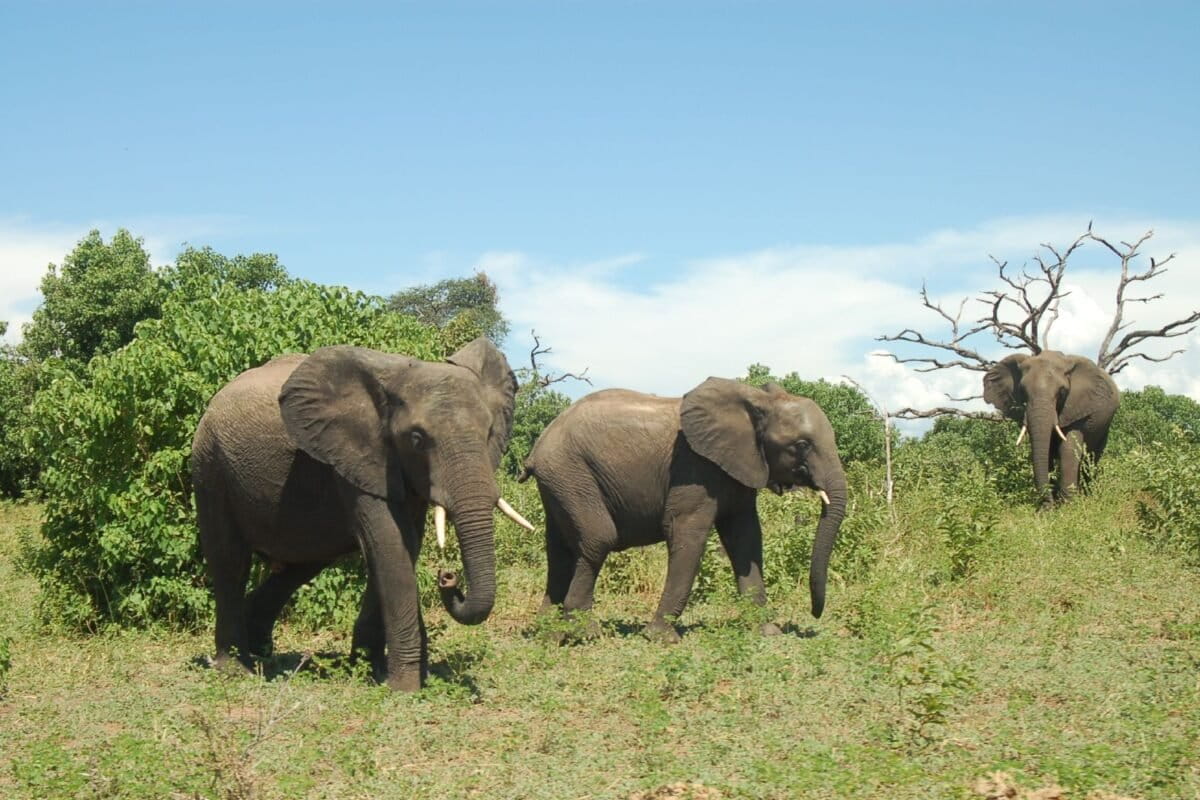
Banner image: Elephants in Botswana. Image by Joe Ross via Wikimedia Commons (CC BY-SA 2.0).
