
Bioluminescent creatures, such as glowworms, fireflies and oceanic algae that light up like underwater stars, produce their own light. This dazzling ability has evolved independently at least 100 times across the tree of life.
Within vertebrates, bioluminescence is unique to fish. Perhaps most famous is the anglerfish, a deep-sea fish that uses its bioluminescent lure to attract prey.
Are there any bioluminescent mammals?
While there are technically no bioluminescent mammals, there are some mammals that ‘glow in the dark’.
Rather than producing their own light, these mammals absorb shorter wavelength light and then emit it as longer wavelength light that is a different colour – usually reds, oranges and greens. This is called biofluorescence and it tends to be visible to the human eye under UV light.
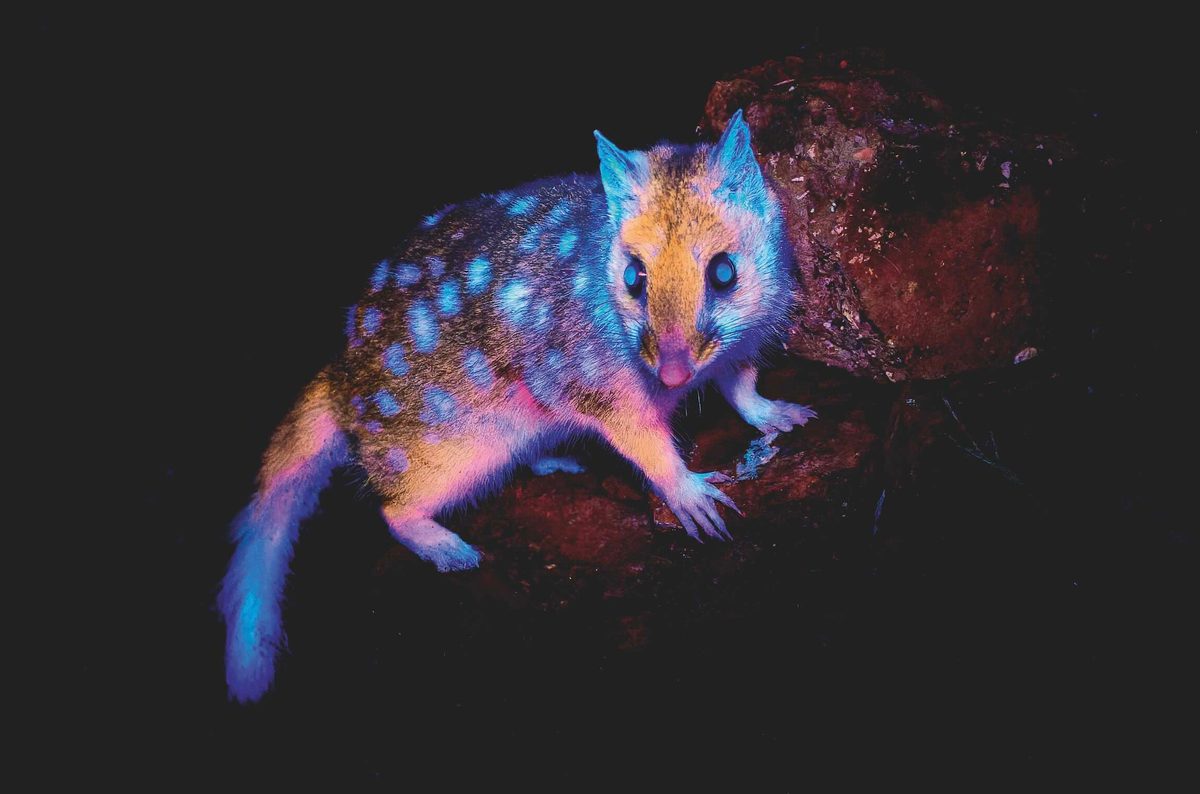
Biofluorescence is most common in marsupials. Opossums, platypuses, wombats and echidnas are all biofluorescent, as is the eastern quoll, whose glowing pelt recently made headlines. However, some non-marsupial mammals, such as flying squirrels, are also biofluorescent.
Why exactly biofluorescence has evolved in these species is unclear, but most are nocturnal or crepuscular (active at dawn and dusk), so living in the dark is thought to play a role.
Discover more amazing wildlife
Top image: Ben Alldridge captured the first image to show a wild marsupial glowing under UV light.