
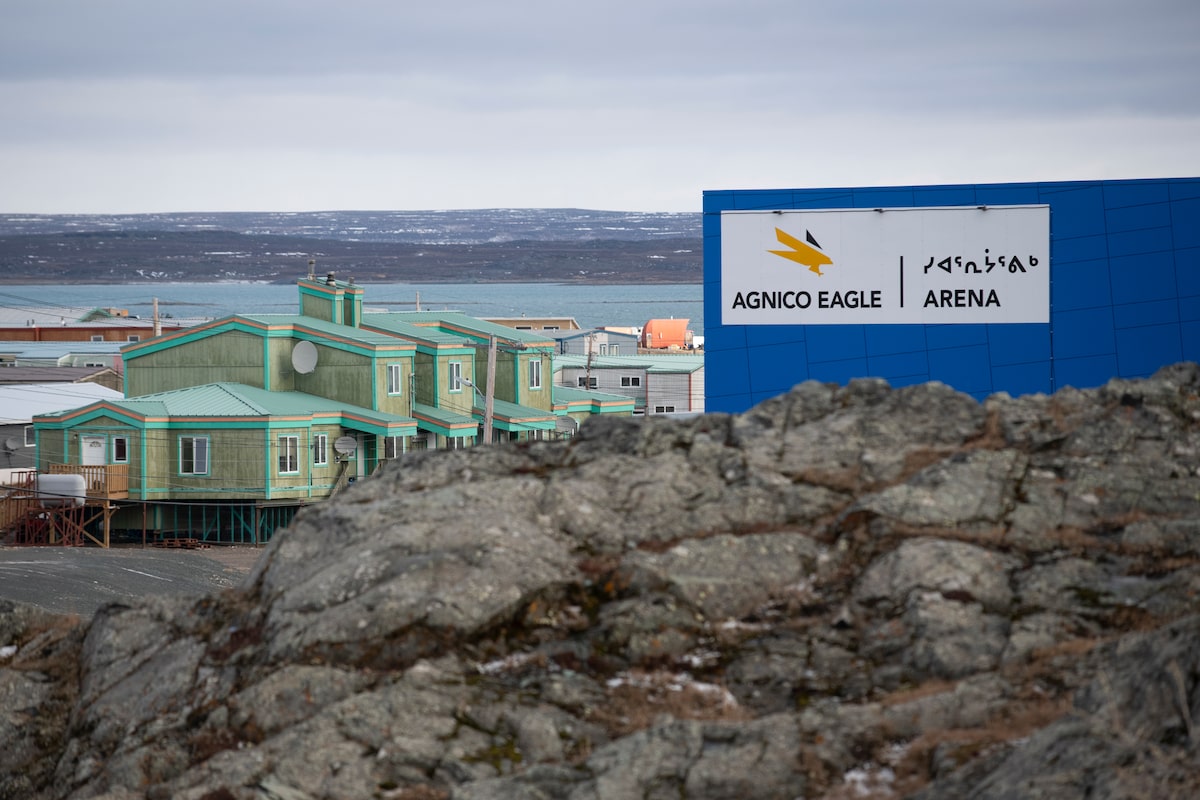
The Agnico Eagle Arena in Rankin Inlet, Nunavut, in October, 2022. Agnico Eagle’s Meliadine gold mine is located 25 kilometres north of the community.Fred Lum/The Globe and Mail
Agnico Eagle Mines Ltd. AEM-T has joined an Inuit-led effort to build a $3.2-billion electricity and broadband link to Nunavut from Manitoba, as it seeks a new source of clean power for its gold-mining operation in the northern territory.
Agnico Eagle, the world’s second-largest gold producer, and Nukik Corp. said on Monday that they had signed a memorandum of understanding to collaborate on the technical aspects of the proposed Kivalliq Hydro-Fibre Link and formalize commercial discussions.
The KHFL would extend 1,200 kilometres to central Nunavut from northern Manitoba, comprising high-voltage power lines with capacity for 150 megawatts and fibre-optic cables to bolster telecommunications.
Proposed by Inuit-owned Nukik, it is designed to serve Arviat, Whale Cove, Rankin Inlet, Chesterfield Inlet and Baker Lake, which are reliant on diesel-fuel power generators.
Agnico Eagle’s Meliadine gold mine is located 25 kilometres north of Rankin Inlet in the Kivalliq region. The underground and open-pit operation opened in 2019.
The companies had been working together informally to advance the project, and now the MOU makes it official as the backers prepare to seek consideration by Ottawa’s Major Projects Office.
Hydro-fibre line to Canada’s North is key to Arctic sovereignty, proponents say
Under the memorandum, the companies will study the long-term power needs of the mine, and how the KHFL could serve them, said Anne-Raphaëlle Audouin, chief executive officer of Nukik. That includes determining how long the mine will be in operation, and what that might mean for the territorial utility, Qulliq Energy Corp.
“It’s a lot of different technical inputs – the amount of power they need and for how long, the geology, the quality of the deposit, the exploration that’s under way at Meliadine,” Ms. Audouin said in an interview, “and seeing how we can serve those needs and still have enough, obviously, for the communities, which is critical.”
Currently, the companies expect that the initial power requirements for the communities and the mine will be about a third of the planned capacity, she said.
The proponents say the project is crucial for the resilience of Canada’s Arctic as Ottawa seeks to protect Canadian sovereignty in the region, which currently relies on fossil fuel imported from the U.S. for electricity and Elon Musk’s Starlink for some of its internet service.
“This effort represents a significant step toward improving quality of life and supporting sustainable development across the region,” Agnico CEO Ammar Al-Joundi said in a statement.
In April, Manitoba Premier Wab Kinew and then-Nunavut premier P.J. Akeeagok agreed to work together to further the project. Manitoba Hydro has set aside 50 megawatts of electricity in its planning process, and the two leaders called on Ottawa to “support capital funding for the KHFL and associated hydroelectric upgrades.”
Manitoba, Nunavut premiers hopeful for hydro project, seeking federal help
Rankin Inlet-based Nukik, which is owned by the Kivalliq Inuit Association and Sakku Investments Corp., expects to fund the project through a combination of federal programs, including the Canada Infrastructure Bank and the Indigenous Loan Guarantee. It is also seeking private-equity partners.
The MOU will help inform discussions Nukik will have with the federal government, including the CIB, which is leading the financial talks, Ms. Audouin said.
“It’s quite confusing still in terms of what the Major Projects Office might do or not,” she said. “So, what we can do as a project proponent is really to try and focus on what we can control because we don’t control the federal process.”
The KHFL meets all the criteria that the government set out for fast-track approvals of projects deemed to be in the national interest, she said. They include having a high likelihood of proceeding, offering economic benefits, strengthening security and resilience, advancing climate goals and furthering Indigenous interests.
Some of the projects accepted for fast-track approval decisions so far do not have all those characteristics, Ms. Audouin said.
“There’s an impression of an objective process that has been created for proponents, and you’re seeing projects that are at very different levels of development, projects that are also at very different levels of commercial advancement or technical advancements that make it on the list,” she said.
“So, we are confused with that process and we’re not the only ones.”