
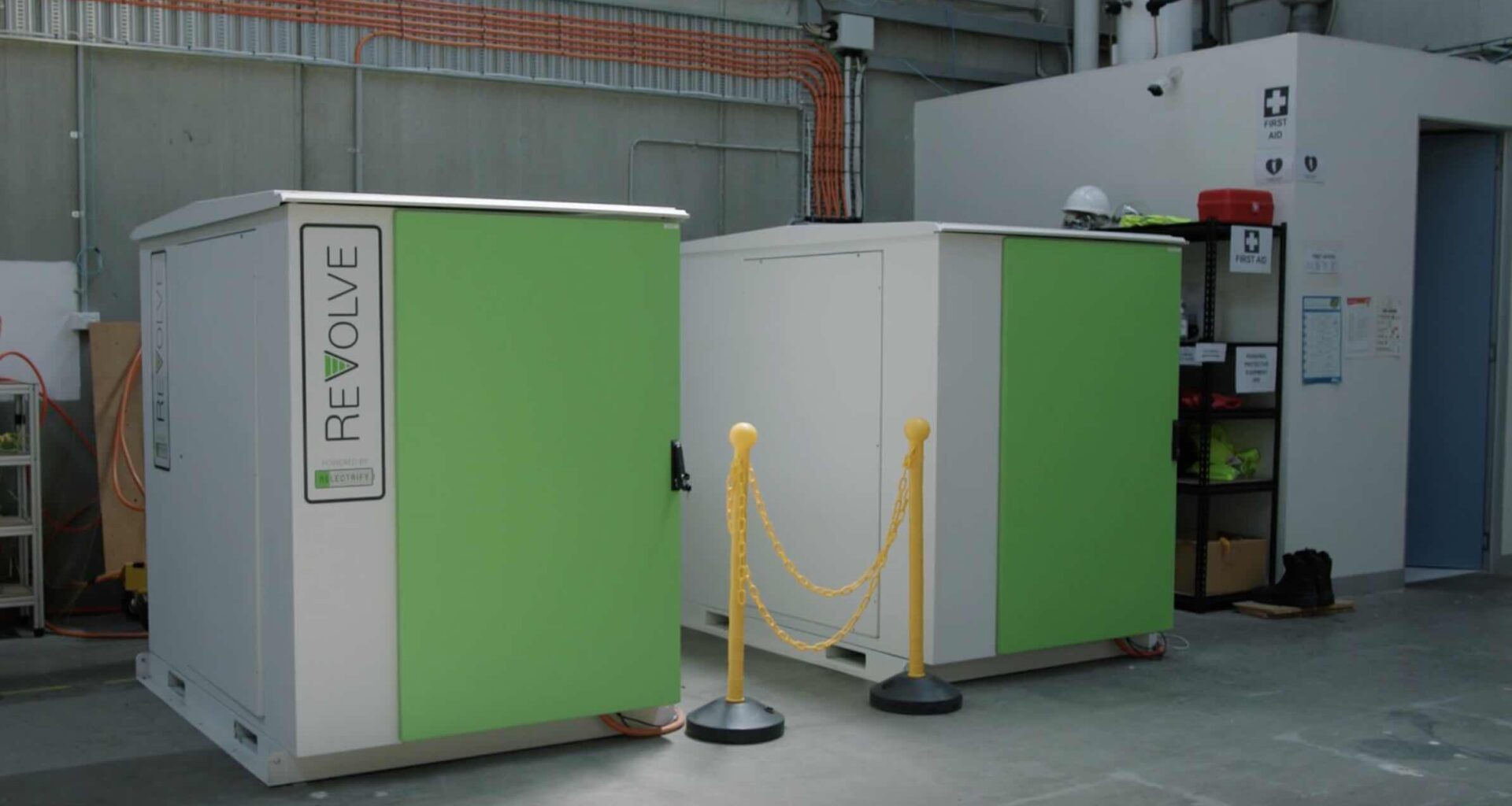
Nissan Australia says it has completed a solar and battery development at its casting plant in Victoria which is using recycled end-of-life Nissan Leaf batteries as the energy storage component.
The project was first announced in September, 2022, and will use nine repurposed Gen 1 Nissan Leaf batteries that will be charged by the adjacent solar array and provide power to the Dandenong plant, including for two EV chargers on site.
The project is estimated to reduce Nissan Casting Australia’s annual CO2 emissions by 259 tonnes and save 128 megawatts hours (MWh) of energy every year.
“This isn’t just a hugely exciting project, but an important step into the future for end-of-life EV batteries,” said Andrew Humberstone, managing director of Nissan Oceania.
“As an early pioneer of the electric vehicle both globally and locally, we can also demonstrate leadership in second-life battery initiatives.”
The project was carried out in partnership between Nissan and Melbourne-based battery technology company Relectrify.
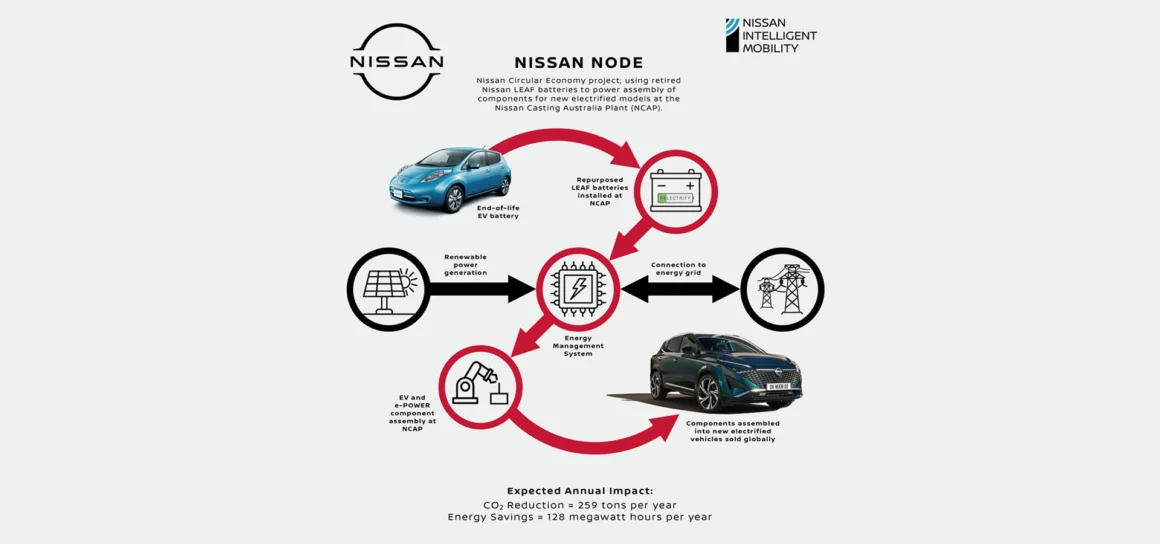
Relectrify has developed a battery management and inverter technology that dramatically extends of the life of batteries, reduces battery system costs, and enables the repurposing of high-quality end-of-life batteries from electric vehicles.
The ReVolve Battery Energy Storage System from Relectrify that has been installed at the NCAP is nevertheless a first-of-its kind product built from end-of-life LEAF batteries.
In addition to the local benefits, the addition of solar and battery storage at the NCAP will have an impact across Nissan’s entire value chain, with every Nissan Leaf EV sold globally to date containing components that were manufactured in Australia.
This will also be the case for the next generation of Nissan’s e-Power powertrain which is set to launch locally next year in the 2026 Nissan Qashqai.

Joshua S. Hill is a Melbourne-based journalist who has been writing about climate change, clean technology, and electric vehicles for over 15 years. He has been reporting on electric vehicles and clean technologies for Renew Economy and The Driven since 2012. His preferred mode of transport is his feet.