
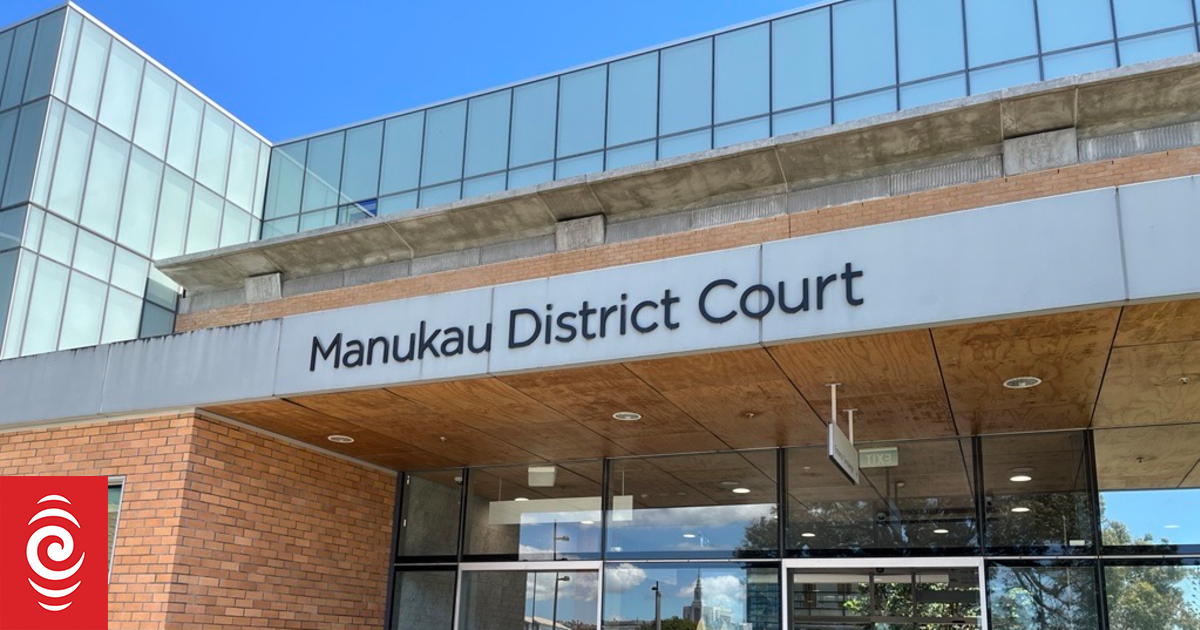
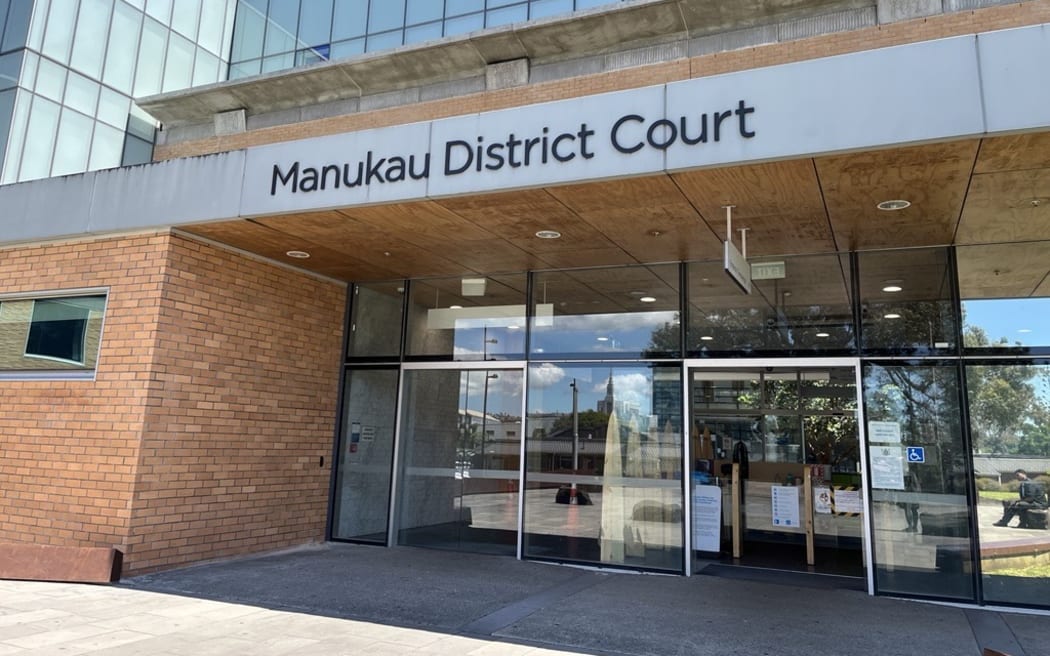
Photo: RNZ / Liu Chen
A district court judge has reserved his decision on whether a by-election is needed in an Auckland local body election.
The hearing followed a petition by former Ōtara-Papatoetoe Local Board member Lehopoaome Vi Hausia, who claimed to have received reports of voting papers being stolen from residents and submitted without their consent.
Dale Ofsoske, an independent electoral officer for Auckland, was the respondent to the petition.
At a preliminary hearing at Manukau District Court in November, Judge Richard McIlraith ordered five ballot boxes containing votes from the electorate to be transferred from Auckland District Court, where they were being kept, to Manukau for scrutineering in the presence of Judge McIlraith, legal counsel for Hausia and Ofsoske, as well as Ofsoske himself.
Seventy-nine voting papers were subsequently identified during examination as having been cast without the rightful voter’s knowledge.
At Monday’s hearing, legal counsel for Ofsoske acknowledged there had been irregularities in some of the ballots cast.
McIlraith said a ruling on the petition would be made before Christmas.
Lodged under the Local Electoral Act, the petition by the former deputy chair of the Ōtara-Papatoetoe Local Board who failed to be re-elected also alleged statistical anomalies in turnout, misuse of ballot papers, irregularities involving special votes, discrepancies in voter records, unlawful campaign activity and systemic weaknesses in the postal model.
Papatoetoe was the only Auckland electorate to record a significant rise in turnout in the latest local body election.
While other Auckland areas saw turnout drop, voting numbers in Papatoetoe increased by more than 7 percent.
None of the previous members were returned. All four seats went to first-time candidates from the Papatoetoe Ōtara Action Team.
The petition argued that the result was inconsistent with historic voting patterns and warranted examination.
Simon Mitchell, legal counsel for Hausia, highlighted the sharp rise in the number of votes in Papatoetoe.
“We say there are 3000 new votes in the Papatoetoe subdivision,” he said on Monday.
“And that is the only subdivision or local board area in the entire Auckland city that has had an increase in voting. Every other local board had a decrease in voting.”
Mitchell argued that the irregularities and unexplained surge in voting in Papatoetoe could only be explained by mass voter fraud.
Judge McIlraith acknowledged the seriousness of the allegations but asked for evidence supporting claims of thousands of unlawful ballots.
Mitchell said one police case had been made regarding theft and argued that a surge in votes was not the consequence of a “sudden interest in democracy”.
He also noted that, had the winning candidates engaged in the process, conclusions might have been drawn from their perspectives about the sudden increase in voting in the area.
No one from the Papatoetoe Ōtara Action Team, which won all four seats in the board’s Papatoetoe subdivision, was present at Monday’s hearing.
Mitchell said the irregularities could undermine public confidence in the electoral system.
Judge McIlraith said that if Mitchell’s allegations were proven, it would confirm “everyone’s worst nightmare regarding the efficacy of the [postal] system had come true”.
David Collins, representing Ofsoske, argued that case law did not automatically justify overturning the election.
He said Hausia lost by roughly 1200 votes, and alleged fraud might not have materially affected the result, according to the law.
Collins also argued there could be several reasons why constituents did not receive their ballot papers that had nothing to do with mass fraud.
Residents could have changed addresses, not have been enrolled in the first place, or the ballot papers could have been collected by someone else.
The hearing concluded on Tuesday.
Andrew Geddis, a law professor at the University of Otago, said the situation was “certainly very worrying” because it called into question the trustworthiness of the postal voting system used in local elections.
“[The petition] highlights some vulnerabilities in that practice and, ultimately, it does raise the question as to the methods that were used to determine the results in the election in question and whether everything that was done in this election was lawful,” he said.
Geddis said such petitions were rare in local elections, as petitioners must convince a judge of potential issues and cover their own legal costs.
Under the Local Electoral Act, a by-election could be called if enough unlawful votes were proven to have changed the outcome.
“The problem here is that the victors of the election won by about 1200 votes,” he said. “So, you would have to prove that there was a very widespread pattern of unlawful voting.”
Geddis said it was unclear whether a judge, if unable to prove whether enough unlawful votes could have changed the outcome, would let the result stand or could void the election due to public distrust in the process.
“I would hope it’s an option that’s available because it would be pretty bad, I think, to have a judicial inquiry that finds, yes, there were widespread irregularities, but the judge just has to let the results stand,” he said. “I think that would be a bad outcome.”
Geddis said by-elections that stemmed from election petitions were rare, and that all candidates were free to run again.
He also said the result of an electoral petition was final.
The Ōtara-Papatoetoe Local Board has two subdivisions, with the Ōtara having three seats and Papatoetoe four.
None of the previous local board members of the Papatoetoe subdivision were re-elected.
Separately, police have confirmed they are investigating 16 complaints of electoral fraud that had been forwarded to them from Election Services.
Last month, RNZ received a complaint alleging “electoral malpractice” in relation to the Ōtara-Papatoetoe Local Board.
In addition to voting paper theft, it claimed voters were being told how to vote inside polling booths and in public places at a Sikh temple in Papatoetoe.
Speaking to Local Democracy Reporting earlier, Papatoetoe-Ōtara Action Team spokesperson Kunal Bhalla rejected the allegations, describing them as “baseless and politically motivated”.