
Transactions described in the police summary of facts and a determination of the Institute of Chartered Accountants Disciplinary Tribunal included a large amount of cash withdrawals, ATM withdrawals, purchases at petrol stations, flights, accommodations, such as Airbnb bookings, groceries, and Uber Eats, Judge Jelas said.
“The tribunal decision states … ‘additionally, there was an enormous amount of money spent on Uber Eats, restaurants, cabs, groceries, and alcohol’.
“In order to conceal these purchases, Ms Fifita recorded these purchases in the company accounts as client-related expenses.”
Kāhui Tū Kaha told the court the organisation worked to support, in particular with housing and mental health, some of the community’s most vulnerable, including providing services to more than 5700 people in the 2023-24 financial year.
The offending damaged their reputation and would cause ongoing issues with insurance, the chief executive said in a report before sentencing.
The report also recorded their “deep feelings of a breach of the trust” they placed in Fifita, Judge Jelas said.
“They had provided considerable career development and support during her time with Kāhui Tū Kaha, which included external mentoring.”
By 2024 Fifita was having increasingly frequent days off work, with colleagues “expressing concern for her and her family’s welfare”.
“However, their investigations have identified some of these leave days correlated with her travel to other cities and Australia … [with] expenses recorded by Airbnb and other tourist activities where the credit card was used.”
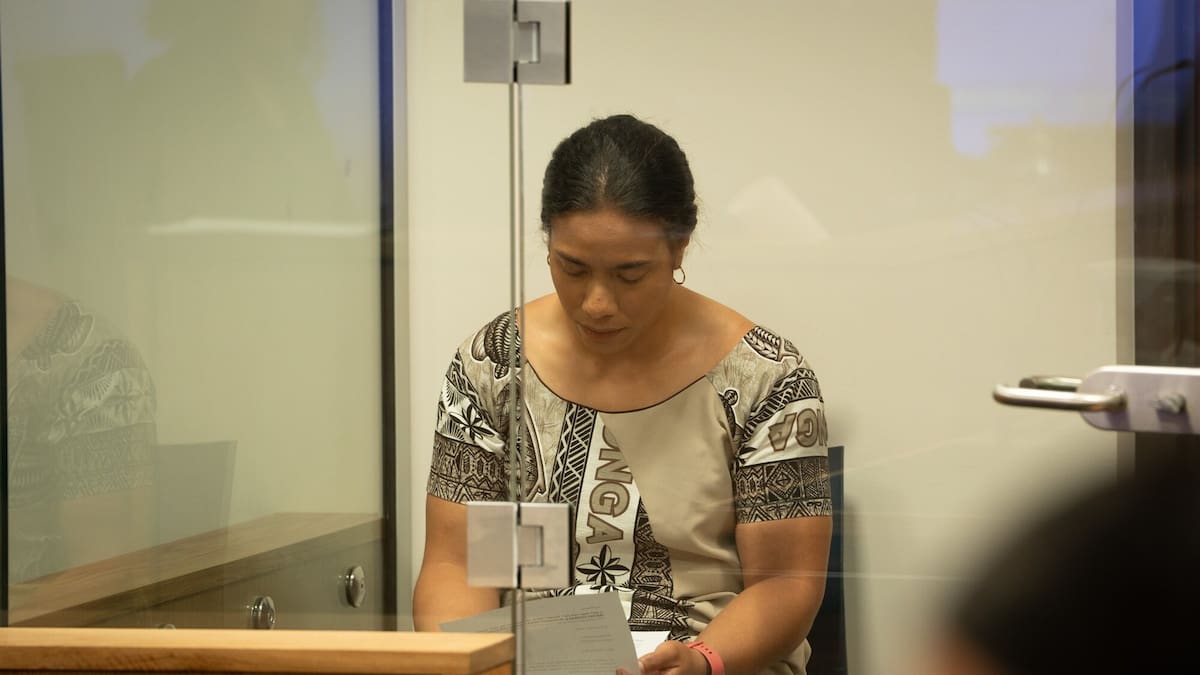
Ilaisaane Mosiana Fifita says her fraudulent spending had started small, before getting out of hand. Photo / Cameron Pitney
When spoken to by police, the Auckland-based wife and mother acknowledged her wrongdoing and accepted there were no excuses for it, later pleading guilty at her first court appearance and writing a letter of apology to the organisation, Judge Jelas said.
She had also paid more than $161,000 to Kāhui Tū Kaha, which included covering an insurance excess of $11,500, $20,000 toward emotional harm and agreed reparation.
This was funded by the sale of the family home.
Her unauthorised spending had started small, before getting out of hand, Fifita told the pre-sentence report writer.
Using a starting point of three-and-a-half years’ jail based on aggravating aspects of Fifita’s actions, including the breach of trust, ongoing “systemic” nature of the offending and the impact on her former employer’s reputation, Judge Jelas reduced that by 40%.
This was based on her early acceptance of responsibility, remorse, offer to attend a restorative justice meeting, efforts at understanding her offending and selling the family home to pay reparations and emotional harm.
That left a sentence of two years’ and one month jail, just over the threshold for considering home detention, Judge Jelas said.
“But the sentencing exercise is not a complete mathematical exercise. Judges have discretion, and I consider the least restrictive outcome should be one of home detention.”
The consequence of Fifita’s offending on her and her family would be far-reaching, particularly given the findings of the Institute of Chartered Accountants disciplinary report, Judge Jelas said.
“Your ability to hold a position utilising your skills and expertise to date and in the future are much eroded.”
But Fifita was also clearly loved by her community and had “many positive qualities”, Judge Jelas said.
Fifita was sentenced to 12 months’ home detention, and given six months’ of conditions to follow after the 12-month sentence is complete.
No reparation or emotional harm payments were ordered as “[these have] already been paid”, Judge Jelas said.