
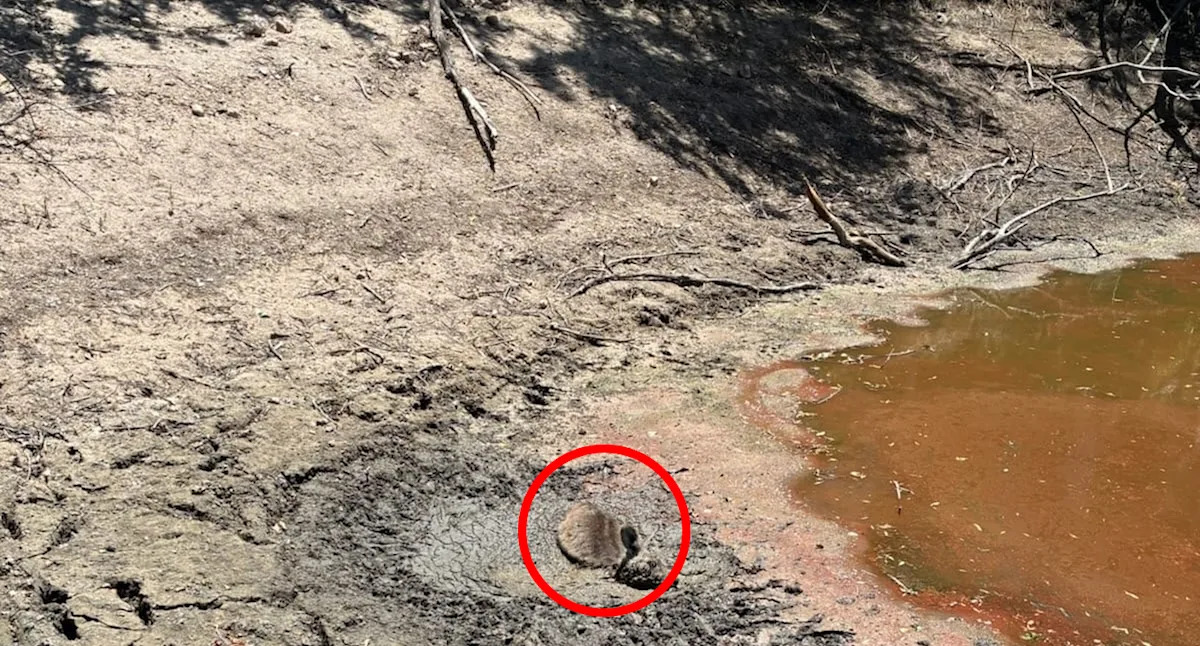
At the edge of a new housing development, rescuers have responded to a sad discovery buried in thick mud. Up to its neck and shivering at the edge of a dam, they found a kangaroo believed to be displaced by the construction at the NSW site.
The team from Possumwood, a specialist wildlife trauma centre, believes the animal was likely seeking refuge in an area that had abundant water until recently.
Injuries later discovered on its body suggest it had been chased by dogs, a common occurrence when farmland becomes urbanised, and families move into the area.
“The first thing kangaroos do when they’re threatened like that is jump into a farm dam, knowing the dogs won’t attack them whilst they’re in relatively deep water,” its founder Professor Steve Garlick said.
“Unfortunately, in this particular case, the dam was virtually empty, with only a tiny puddle remaining in it.”
Incident sparks warning about future of kangaroos on urban fringe
The incident occurred at Queanbeyan, near the ACT border, where there’s been a steady expansion of housing developments.
Professor Garlick warns the kangaroo’s predicament highlights the growing pressure facing native animals considered by authorities to be abundant.
Because they don’t receive the same protections as species threatened with extinction, their habitat is rapidly being bulldozed and fragmented.
Professor Garlick said the expansion of the urban fringe means kangaroos are more likely to encounter dogs, people and vehicles.
“People seem to think there’s a plague of kangaroos — well, not really,” he said.
“Kangaroos are just being crammed into smaller places, so it looks like there’s a lot.”
Have you made a similar discovery? Contact newsroomau@yahoonews.com
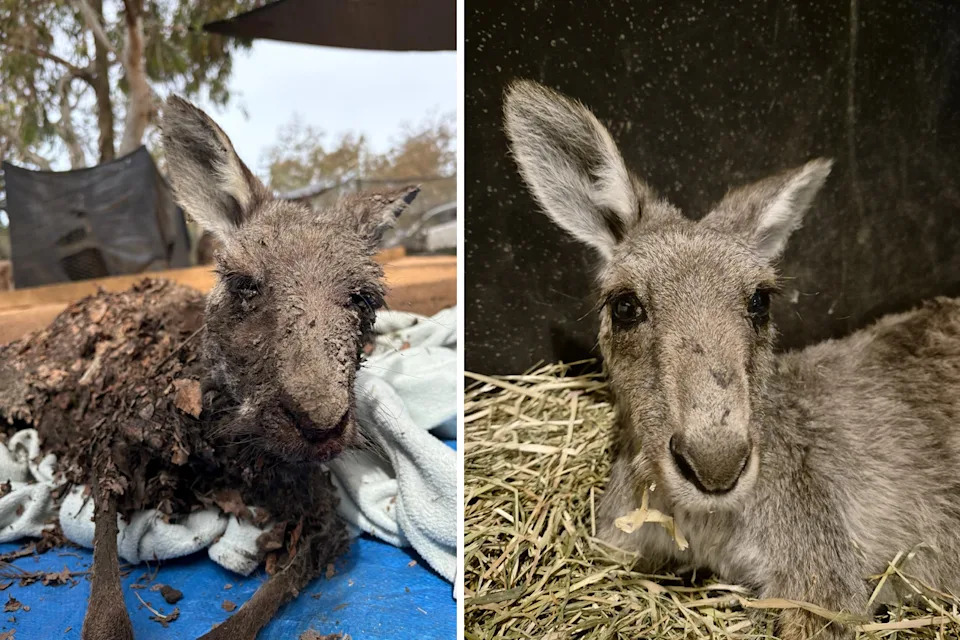
The kangaroo is now recovering after being taken into care. Marks are visible on the animal’s face and they were likely inflicted by a dog. Source: Possumwood
As urban development takes over grasslands, kangaroos become locally extinct in areas where they were once abundant.
“Dogs proliferate, and people don’t want kangaroos in their backyards, and it becomes very difficult for kangaroos to exist,” Professor Garlick said.
“A lot of people who move into these places come with suburban values and tend not to always relate well to Australia’s wildlife.
“Since they’ve bought their property, they often believe that the land is their own, and kangaroos and other animals that have lived in these areas find themselves with a lot more stressors in their lives.”
New challenge facing rehabilitated kangaroo
When dogs chase kangaroos, they can develop an often fatal stress-induced condition called myopathy.
After the kangaroo was taken from the dam, it was immediately sedated to reduce its risk of death.
When it came into care, the Possumwood team worked to remove the mud and warm it up, because its temperature was 28 degrees, rather than 36.
It’s now been in care for over a week and is recovering well, but releasing it somewhere safe will be a challenge, as available habitat shrinks.
Over his years working with wildlife, Prof Garlick has watched as the face of Australia has changed.
“There are areas where there used to be kangaroos that you no longer see them, but it’s the same with other wildlife too,” he said.
“Birds, possums, wombats and echidnas, you just don’t find them in those places.”
Love Australia’s weird and wonderful environment? 🐊🦘😳 Get our new newsletter showcasing the week’s best stories.
