

A remarkable discovery in Colombia has unveiled a previously hidden creature, long thought to be a relative of a more common species. This elusive mammal, known for its long, sharp spines, was recently identified through a study published in the Journal of Mammalogy. The research offers a fascinating glimpse into the rich, yet understudied biodiversity of Colombia, particularly in its remote and lesser-explored forests.
Unveiling Coendou vossi: A Hidden Gem of Colombia’s Biodiversity
Deep in the forests of central Colombia, a creature with long, sharp spines has been hiding in plain sight for decades. Known to locals but largely ignored by scientists, Coendou vossi is a species of porcupine that was long misidentified as a member of the more common Quichua porcupine. However, thanks to years of meticulous research, this unique animal has finally been recognized as a distinct species, shedding new light on Colombia’s rich, yet understudied, biodiversity.
The journey to this discovery, published the Journal of Mammalogy, in began with a close examination of museum specimens, some dating back to the 19th century. Researchers noticed that certain porcupines from a specific region in Colombia showed subtle differences from their more widespread counterparts. These differences prompted the team, led by biologist Héctor E. Ramírez-Chaves, to further investigate this population, which was isolated in the humid and dry forests along the Magdalena River valley and the Caribbean foothills of Colombia.
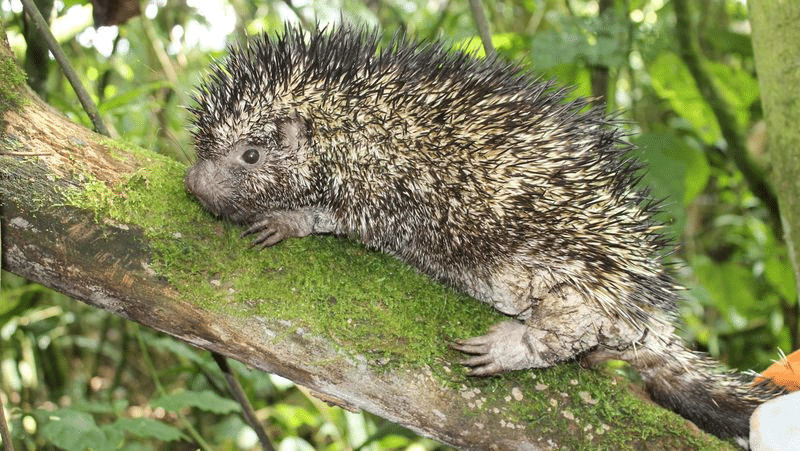 Credit: Omar Daniel Leon Alvarado (Rutgers, The State University of New Jersey Newark, USA)
The Role of Museum Collections and Local Knowledge
The breakthrough in recognizing Coendou vossi as a separate species would not have been possible without the collaboration of several sources of information. Old museum specimens, blurry photos taken by local farmers, and observations from researchers who combed through the dense Colombian forests all played a critical role.
“For me, it is interesting that there is a huge part of the biodiversity of Colombia that is understudied,” said Héctor E. Ramírez-Chaves, reflecting on how much remains to be discovered in the country’s lesser-explored regions.
The team utilized historical data and combined it with field research, including new specimens collected from the forests. Their search led them to realize that Coendou vossi had unique features, including a long, prehensile tail completely covered in quills—something not seen in its relatives. The animal’s nocturnal habits, along with its fruit-based diet, further contributed to the mystery surrounding its existence. In the wild, these creatures rest in tree cavities or small caves during the day, only emerging at night to forage.
Genetic Evidence Confirms the Discovery
After the initial field studies, genetic analysis provided the final proof that Coendou vossi was indeed a new species. Researchers sequenced mitochondrial DNA, a genetic barcode that allowed them to measure the differences between the Magdalena porcupine and its relatives. These genetic findings showed a significant divergence of around 3 percent in the mitochondrial gene sequence, a difference comparable to other recognized species within the Coendou genus.
Additionally, ecological niche modeling, a computer-based method that predicts suitable habitats for species, confirmed that Coendou vossi was restricted to the inter-Andean forests of Colombia’s Magdalena valley and Caribbean region. This is an area where large-scale agriculture and industrial development are rapidly replacing natural forests, making the discovery of this species all the more crucial for conservation efforts.
The Conservation Urgency of Coendou vossi
The discovery of Coendou vossi is not just an academic achievement; it is a call to action for conservation. The forests of Colombia’s Magdalena River valley, where this new porcupine is found, are under severe threat. Much of the original tropical dry forest has been cleared for agriculture, particularly oil palm plantations and cattle ranching. The fragmented remaining forests are crucial habitats for a wide variety of species, but they are rapidly diminishing.
In this context, the discovery of Coendou vossi highlights the fragility of Colombia’s ecosystems. As conservationists point out, preserving these remaining forests is not just important for the survival of this new porcupine species but also for the myriad other plants and animals that call the area home.
Tropical dry forests are considered one of the most endangered ecosystems in the world, and the Middle Magdalena Valley, where Coendou vossi resides, is considered a biodiversity hotspot. Its ecological importance cannot be overstated, as it plays a key role in sustaining regional ecosystems and providing critical services such as carbon storage and water regulation.