
 Leigh Day

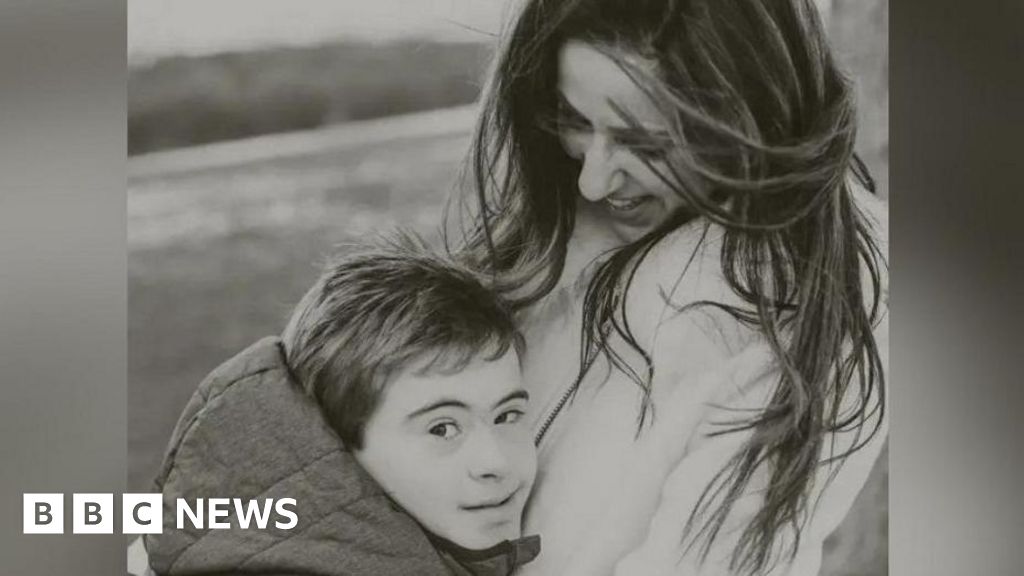
Antonio, pictured with his mother Milena, died in October 2021
A coroner has raised concerns about a lack of national guidelines for the use of the sedative Propofol.
Antonio Galisi-Swallow, 15, died at Leeds General Infirmary (LGI) in October 2021 after being sedated for six days via a constant infusion of the drug.
An inquest ruled he had died from the effects of continuous sedation by Propofol and heard Leeds Teaching Hospitals NHS Trust had since devised fresh guidance, which one expert witness said could have prevented Antonio’s death.
In a report sent to the National Institute for Health and Care Excellence (NICE), coroner Oliver Longstaff said he was concerned there was a risk of further deaths while there was no national guidance.
The inquest heard Antonio had Downs Syndrome, attention deficit hyperactivity disorder and autism, and was also born with Tetralogy of Fallot, a congenital heart defect.
Mr Longstaff was told the teenager had been admitted to LGI to undergo heart surgery on 30 September after which he was sedated “by a constant Propofol infusion and occasional bolus doses”.
From 4 October, Antonio developed a “persistent and increasing fever” and he was noted to have a Stage 1 acute kidney injury on 5 October.
On 6 October, concern was raised that his deterioration might be due to Propofol-Related Infusion Syndrome and his Propofol was stopped and replaced with fentanyl.
He died the following day after he went into cardiac arrest.
Recording a narrative conclusion, Mr Longstaff said Antonio had died “from the effects of receiving a continuous Propofol infusion of 5,634 milligrams plus additional bolus doses over a period of 121 hours, while in post-operative sedation on the Paediatric Intensive Care Unit (PICU)”.
The inquest heard the trust had since devised and implemented new guidelines around the use of Propofol for “short term sedation in children and young people on PICU”.
Mr Longstaff’s report said a consultant paediatric intensivist who appeared at the inquest “wholeheartedly endorsed” the guidance and said that “had its provisions been in place in October 2021, it is likely that Antonio would not have died when he did”.
In a statement issued after the inquest, Antonio’s mother Milena Galisi said her son had gone into hospital as a “healthy, happy boy for a planned procedure that was supposed to make his life better”.
“Instead, I watched him suffer for days as he became more and more unwell, and my concerns were not listened to,” she said.
“No family should ever have to see their child die in such a traumatic and avoidable way.”
Beatrice Morgan, a human rights solicitor at Leigh Day, who represented Antonio’s family, said his death had been “preventable” and he “should have recovered” after the surgery.
“Instead, he was kept on a drug that his clinicians knew carried serious risks when used for prolonged sedation,” she said.
“Rather than consider alternative sedatives, Propofol was continued for six days. The expert evidence is unequivocal.
“Antonio died from Propofol Infusion Syndrome, and his death was preventable.”
Dr Magnus Harrison, chief medical officer at Leeds Teaching Hospitals NHS Trust, said he recognised the trust’s new guidance would be “little comfort for Antonio’s family”, adding they were “sorry for the pain they have endured”.
“We are deeply sorry for the tragic loss of Antonio. Our medical teams did everything they could to save his life and our condolences and thoughts are with his family at this very difficult time,” he said.
A NICE spokesperson said they had received the report and would “consider the issues raised and respond to the coroner directly”.
“We follow an established process when making sure our published guidelines are current and accurate and take a proactive approach to responding to events that may impact on our recommendations,” they added.