

LOS ANGELES, Dec 10 — Time has named K-Pop Demon Hunters its 2025 Breakthrough of the Year, a fitting crown for an animated feature that shattered Netflix records, redefined success in the streaming era, and captured the global zeitgeist in a whirlwind of catchy pop anthems and a powerful message of self-acceptance.
From sold-out sing-along screenings in Brooklyn to its soundtrack dominating the Billboard charts, the 95-minute film about a trio of K-pop stars who secretly fight soul-eating demons has become a true cultural phenomenon, making its journey from a risky original concept to a global sensation all the more remarkable.
By all conventional Hollywood wisdom, K-Pop Demon Hunters should have failed, Time said in its feature.
It was an original story in an era dominated by familiar IP. It was a non-franchise animated film at a moment when the genre was flagging at the box office. And it leaned heavily on specific Korean cultural references without the safety net of bankable Hollywood stars.
Yet, its success has been staggering. The film surpassed 325 million views in its first three months, hitting the top 10 in 93 countries. Its soundtrack reached No. 1 on the Billboard 200, and its breakout hit, Golden, spent 17 weeks atop the Global 200 chart.
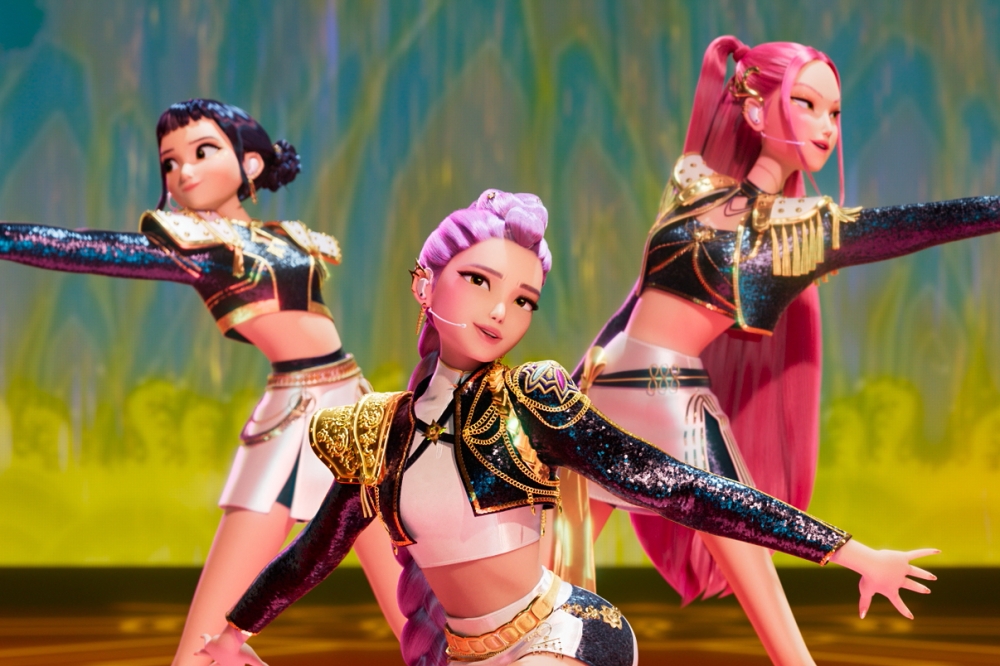
‘Kpop Demon Hunters’ features Huntrix, a girl group who fights against Saja Boys, a rival boy group made of demons. — Picture from Facebook/Sony Pictures Animation
Genesis of a global hit
The film began as a deeply personal project for director Maggie Kang, an animation veteran and self-professed “OG K-pop fan.”
The initial concept was rooted in the demons of Korean folklore, the jeoseung saja or Grim Reapers, who became the film’s antagonists: the Saja Boys, a rival boy band intent on stealing souls.
The project evolved from a darker, smaller-budget film into a bigger, more ambitious feature after Sony Pictures Animation came on board, before the rights were ultimately sold to Netflix in 2021.
The film’s breakthrough success can be attributed to three key ingredients.
The first is its authentic music, created by a who’s who of the K-pop world, including producers for Blackpink and BTS.
The soundtrack broke records, with one song surpassing a Destiny’s Child chart record and another becoming the highest-charting K-pop boy band song in Spotify US history.
The second is its perfect timing, riding the explosive global growth of the “Korean Wave,” or hallyu.
With K-pop groups collaborating with Western stars and K-dramas dominating streaming, the world was primed for a film that celebrated Korean culture.
Finally, and most importantly, is its powerful message of self-acceptance.
“It’s a very perfectionist country,” said Ejae, who provides the singing voice for the protagonist, Rumi. “This movie says it’s OK to not be perfect because not perfect is absolutely beautiful.” This theme has resonated deeply with audiences worldwide.
The film’s impact is set to continue. A sequel is reportedly slated for 2029, and the movie has already landed three Grammy and three Golden Globe nominations. But its biggest “breakthrough” may be its influence on a risk-averse Hollywood.
“It shows that new voices are welcome,” said Netflix film chairman Dan Lin.