
“It’s very challenging logistically to respond,” said Ade Soekadis, executive director of aid group Mercy Corps Indonesia.
“The extent of the damage and the size of the affected area is really huge.”
The group is hoping to send hygiene equipment and water from Jakarta and locally.
He said reports of food and water shortages were already “very concerning” and the situation will be “more problematic as time goes by”.
‘Like an earthquake’
At an evacuation centre in Pandan, 52-year-old Reinaro Waruwu said he was “disappointed” in the government’s immediate response and the slow arrival of aid.
“Some waited a day and night before receiving help, so they couldn’t be saved,” he said, surrounded by evacuees sitting on mats on the floor in the hall-turned-shelter.
“I am frustrated, it doesn’t need to be said twice,” he said.
He described the floodwaters and landslides as unprecedented.
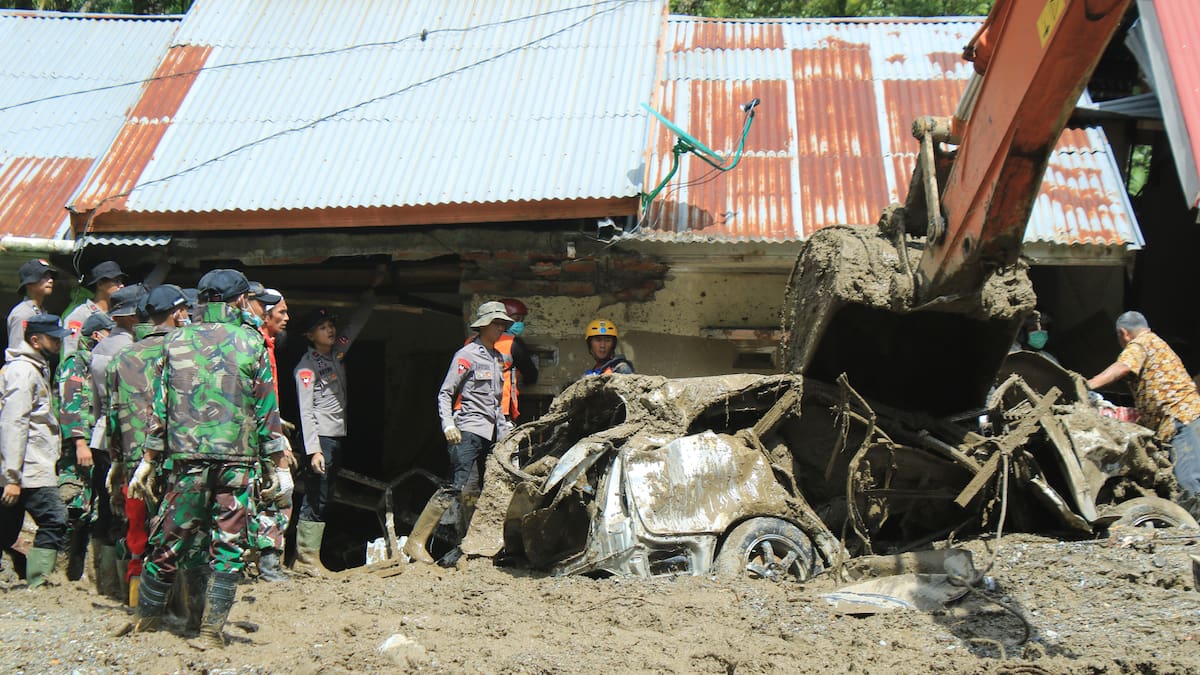
Indonesian rescuers search for missing people after flash floods in Padang Panjang. Photo / Getty Images
“It came like an earthquake … I thought ‘Well, if I am going to die, then so be it’,” he said.
Traumatised, he could not even eat on arrival and food had only been patchily available, though vegetables arriving on Tuesday offered a “semblance of hope”, he said.
Nearby, Hamida Telaumbaunua, 37, described watching her entire kitchen swept away by floodwaters.
“My heart … this was the first time I experienced such a flood,” she said.
Her home was lost entirely, with everything but the few possessions she took when she left.
“It’s hard to think about what lies ahead. Maybe as long as we’re still here, it’s okay, but later … I don’t know what will happen.”
In North Aceh, 30-year-old M. Atar said some areas were only just becoming accessible as roads were cleared.
“We are in dire need of clean water. Very much in need,” he said.
The weather system that hit Indonesia also brought heavy rains to Thailand, killing at least 267 people, authorities said on Wednesday, and Malaysia, where two people were killed.
Sri Lanka ‘open’ for tourists
Though floods are common in Asia during monsoon season, climate change is making heavy rain events more frequent because a warmer atmosphere holds more moisture.
Warmer oceans can also turbocharge storm systems.
A separate weather system, Cyclone Ditwah, brought torrential rain and deadly floods and landslides to much of Sri Lanka last week.
At least 474 people were killed and authorities have estimated the disaster’s cost up to US$7 billion ($12b).
Another 356 people are unaccounted for, including in some of the hardest-hit regions that remain largely inaccessible.
Sri Lanka reported 474 deaths, with damages estimated up to US$7 billion, while offering financial aid to affected families. Photo / Getty Images
Officials said laws that allowed a person to be declared dead only after being missing for six months could be shortened to expedite the issuance of death certificates.
The government has said it will offer 25,000 rupees (US$83) to families to help clean their homes. Those who lost homes will receive up to US$8000.
On the outskirts of Colombo, R.M.V. Lalith was beginning the clean up at his two-storey home.
“We managed to salvage some furniture by moving it upstairs, but the kitchen is a mess,” he said, as a relative helped push mud out of the living room.
Despite the disaster, the tourism-reliant country welcomed a luxury cruise liner to Colombo port on Tuesday, authorities said.
The arrival sends “a clear message to the world: Sri Lanka is safe, open and ready to embrace visitors once again”, the country’s tourist board said.
– Agence France-Presse