
Former cinematographer David Bross has released DIGILOG, a free iPhone camera app that reconstructs images from raw sensor data using a film-inspired color science pipeline. The app offers a Kodak 500T-inspired look and ARRI Rec.709 profile, with open-gate recording capabilities in ProRes 422 or H.264 starting from the iPhone SE 3rd generation.
DIGILOG positions itself not as a filter or LUT overlay but as a fundamental reimagining of the iPhone’s image processing chain. Rather than applying a look to Apple’s processed output, the app intercepts the linear scene signal immediately after debayering and constructs the entire image from that point forward. This approach, according to David Bross, translates his DaVinci Resolve color grading workflow directly into the iOS camera environment to produce ready-to-use images that require minimal post-production intervention.
The developer’s background in cinematography and color science led him to create DCTLs for Resolve before transitioning into furniture design and woodworking. Despite leaving film sets, his ambition to build custom camera systems persisted, with DIGILOG serving as the initial step toward that larger goal.
Building images from the ground up
DIGILOG’s technical approach distinguishes it from typical camera apps that apply effects to finished images. The app takes control after Apple’s native debayering process, implementing custom de-linearization, gamma curves, and color adjustments before final output. This method allows the app to bypass certain iOS restrictions, enabling open-gate recording formats that Apple’s native camera typically reserves for higher-end devices.
The app currently supports ProRes 422 recording in open-gate mode across compatible devices, with H.264 options available for older hardware. This democratization of format access means users with iPhone SE 3rd generation devices can capture full-sensor footage in professional codecs without artificial limitations based on device tier.
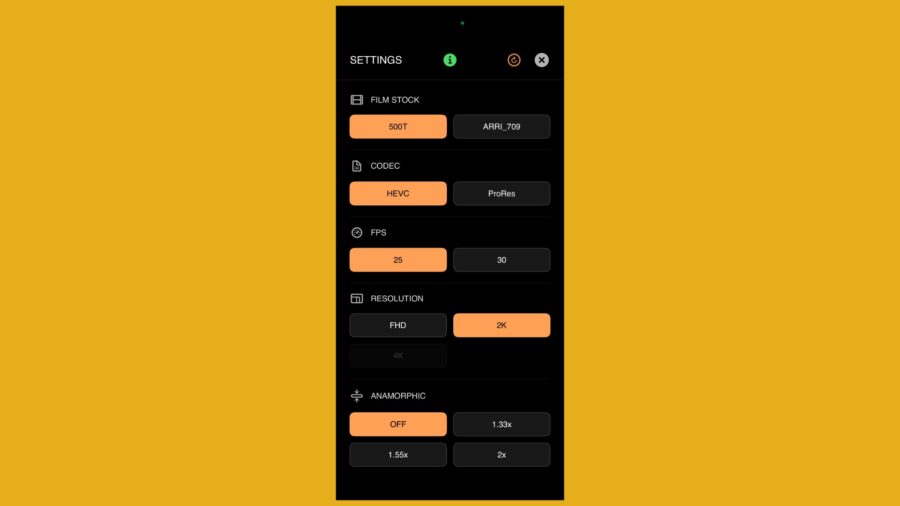 DIGILOG App simple settings interface. Credit: CineDTwo distinct image profiles
The primary profile recreates the characteristics of Kodak 500T film stock, with emphasis on softening highlight transitions and reducing what David describes as the “digital feel” of standard iPhone footage. The color science and tonal response aim to replicate the organic rolloff and color separation associated with traditional negative film.
A secondary ARRI Rec.709 profile provides a neutral, broadcast-standard starting point for users who prefer cleaner images with wider grading latitude. This dual-profile approach serves both filmmakers seeking a finished look straight from the camera and those who want maximum flexibility in post-production.
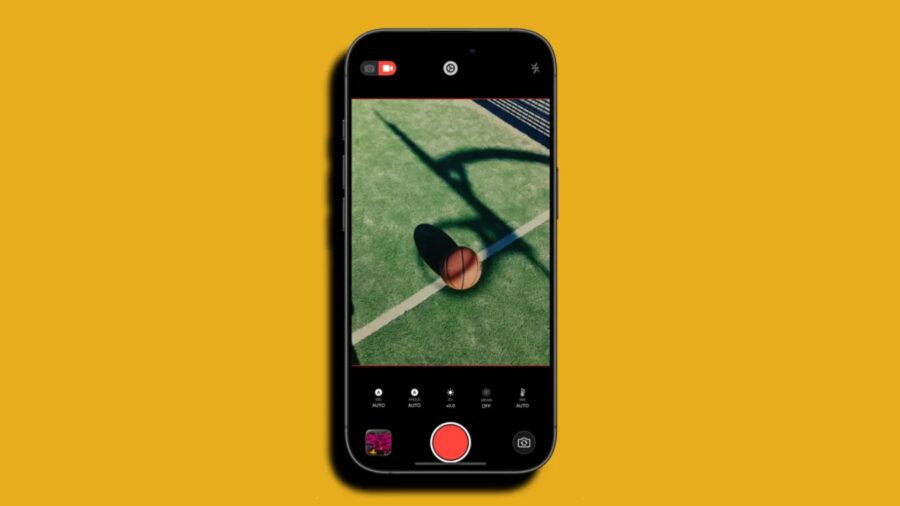 4×3 Open-Gate recording. Credit: DIGILOGFree distribution model
DIGILOG operates on a donation-supported model with no paywalls or feature restrictions. The app is freely available on the Apple App Store, with sustained development funded entirely by voluntary contributions. This approach contrasts sharply with the subscription-based pricing common among professional camera apps.
David frames this decision as supporting creative accessibility, removing financial barriers to sophisticated image control tools. The philosophy extends to his broader camera development ambitions, which emphasize open-source principles and community-driven improvement.
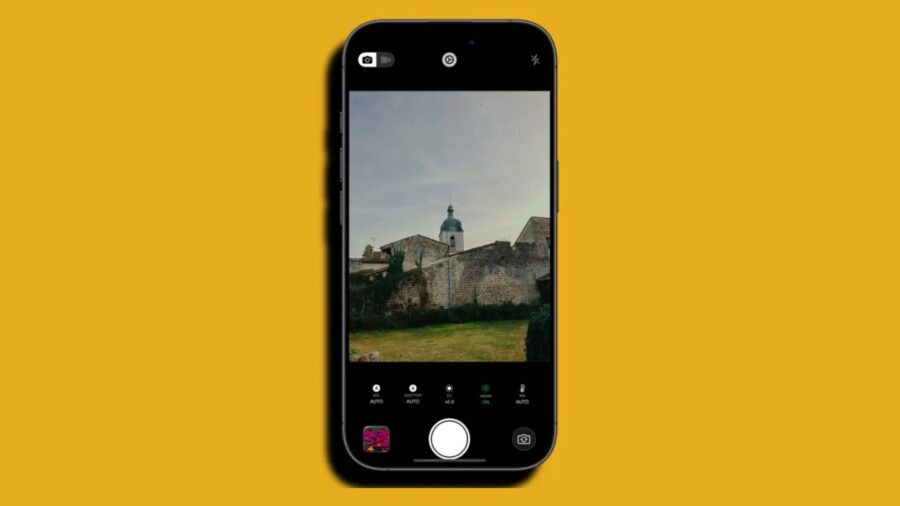 Kodak 500T Film-Inspired Look. Credit: DIGILOGPlanned improvements and roadmap
Development priorities include restoring 4K recording capabilities that were disabled during beta testing, adding selectable image stabilization levels similar to Blackmagic Camera, and introducing a Kodak 250D-inspired look profile. The stabilization feature addresses a common cinematographer requirement for controlling the trade-off between handheld smoothness and organic movement.
Hardware expansion includes wooden shooting cages with universal threading for filters and lens adapters, plus research into anamorphic optics. David is also pursuing integration with the Blackmagic Design ProDock, though this remains contingent on manufacturer cooperation.
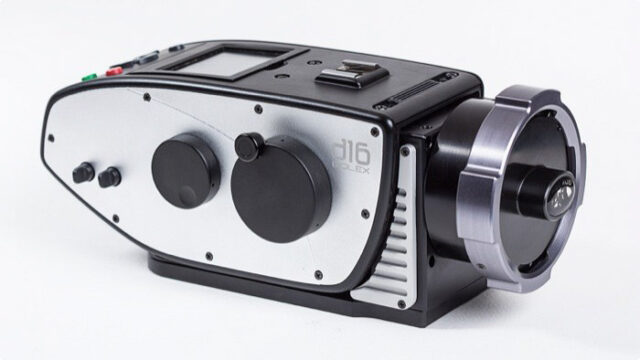 Credit: Digital BolexDigital Bolex D16 resurrection project
Beyond DIGILOG, David has acquired four original Kodak CCD sensors from the discontinued Digital Bolex D16 and is rebuilding that camera using contemporary development boards and components. The project maintains the D16’s imaging characteristics while updating the physical architecture and processing pipeline.
Collaboration with Joe Rubinstein, who provided early Digital Bolex DNG files, and Csaba Nagy, creator of the CinePi camera system, accelerated development by eliminating months of reverse-engineering work. The preview and recording pipeline is operational, with ongoing refinement focused on sensor calibration and color accuracy.
This initiative represents David’s long-term vision of producing custom, modular cinema cameras as unique instruments comparable to handcrafted surfboards or guitars. The open-source philosophy would allow users to modify and adapt designs for specific production requirements.
Download the DIGILOG app for free here.
Does DIGILOG’s film-emulation pipeline offer a viable alternative to traditional camera apps for professional productions? Don’t hesitate to let us know in the comments below!