
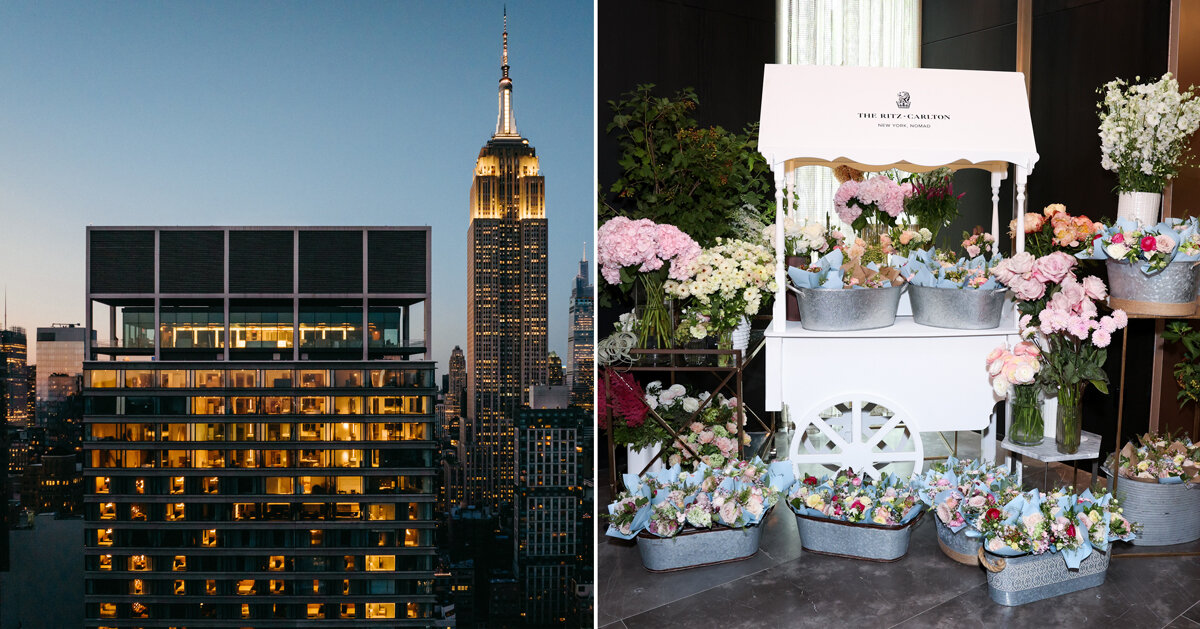
DB: I feel the brand is somehow associated with a more established, classic luxury idea, and it’s very interesting to see this more fresh approach.
DOK: Yeah, because this is really the next generation Ritz-Carlton, this is how people see luxury today. Younger customers really want an experience that feels bespoke, and not to feel like they’re in such a giant building that has so much that you’re lost in it. They want a sense of intimacy, they want to be welcomed, they want it to be design-forward, and the design has to be interesting, it’s got to be vibrant.
They want to feel the energy from the restaurants, from the bars, you know, to feel like there’s something going on, not that you walked into a mausoleum.
I was just in a hotel uptown for lunch today and it very much felt like that same old-fashioned thing where you walk in and the front desk is like the cathedral, and then you sit in the lobby bar and everybody’s whispering, and the music is just not vibing. You feel like you’re in an airport lounge.
That was not what we wanted here. We wanted to bring in elements of surprise and delight, to make the experience fun by discovering something little bit different at every corner. We worked with five different interior designers here to create all of these fun, different, unique experiences.
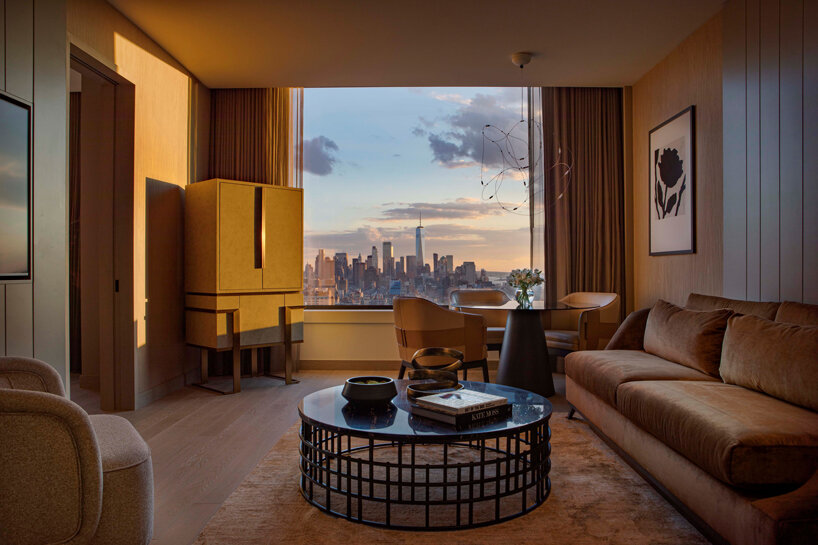
Liberty Club Suite living area, image by The Ritz-Carlton New York, NoMad
DB: I wanted to ask you about the architecture. The building was done by Rafael Viñoly, right?
DOK: Yes, it was the only hotel he built, and he was a big Ritz-Carlton fan. He was so proud to get this job and we actually spent so many hours together, he would draw on his computer or a sketch pad and we would talk it through the whole time. I did a contest where I had five different top architects and I paid them for it so they would show me substantive work.
He was the one that just wanted to work with me all the time, the other other architects, maybe we had one or two meetings, but every day he was like, ‘let’s sit and talk more, I want to know what your vision is, I want to know what you want, do you like the rooms like this?’ We just sat there and talked so much, and when he finally presented his plan, it was the one that made the most sense. That’s how we picked him and it was really exciting, we were very close.
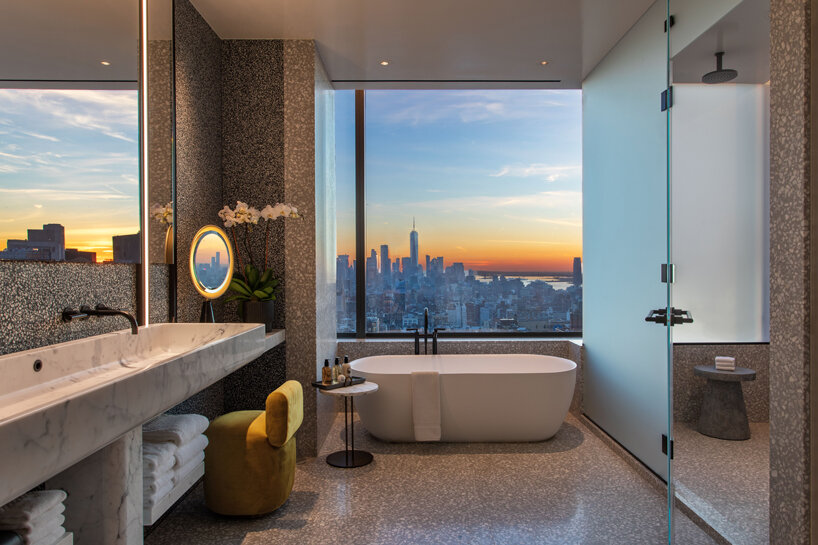
Ritz-Carlton Suite bathroom, image by The Ritz-Carlton New York, Nomad
DB: How was your collaboration? How much were you involved during the process?
DOK: In every detail. I mean, me and Rafael basically made this building. And, you know, as an architect, especially a contemporary architect, the architecture is everything.
They want to make a building from the outside in, and what I explained to all the architects was that I can’t do that because I have such a small plot of land. It’s a very little, tiny, tiny site.
It’s not very big for everything that we have to fit in here, which is a lot of program. And we fought like literally for every square foot. Everything really had to be so carefully thought out, we couldn’t miss one square foot. So I had to have an architect that could build it from the inside out. And that’s really important. Because there was no way that we could fit this program and make it economically viable without that.
And with some of the other architects, they would sacrifice on the number of rooms or this or that. And then it just wasn’t going to pencil for us, financially. So there’s always that push and pull between the finances, between what you’re dreaming in your head and, you know, what you want, and then the reality of how are you going to pay for it.
And because I went to an undergraduate business school, I can think I’m with both sides at the same time and try to make it match without sacrificing the experience. It’s a lot more work for my team because we have to value engineer, everything, things that nobody sees, and we want the guests to have the most luxurious experience. But it is a lot of work to make that happen.
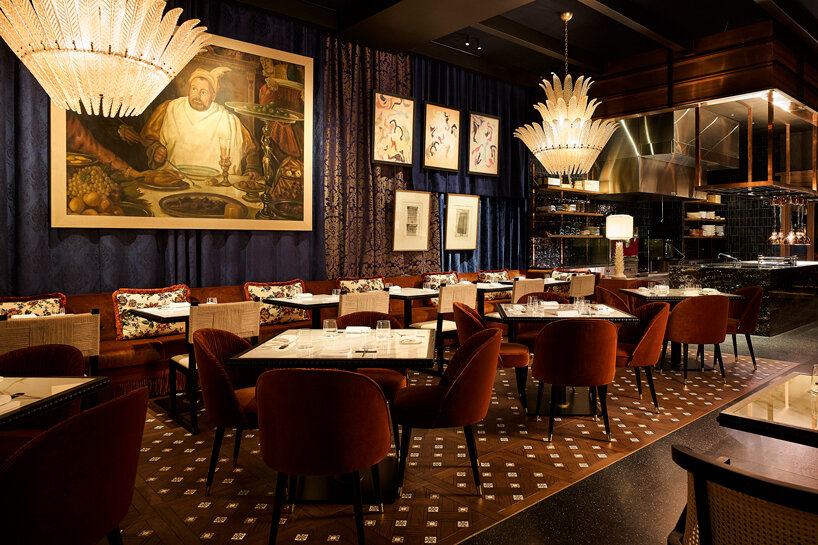
The Bazaar restaurant, image by Björn Wallander
DB: I think that’s one of the reasons why it stands out in such a competitive landscape like New York, too, is because it’s very guest-forward. A lot of the experiences are very guest-centered and guest-forward.
DOK: People are looking for that. I mean, you look at all the boutique hotels and how well they do and how much people identify with the personality of that hotel or whether it’s the designer or the owner that has a really specific point of view.
And this hotel is the kind of place where you’re kind of getting the best of both worlds. You’re getting an owner that understands and is really passionate about what the owner wants to deliver to the guest with the very best operator in the world, in the luxury world today. It’s a really unique experience because a lot of times the boutique hotels can’t offer that kind of thing. They can’t offer also the same kind of program, they don’t have the same kind of spa that we have or room service for the amount of hours that we have room service.
A lot of them don’t even have room service, right? We’re offering a full-service hotel, but with this bespoke boutique experience.
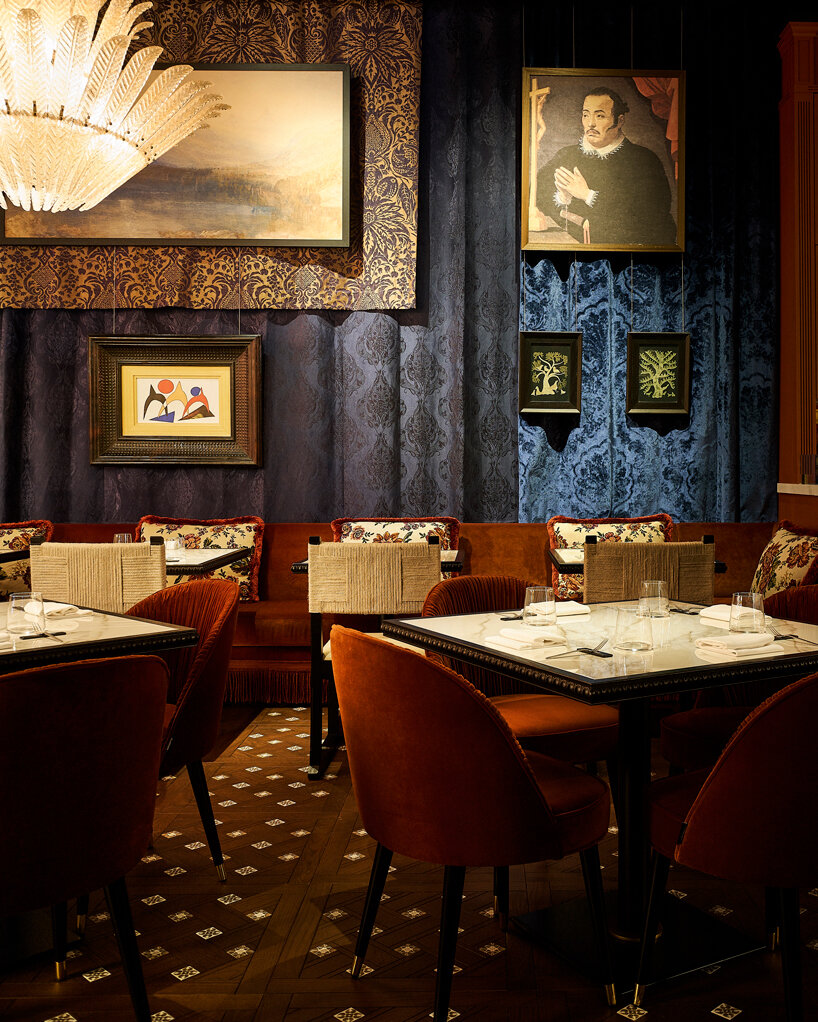
The Bazaar, image by Björn Wallander
DB: How would you define the experience of a luxurious place today? Like what are the key elements that compose this experience?
DOK: Luxury as a term can be really overused, right? And it can mean a lot of things to a lot of people, but what it means to me is knowing that things have been handcrafted, that things have been bespoke, that they have been especially chosen, in the selection of the fabrics, the materials.
Almost everything in this hotel is custom, very few things are not. It’s something that was really made specifically here, you’re not going to see my minibar anywhere in the world. It’s not a copy of anything, we didn’t buy it the way it was and then wrapped it different. It was totally designed and created just for this property.
I think that first has to do with craftsmanship, and with attention to detail in all of the physical spaces, and then, of course, luxury is an experience. What people want is they want service, and they want service with a smile. They want people to be generous. They want people to be anticipatory. And, of course, this is what Ritz-Carlton delivers so beautifully on. The experience is everything.
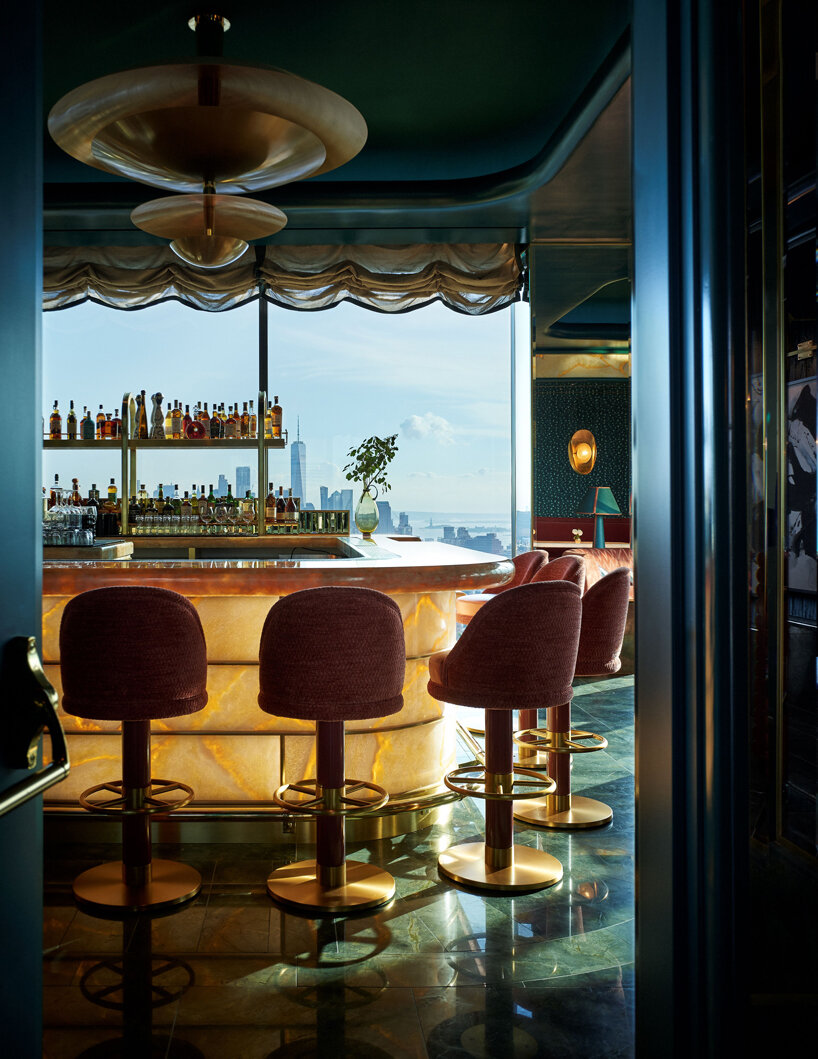
Nubeluz, image by Björn Wallander
DOK (continued): So how can we bring it all together, which is, have a friendly place to check in but know that you have access to a beautiful living room, knowing that you have access to all these extra bars and that we have two restaurants and we’ve got an incredible chef in-house, Chef Jose Andres that is also doing all the room service and all of the amenities. He’s really baking his own bread you know, everything is from scratch down there. His attention to detail is incredible.
And that experience, knowing that everything really does have a person behind it and people really care about what they’re delivering, that is what is bringing the experience to life.
For the younger customer, I think it’s about not having to be in a stuffy room with a white tablecloth to have a caviar. You can have your jeans, have a nice shirt, but you don’t have to wear a blazer and you can do caviar bumps upstairs. That’s now luxury, right? Luxury is being able to have your caviar and a bottle of champagne, spend $10,000 if you want to with your friends, but wearing jeans, not having to wear a jacket and a suit and all of this. It doesn’t feel luxurious anymore to the younger customer.
They still look smart and they still look elegant, just because you’re casual doesn’t mean you don’t look good, nobody here looks trashy or anything, but I think it’s really important when you understand the psyche of your customer.