
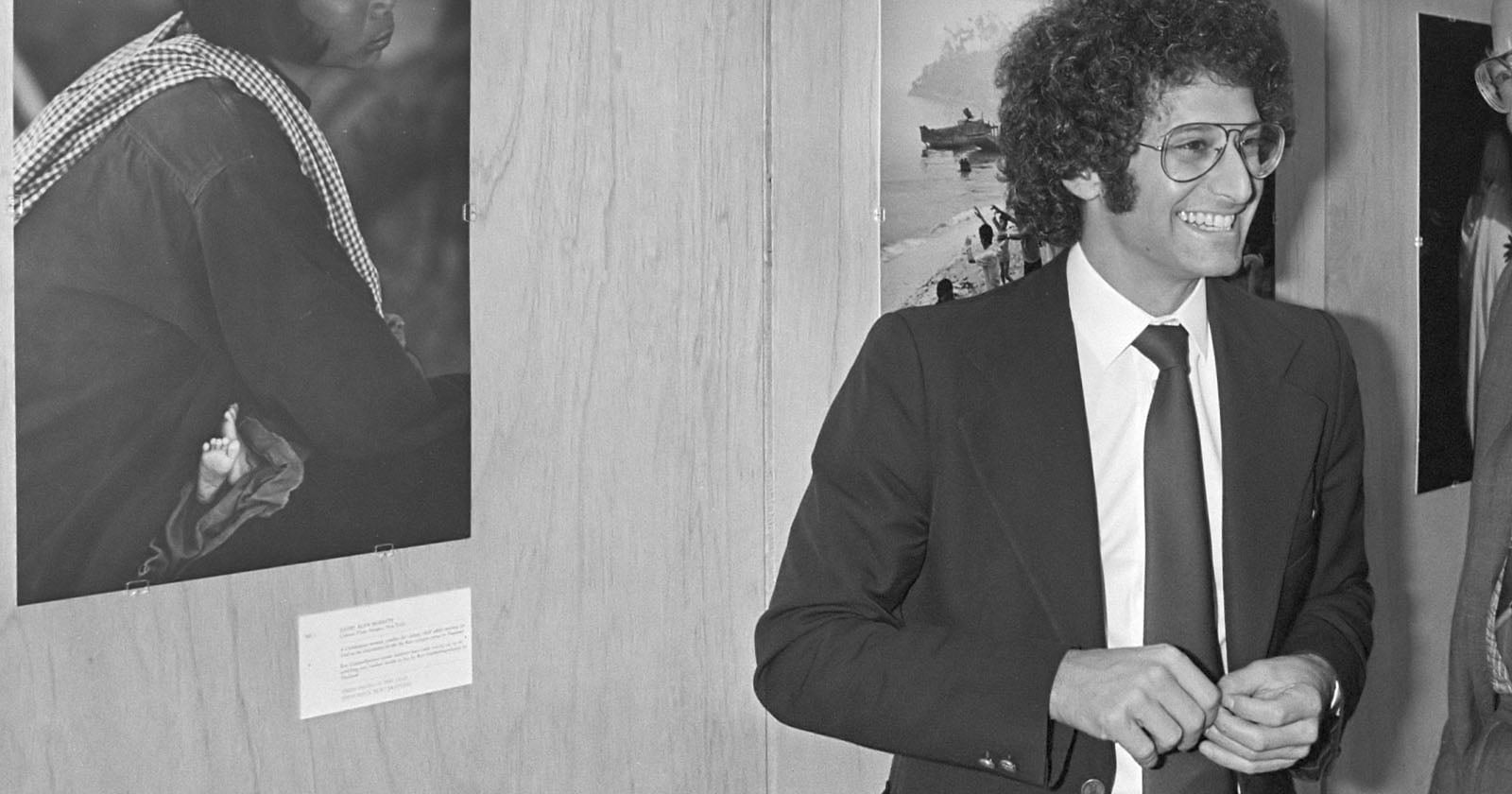
 David Burnett in 1980. | Nationaal Archief
One of the key witnesses to the Napalm Girl photograph, David Burnett, has written an opinion piece for The Washington Post in which he says The Stringer film “does nothing” to shake his long-held conviction that it was Nick Ut who pressed the shutter.
Burnett, who worked for Time and Life magazines, was standing shoulder-to-shoulder with Ut when South Vietnamese forces accidentally napalmed their own people in the town of Trang Bang on June 8, 1972.
“I recall the moment with great clarity,” Burnett writes. “Just minutes after the napalm attack, I was standing on the road outside the village of Trang Bang with Ut and freelance reporter Alex Shimkin when we saw the first of the children fleeing toward the road through a cemetery.”
At that moment, Burnett’s attention was focused on changing the film in his Leica, a task he calls “stubborn.” But he says he remembers Ut sprinting down the road toward the victims, and that he has always believed that Ut took the photo in the “following minute or two.”
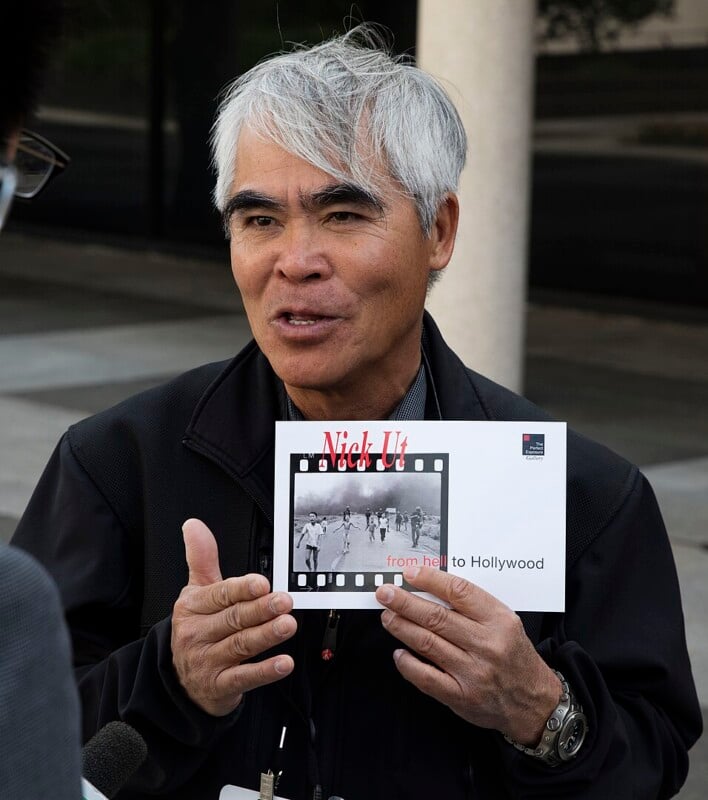 Nick Ut
While Burnett admits that he didn’t actually see Ut take the photo, he says that he never saw Nguyen Thanh Nghe — the freelancer named by The Stringer as the real author of the photo — out at the front of the pack of journalists where he saw Ut.
Key Witness
Burnett’s opinion piece is significant as he has remained mostly silent since The Stringer was announced earlier this year, despite being a key witness. The photographer says he declined to participate in the documentary because of his suspicion that the filmmakers were only interested in rubberstamping prior conclusions.
“Several of my photos — initially shown to Knight in colleagueship and good faith — were used in the film without my permission or attribution,” Burnett adds. “Potentially creating the inaccurate impression that I agreed with the filmmaker’s viewpoint.”
Burnett also says that he doubts the truthfulness of Carl Robinson’s story — the AP photo editor who appears in The Stringer and claims he was told to swap the photo credit by Horst Faas.
“In my experience, there is a 2 percent chance that the absolutely wildest claims might be true, but to me, the account lacks veracity,” says Burnett. “What is absolutely true is that once the picture had been printed and was being wired out to the world, Faas congratulated Ut in a very Faas-like way, saying in his unmistakable German accent, ‘You do good work today, Nick Ut.’ That is word for word what he said.”