


We are proud to announce the results of the fifth-annual PetaPixel Awards where we are able to honor the best new photography products released in the last year. We were really impressed with how big of a year 2024 was but, somehow, 2025 managed to be an even more impressive showing.
Started in 2021, the PetaPixel Awards has gradually expanded over the years. Starting last year and due to the abundance of excellent cameras, PetaPixel expanded the awards to assure that every camera and lens that deserved recognition, received it. This year’s categories continue to recognize the best in cameras, prime lenses, zoom lenses, smartphones, workstations, desktop software, smartphone apps, and photography accessories.
Methodology: Because PetaPixel’s staff is entirely composed of current and former photographers and filmmakers, all were asked to cast a vote in ranked choice of first through fifth (sixth, in the case of some categories) and each was worth descending points: five (or six) for the top pick, one for the last. In all cases, those who deal directly with sales and marketing were excluded from voting to retain objectivity. No company is even allowed to submit nominations for consideration in the PetaPixel Awards, as all conversation is conducted internally. Nominations were published last week.
At a Glance
Accessory of the Year: Llano 4-in-1 Charger
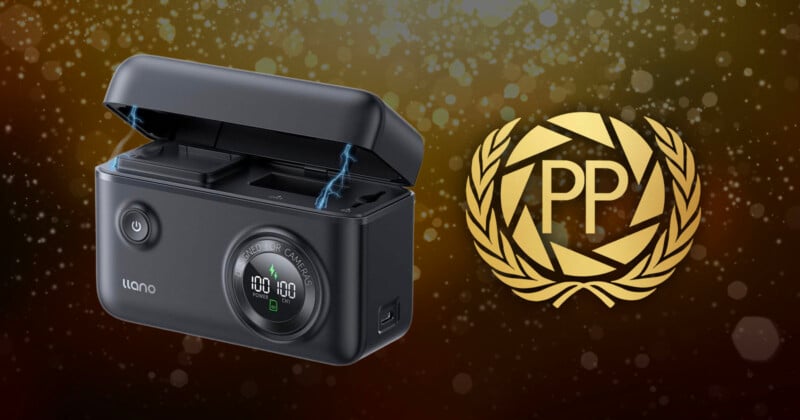
Llano surprised us this year with the launch of its 4-in-1 charger series, as it’s not a brand any of the team had ever heard of. Beyond that, the company doesn’t even have a functional website — it relies entirely on its Amazon store. Still, despite what would normally be red flags for us, Llano created a fantastic product. It won’t work for everyone (you have to be a photographer using strictly SD cards to take full advantage of it), but it is a great little pocket-sized camera battery charger that is also a memory card reader, power bank, and storage case for batteries and memory cards. It’s not only a great idea, but Llano executed on the finished product.
Software of the Year: Affinity

Affinity’s move to a free-to-use model resulted in near instant success for the brand. It jumped to a million downloads in just a week and over three million in just over a month. What a turnaround for Affinity, which had previously been unable to break through and really challenge Adobe for the previous decade. Beyond free-to-use, Affinity’s decision to combine its suite of apps into one piece of software is also a brilliant choice which breaks down barriers to use even further.
There has not been a real, honest-to-goodness threat to Adobe’s dominance in the design and photo editing space in over 25 years, but Affinity — thanks to Canva’s backing — appears to be able to finally change that narrative. Competition in any marketplace is good for the consumer, and Affinity is now poised to send ripples through an industry that has been largely unchanged for decades.
Workstation of the Year: iPad Pro (M5)

Apple’s iPad has successfully become a real usable tool after, arguably, being nothing more than a Netflix machine for years. They’ve always been fun, but in the last two years these thin little tablets have actually become usable workstations for professionals. PetaPixel‘s Chris Niccolls is an iPad power user, regularly challenging Apple’s thin tablet to be a true on-location editing device. He has succeeded, and this year’s M5 iPad Pro is the latest example of technological excellence. Lightweight, silent to use, and incredibly efficient, it is actually possible for a photographer to use an iPad and nothing else while traveling. That’s quite an achievement.
Smartphone of the Year: iPhone 17 Pro

The iPhone 17 Pro is a legitimately excellent smartphone. In North America, it’s easily the best of the “big three” options available. We are particularly happy to see Apple lean into hardware improvements while its competitors rely largely on touting AI additions. While curious and sometimes fun, those additions quickly lose their luster and mostly useless day-to-day.
“Apple has delivered us a phone that builds on the hardware that was already excellent while addressing the weaknesses present,” Niccolls wrote in his review earlier this year. “There is something to enjoy creatively for almost everyone in this phone. Creators and influencers will love the new selfie camera. Photographers now get high-resolution cameras in a wide range of focal lengths, and a usable 8x digital camera for those who need a little extra reach.”
Smartphone of the Year, Official Selection: Vivo X300 Pro

Despite limited availability in North America, we would be remiss if we did not give the Vivo X300 Pro some attention.
“It only takes a few shots to realize just how different the Vivo X300 Pro is as a mobile photography tool. It is laden with improved performance and output, plus a photography kit made up of a 2.35x telephoto lens extender and grip with built-in physical controls and a 2300mAh battery. It’s stacked,” Ted Kritsonis wrote in his review of the phone.
“The company continues to push hard on the imaging side, which helps spur intense competition among Chinese brands, a juxtaposition that stands out so starkly against the inert malaise we keep seeing from more established brands.”
Zoom Lens of the Year: Sigma 300-600mm f/4 DG OS Sports
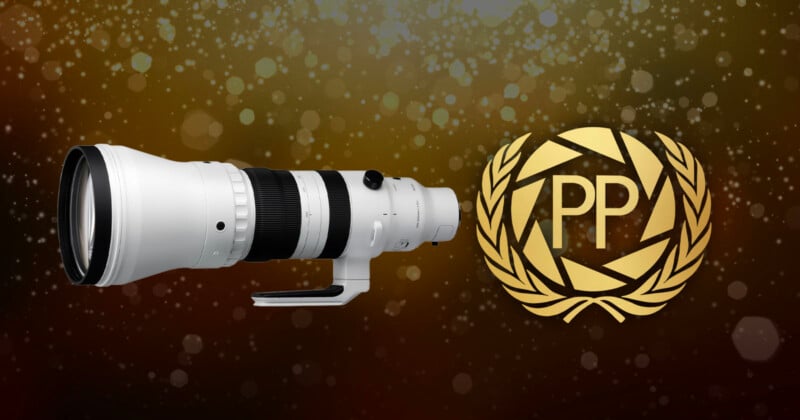
Sigma stole this category with nearly unanimous support, as the 300-600mm f/4 DG OS Sports is a truly spectacular lens that offers photographers a zoom range and wide-open aperture at a shockingly low price compared to what most expect out of super telephoto zooms and primes.
“What certainly impressed me was the level of detail and sharpness that the Sigma could deliver,” Niccolls wrote in his review. “Regardless of whether you shoot at f/4 or stopped down, and at any given focal length, the 300-600mm has the resolving power it needs. This makes the entire lens useful because there is no point in its range that you would want to avoid using for any reason. I think most professional wildlife and sports shooters would be impressed with the wide-open performance of the Sigma 300-600mm versus any of the available prime alternatives.”
In a year packed with outstanding zoom lenses, Sigma’s 300-600mm f/4 DG OS Sports stands out as the most excellent by a country mile. No other product in the Awards this year had the level of consensus that this lens commanded.
Zoom Lens of the Year, Official Selection: Sony FE 50-150mm f/2 GM
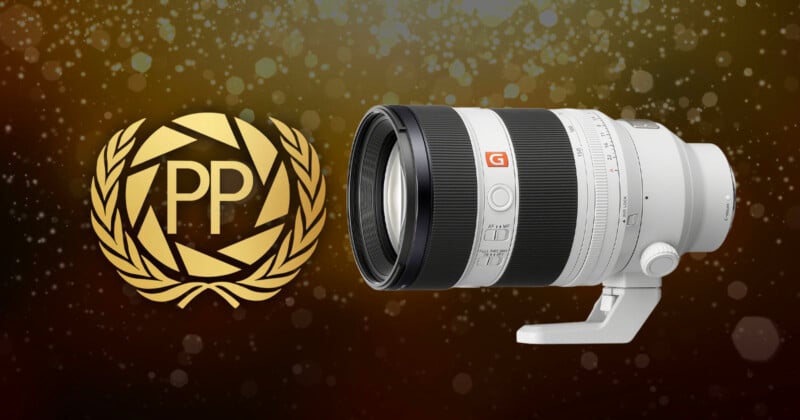
Sony has a real winner on its hands with the 50-150mm f/2 GM. While expensive, you get what you pay for: outstanding performance.
“The Sony FE 50-150mm f/2 G Master lens is the first of its kind, not only for Sony but any lens manufacturer. It’s exciting for photographers whenever a company breaks new ground with a lens. In the case of the 50-150mm f/2, the excitement is taken up a notch (or two) because the lens is phenomenal,” Jeremy Gray wrote in his review.
“Ultimately, what excites me the most is that the Sony 50-150mm f/2 G Master offers something no Sony lens has ever offered. It is a wholly unique lens that builds upon Sony’s rich legacy of incredible G Master lenses. The Sony 50-150mm f/2 GM is not perfect in every possible way, but it gets very close. Sony has crafted an optical delight for its users, and those who can afford it are in for a treat.”
Zoom Lens of the Year, Official Selection: Nikon 24-70mm f/2.8 S II
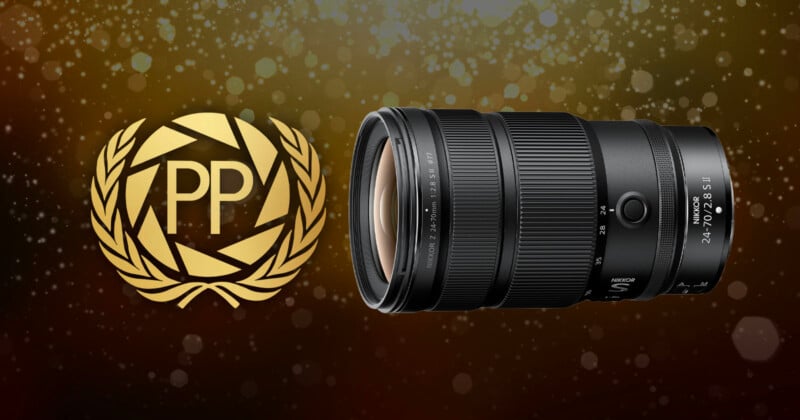
PetaPixel editors agreed: in almost any other year, Nikon’s 24-70mm f/2.8 S II would easily have been hailed as the best. Compared to its predecessor — a beloved and legendary lens in its own right — it’s smaller, lighter, sharper, and has an internal zoom function. It’s basically perfect — it’s just expensive.
“This new Nikon lens seems to achieve an incredibly high level of optical performance throughout its focal range and has essentially no bad qualities. It’s versatile, fast focusing, and sharp, which is exactly what you want out of a professional lens. Nikon has also made sure to add to its cinematic potential by controlling breathing well and allowing for a smooth aperture and internal balance as well. The fact that the lens is lighter and smaller only adds to its appeal,” Niccolls wrote in his review.
Prime Lens of the Year: Sigma 135mm f/1.4 DG Art
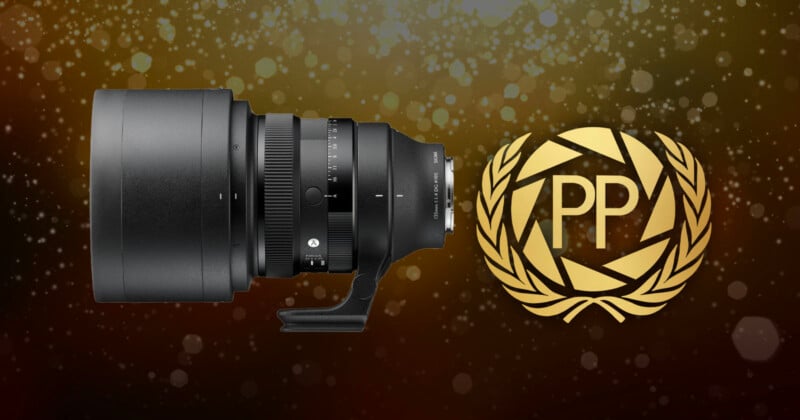
“It might be large, but it’s affordable and it’s perfect,” PetaPixel‘s Jordan Drake says of Sigma’s 135mm f/1.4 DG Art. It’s true, this is a spectacular lens that is yet another example of Sigma’s outstanding optical design.
“The Sigma 135mm f/1.4 DG DN is, effectively, optically flawless. Sure, it’s not a macro lens, and videographers will be dismayed by the breathing, but for its intended purpose of posed portraiture, candids, and sports photography, this lens has no weaknesses. I absolutely loved the aesthetic it can produce, especially for full-body shots taken from a distance,” Drake wrote in his review.
In a year filled with outstanding new prime lenses across the spectrum of price and focal length, the Sigma 135mm f/1.4 DG Art stood out as a real gem — a lens worth coveting.
Prime Lens of the Year, Official Selection: Sony 100mm f/2.8 GM Macro
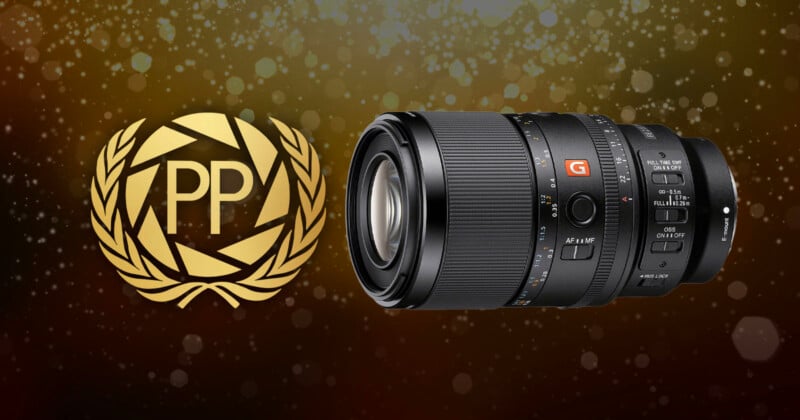
While that might not be exciting to every photographer, Sony photographers are truly spoiled now with this lens for both excellent portrait work as well as the ability to capture close-up details with some of the most impressive image sensors on the market.
“The bottom line is that the 100mm gives you the versatility of a sharp portrait lens with beautiful bokeh and fast focusing, as well as a macro lens capable of pushing well beyond the classic 1:1 macro range. Given its ability to use teleconverters, this lens could be excellent for some wedding and event work as well, where the occasional close-up shot can be appealing to tell more of the story,” Niccolls wrote in his review.
Sony originally touted the 100mm f/2.8 GM Macro as the best of its kind it had ever produced. We think that is selling it short, as it might very well be the best macro lens ever made — period.
Prime Lens of the Year, Official Selection: Sigma 200mm f/2 DG OS Sports

Sigma’s repeated presence in the PetaPixel Awards is not a fluke — this company has cemented itself as a master of optics. The 200mm f/2 DG OS Sports is just another example of Sigma’s incredible capability as a lens designer.
“The Sigma 200mm f/2 Sport is just such a pleasure to use. Optically, this lens is unrivaled right now, with excellent sharpness and a unique look to sports compositions thanks to the shallow depth of field and beautiful bokeh,” Niccolls wrote in his review.
It’s shockingly versatile for a prime lens and will find itself at home in the hands of sports, wildlife, portraiture, and wedding photographers. It’s a technical achievement and a spectacular lens.
Camera of the Year: Canon R6 Mark III
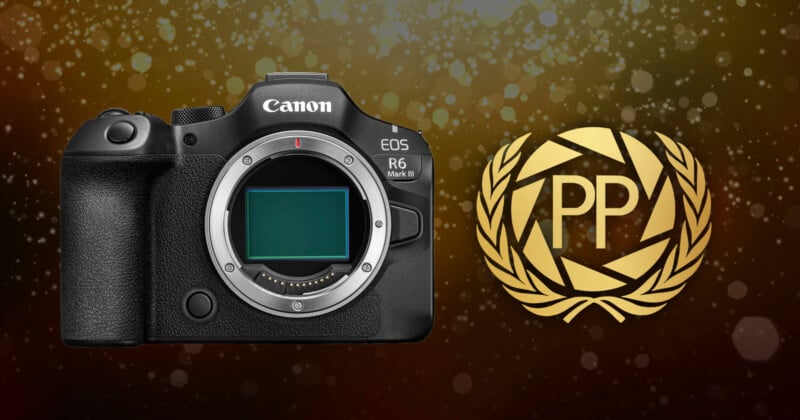
It took many years to get back here, but Canon has once again found itself at the top of the imaging world. Seemingly living in Sony’s shadow for years as the industry transitioned to mirrorless, Canon has stepped out into the sun and has achieved the highest honor PetaPixel can bestow: Camera of the Year.
The Canon R6 Mark III is an outstanding camera. It does everything well, is priced competitively, and is incredibly easy to use.
“The Canon EOS R6 III is the camera equivalent of rewatching one of my favorite movies. It’s comforting, reliable, and easy to digest. There are no unwanted surprises. I know what I’m getting, and I can easily recommend it to friends,” Gray wrote in his review.
“There are plenty of good reasons why the R6 II has been Canon’s best-selling EOS R-series camera since its launch, and for the same reasons and more, the R6 III merits similar commercial success. The R5 II, for its part, felt very similar when it arrived last summer. That camera felt like a huge, important step forward for Canon’s EOS R system as a whole. The R6 III, as good as it is, does not feel like that. It feels more like a 5D Mark III moment. Like that great DSLR, the R6 III is an excellent camera.”
Camera of the Year, Official Selection: Sony a7 V
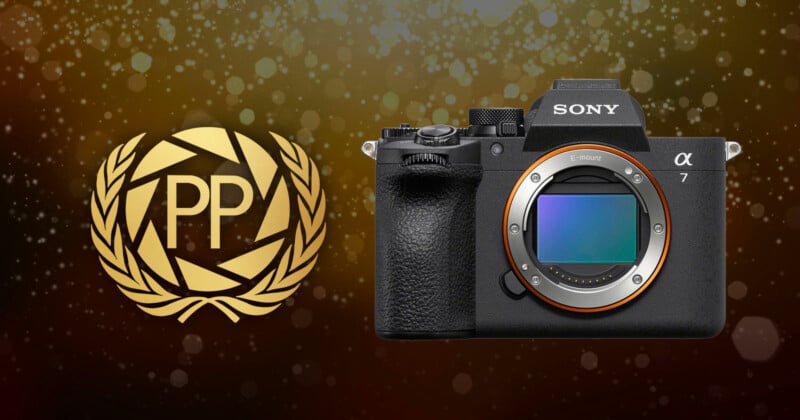
It was an exceptionally close vote, though, as the Sony a7 V is a very, very good camera that Sony a7 IV photographers who have been begging for an upgrade will be extremely happy with. It has outstanding autofocusing capabilities, captures gorgeous video, and has a stunning new sensor with gobs of dynamic range for photographers. It has the capability to be a do-it-all camera without sacrificing much to achieve that.
From a purely photographic standpoint, I think the Sony a7 V has minor advantages over the Canon in terms of image quality and focus performance,” Niccolls wrote in his review. “If you are tempted by the larger lens ecosystem that E-mount has to offer, and want a camera that can do almost any kind of project well, the a7 V would certainly please you in almost every way.”
Camera of the Year, Official Selection: Nikon Z5 II
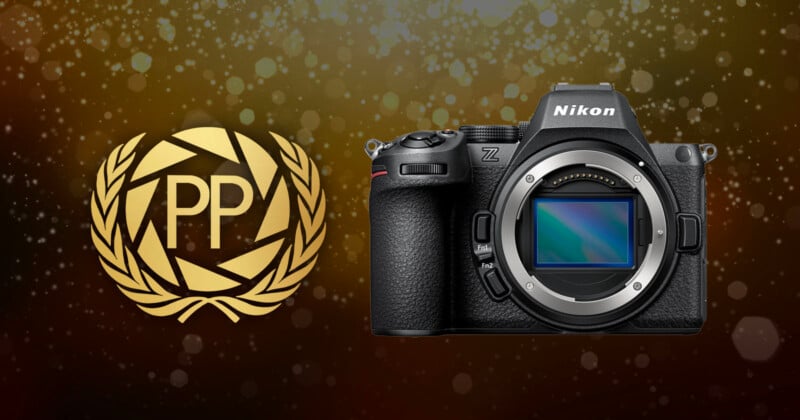
Photographers are spoiled for choice, and there is no better example of this than seeing the Canon R6 Mark III, Sony a7 V, and Nikon Z5 II all coming out in the same year. Nikon, to its credit, offers Z-mount photographers a truly wonderful camera.
“I loved my time with the Nikon Z5 II because I never felt under-gunned. The original Z5 was designed to meet a certain price and as capable as it was, there were some unavoidable compromises made to get there. However, the Nikon Z5 II feels totally different. This is a true jack-of-all-trades with quality hardware throughout,” Niccolls wrote in his hands-on review.
“It can handle everything from landscapes to sports to wildlife and would be equally at home as a professional wedding camera. If you want more megapixels, the Z8 or Z9 are appropriate while the Z6 III is better suited for more demanding sports and action work.”
Camera of the Year, People’s Choice Award: Canon R6 Mark III
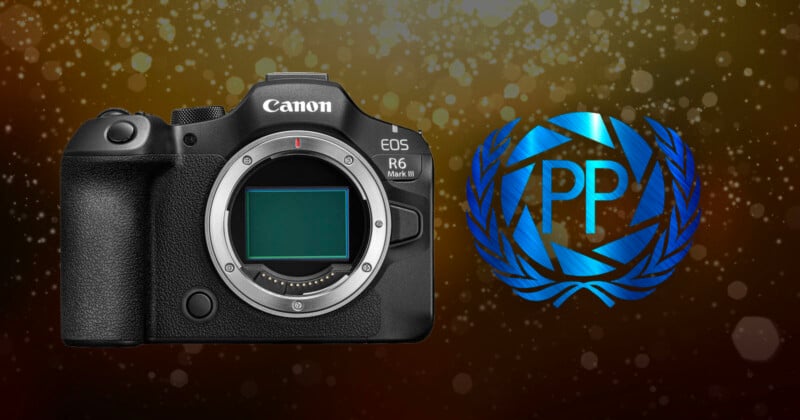
The People have spoken, and they agree: the Canon R6 Mark III is the best camera released in 2025. This is the first time that photographers and PetaPixel‘s staff have come to the same conclusion, and the votes weren’t particularly close. There were 22 new cameras on the People’s Choice ballot and after thousands of votes were cast, Canon commanded a firm 42%. No other brand really came close.
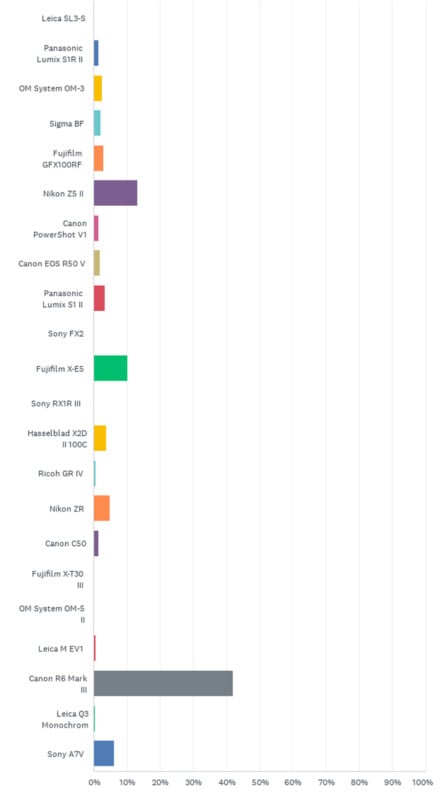
Congratulations to Canon and the R6 Mark III for a firm, resounding win.
Photo Company of the Year: Sigma

Sigma had more nominations and more awards this year than any other brand, which should say everything about why it is PetaPixel‘s Photo Company of the Year for the second year in a row. No other brand did more for photographers and filmmakers in 2025 than Sigma did.
Not only did Sigma produce the excellent and now award-winning lenses like the 200mm f/2, the 135mm f/1.4, and the 300-600mm f/4, it also made a suite of cinema primes that give filmmakers an affordable way to add both clarity and character to their films while at the same time it also gave photographers a lovely all-in-one travel zoom for that is affordable and approachable. In all aspects, Sigma integrated something special into the design of its products that is more than just the images they can create.
Last year, PetaPixel granted Sigma the award for Photo Company of the Year for its outstanding achievements in optical excellence. Somehow in 2025, it one-upped itself with an even more impressive total body of work. That is remarkable, especially for a company making everything from scratch from a single factory in Aizu, Japan.
Congratulations again to Sigma and, perhaps more importantly, thank you for continuing to push the envelope so that photographers and filmmakers can make ever more beautiful, compelling art.
Technology Innovation of the Year: Sony 33MP Partially Stacked Sensor

The long-awaited Sony a7 V has arrived, and is, in many ways, a significant leap forward for Sony’s popular a7 series cameras. The a7 V is faster and more performant across the board, thanks in large part to its brand-new 33-megapixel partially stacked full-frame image sensor. This new sensor, the highest-megapixel partially stacked sensor yet, represents a significant technical achievement and innovation in a space that generally moves forward at a slow clip or takes at least one step backward whenever it moves forward.
When Nikon debuted a 24-megapixel partially stacked image sensor in the Z6 III last year, it promised to blend the speed and performance of a fully stacked sensor with the budget-friendly price of a typical unstacked sensor. However, while the Z6 III checked many of these boxes, it did so with a slight image quality compromise. Panasonic showed, with its 24-megapixel partially stacked S1 II earlier this year, that there are ways around this, though.
Sony, which almost certainly makes the partially stacked sensors in the Z6 III and S1 II through its Sony Semiconductor Solutions (SSS) Group, delivers similar innovations as the S1 II but with a sizable megapixel bump in the 33-megapixel a7 V. In fact, the a7 V not only overcomes the potential dynamic range drawbacks of a partially stacked sensor but also delivers better image quality than its predecessor, the a7 IV, and its unstacked 33-megapixel sensor.
“Normally, there is some loss of dynamic range when using stacked sensor of any kind; however, the a7 V bucks this trend by bringing a noticeable improvement over the older a7 IV,” writes Chris Niccolls in PetaPixel‘s Sony a7 V review. If that doesn’t deserve major props, what does?
We routinely knock the lack of meaningful innovation in the camera industry, so when a company does something new and impressive, they deserve kudos. In the rare cases when an image sensor does something altogether new, it is typically reserved for professional shooters with big budgets. The Sony a7 V is decidedly not that type of camera. The Sony a7 V’s impressive new 33-megapixel partially stacked sensor breaks new ground, reaches new heights of performance, and does so in a product squarely aimed at enthusiasts rather than pros.