
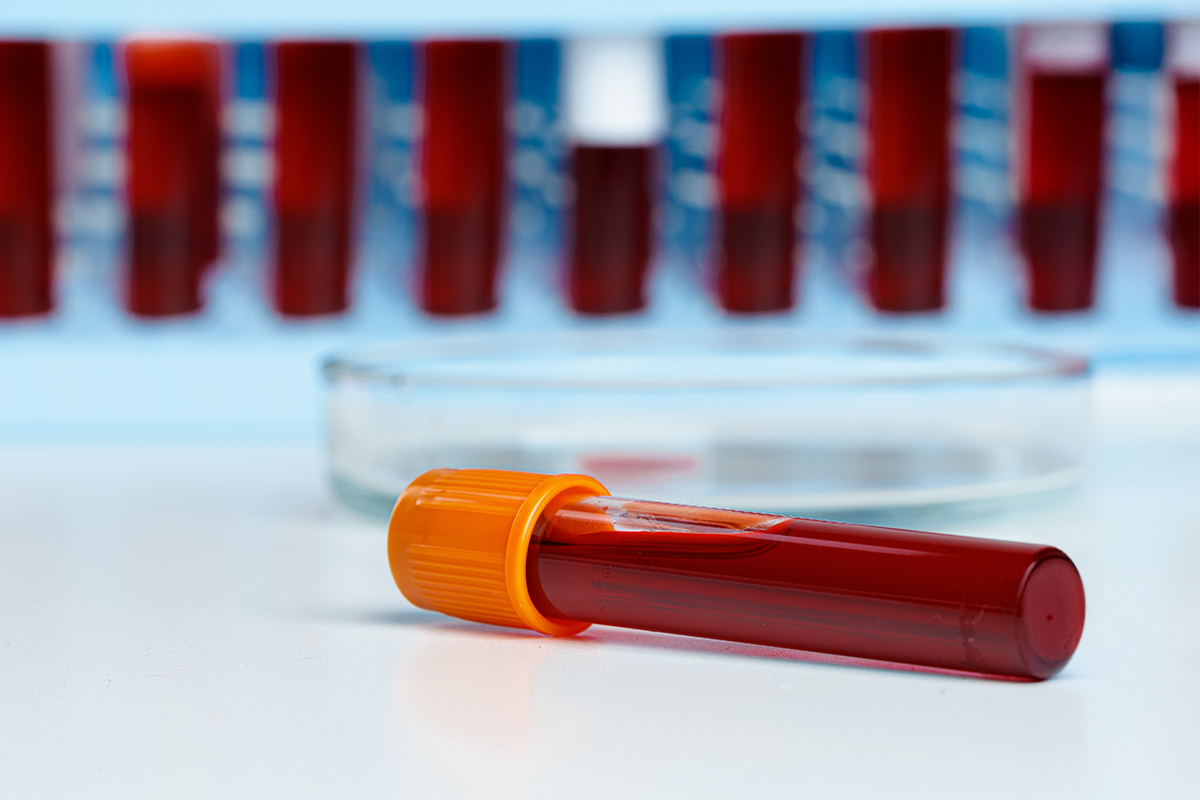
Longevity specialist says that testing five simple biomarkers can reveal how long – and how well – you might live.
Modern longevity researchers say that the most powerful predictors of how long you’ll live aren’t hidden in your DNA or found in the latest supplements; they’re circulating quietly in your bloodstream. Just imagine if your future health wasn’t a mystery, but something you could measure today.
Dr Vassily Eliopoulos, a Cornell-trained physician and Co-founder and Chief Medical Officer of Longevity Health, believes five biomarkers can offer a surprisingly accurate snapshot of your biological age, cardiovascular resilience, metabolic health and overall trajectory.
“Most people think longevity is about supplements and genetics, but the truth is, it’s measurable right now through your blood,” Vass explained in an Instagram post. “There are five biomarkers that can predict not just how long you’ll live, but how well.”
It’s a bold claim, but one that is increasingly backed by emerging science. As Vass puts it, “These labs give you real insight into how fast you’re aging on a cellular level, long before symptoms appear.”
Below are the five key biomarkers he considers essential for anyone serious about protecting and extending their healthspan.
1. ApoB: The silent predictor of cardiovascular risk
Apolipoprotein B (ApoB) has gained significant traction in longevity and cardiovascular research as a more reliable indicator of heart-disease risk than LDL cholesterol.
High ApoB means your blood contains more plaque-forming particles – tiny, dense lipoproteins that can slip into artery walls and accelerate cardiovascular aging.
Vass calls ApoB the most important blood marker for long-term heart health, advising people to aim for levels below 80 mg/dL.
If healthspan had a villain, it would probably be ApoB: quiet, consistent and capable of aging the arteries long before symptoms show.
2. hs-CRP: A window into hidden inflammation
High-sensitivity C-reactive protein (hs-CRP) measures low-grade inflammation, often referred to as “silent inflammation”, the kind that slowly erodes long-term health.
“This measures silent inflammation, the root of aging, heart disease, Alzheimer’s, and more,” Vass said. “Even a mild elevation signals oxidative stress and immune activation.”
He recommends keeping hs-CRP below 1.0 mg/L to support healthier aging and reduce the underlying inflammatory burden that drives many chronic diseases.
3. VO₂ Max: The fitness marker that predicts longevity
Widely recognized as one of the strongest predictors of all-cause mortality, VO₂ Max measures how efficiently your body uses oxygen. Think of it as your fitness engine and longevity fuel.
According to Vass, “Higher VO₂ Max equals longer life, better brain health, and metabolic resilience. The goal is to stay in [the] top 25 percent for your age.”
VO₂ Max naturally declines with age, but improving it is one of the most powerful ways to extend both lifespan and quality of life. Even small gains can have outsized effects.
4. Fasting insulin: Your metabolism’s early warning system
Long before blood sugar spikes or diabetes symptoms appear, fasting insulin reveals the earliest signs of metabolic slowdown.
As Vass puts it, fasting insulin is an “early warning sign of metabolic dysfunction, even before glucose spikes. Chronically high insulin drives aging, fat gain, and cognitive decline.”
Optimal levels should fall between 2 and 5 μIU/mL, a range associated with stronger metabolic health, better weight stability, and sharper cognitive performance over time.
5. GGT: A small enzyme with big longevity clues
Gamma-Glutamyl Transferase (GGT) is a liver enzyme that quietly reflects oxidative stress and detoxification capacity, two underappreciated drivers of aging.
Although often overlooked in routine checkups, elevated GGT is linked to faster biological aging and higher mortality risk.
Vass recommends keeping GGT between 10 and 25 U/L. He explains that it “predicts oxidative stress and mortality risk – quietly tracking both liver health and the hidden oxidative processes that drive aging.”
A roadmap for longer, better living
Together, these five biomarkers form a roadmap, not only for predicting lifespan, but for improving it. They offer a rare glimpse into the body’s cellular tempo: how it ages, adapts, and responds to stress long before diseases develop. For Vass, knowledge is something we should leverage.
“When you know these numbers, you have a roadmap to reverse early decline and add healthy years to your life,” he emphasized. “This is what true preventative medicine looks like.”
In a world overflowing with longevity hacks, it turns out the most reliable clues are hiding in plain sight – written not in the stars, but in your blood.
Photograph: FabrikaPhoto/Envato