
2025 National Wildlife Photo Contest Winners: Powerful Impressions
They captured nature’s raw strength and its ability to amaze. See winners of the 2025 National Wildlife Photo Contest.
By Jennifer Wehunt
Wildlife Photos
Dec 10, 2025
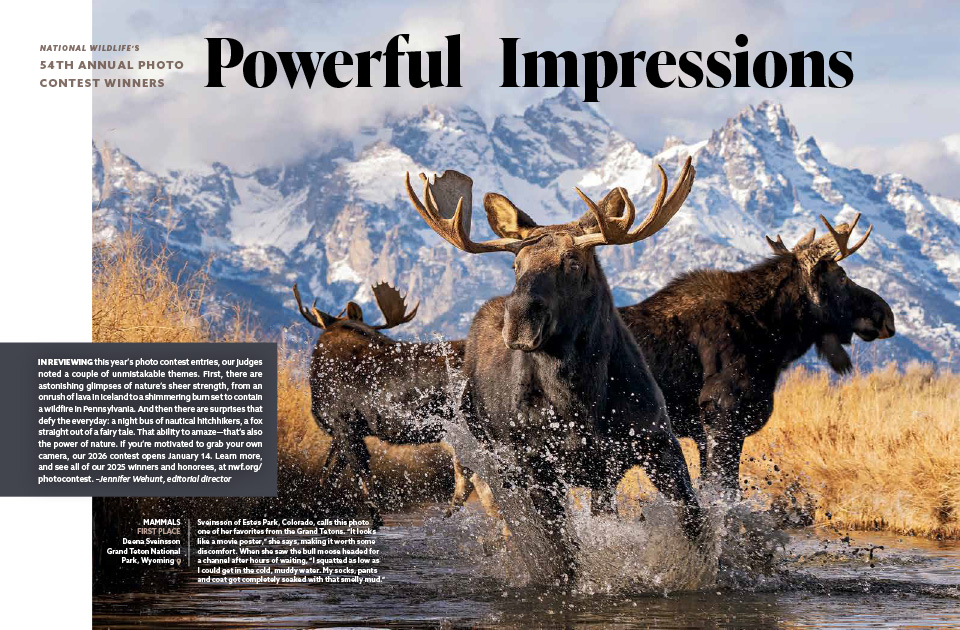
IN REVIEWING THIS YEAR’S PHOTO CONTEST ENTRIES, our judges noted a couple of unmistakable themes. First, there are astonishing glimpses of nature’s sheer strength, from an onrush of lava in Iceland to a shimmering burn set to contain a wildfire in Pennsylvania. And then there are surprises that defy the everyday: a night bus of nautical hitchhikers, a fox straight out of a fairy tale. That ability to amaze—that’s also the power of nature. If you’re motivated to grab your own camera, our 2026 contest opens January 14.
See all of the 2025 winners below.
GRAND PRIZE
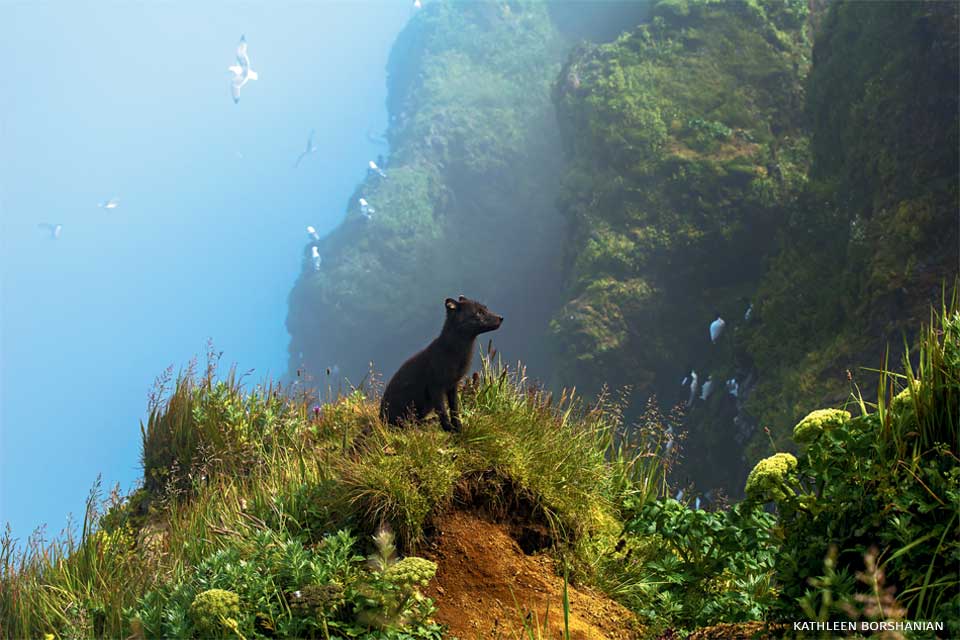
Kathleen Borshanian St. George Island, Alaska
“On the high bluffs of St. George Island, there is a 1,000-foot sea cliff where numerous fox trails cut a path precariously close to the edge,” says Borshanian of this enchanting sun- and fog-dappled scene. As she approached the island’s west end, she spotted a female blue Arctic fox about 75 feet away. Hiding behind a tussock, the Salt Lake City photographer used a telephoto lens to record the moment without disturbing the fox or her kits, sleeping nearby.
BABY ANIMALS
FIRST PLACE
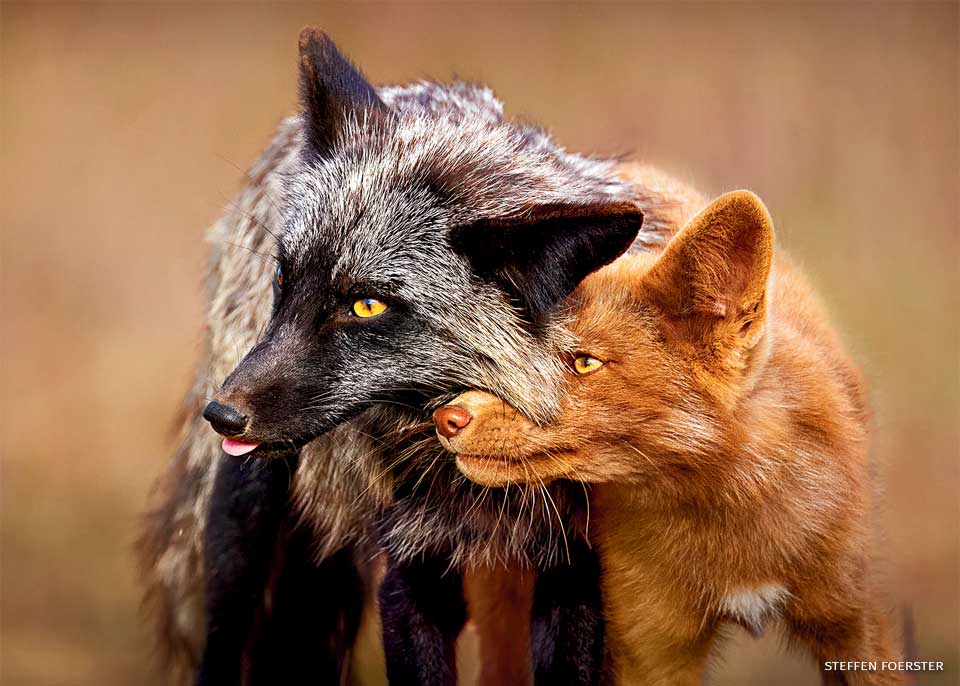
Steffen Foerster San Juan Island, Washington
San Juan Island’s red foxes were introduced in the 1900s to manage the local rabbit population and since have become part of the ecosystem. Foerster of New York City photographed them from a safe distance to avoid disturbing their behaviors. The foxes get enough stimulation on their own. “During a play session, one of the kits sought comfort from its mother nearby,” he says of this photo.
BABY ANIMALS
SECOND PLACE
Robert Cook Manhattan, Montana
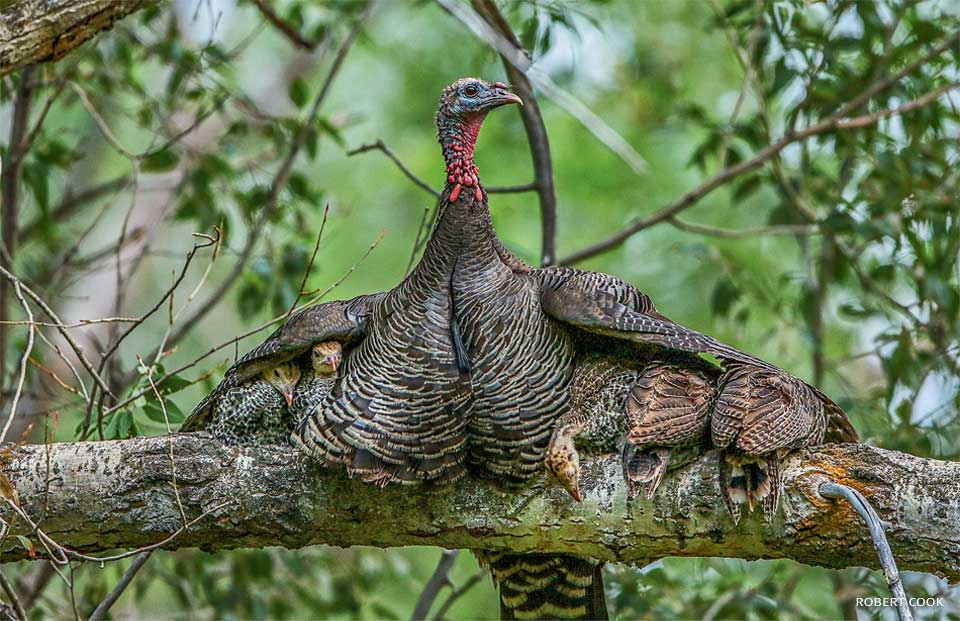
Cook of Earlville, New York, was visiting Montana when he heard of a turkey that had taken up residence near the Gallatin River. After spotting the bearded hen and her poults, he located his camera about 50 yards from a stand of cottonwood trees where, as daylight faded, the family returned to roost. “It was such a rare opportunity that I had never witnessed before,” he says.
BIRDS
FIRST PLACE
Jack Zhi San Diego, California
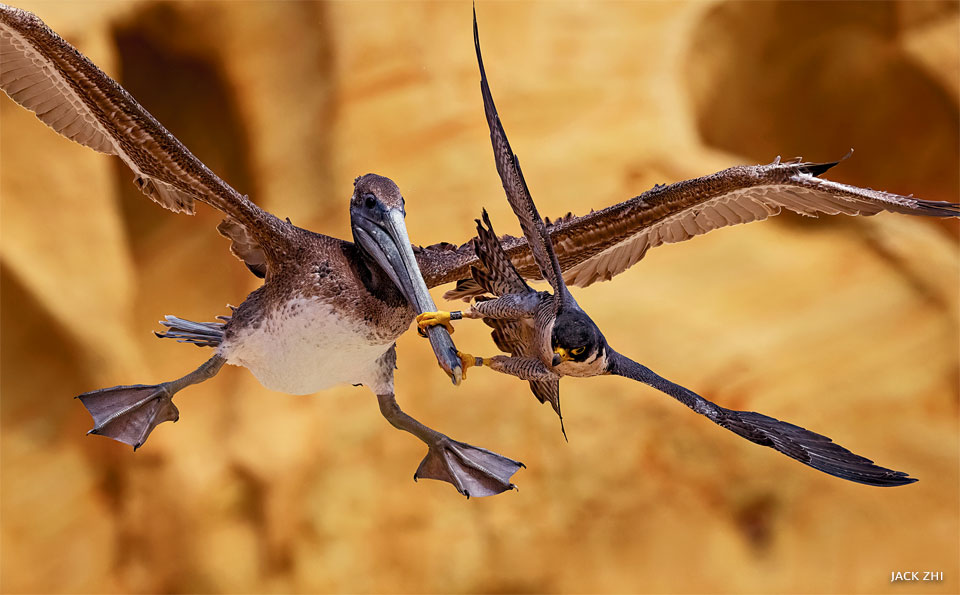
Zhi has spent seven years investigating a question with his camera: How do peregrine falcons, the fastest animals on Earth, protect their young? “With sheer speed and agility,” the Irvine, California, resident learned while documenting broods. The mothers “were on duty, attacking the much larger brown pelicans when they ventured too close to the nest.”
BIRDS
SECOND PLACE
Ajay Kumar Singh Eker, Bahrain
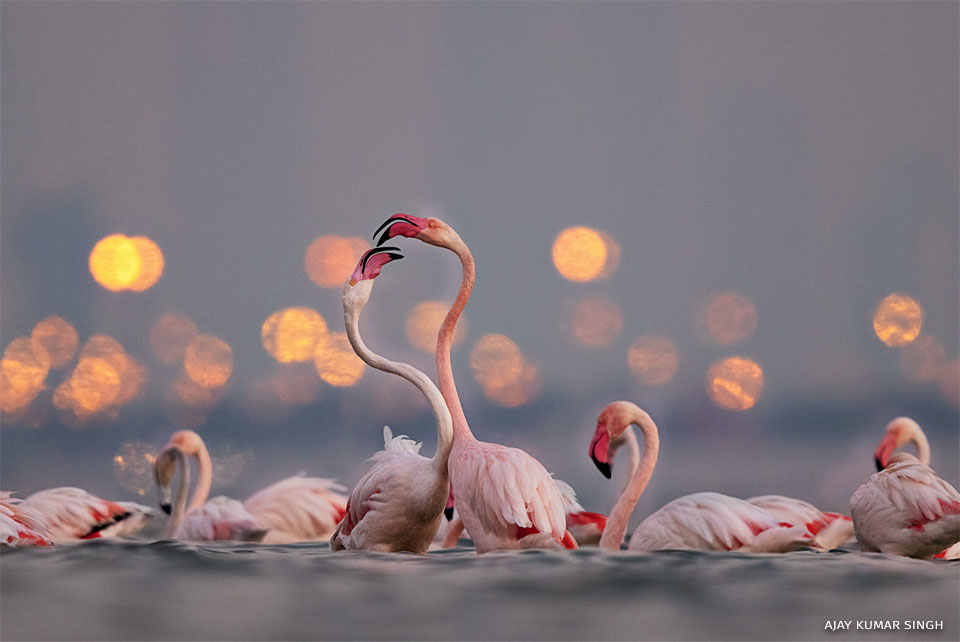
In winter, Eker Creek is one of the few sites in a settled area “with some mangrove patches still left,” attracting large numbers of greater flamingos, says Singh of Manama, Bahrain. He shot this photo “in early morning, when it was dark, and the building and streetlights were still on.”
LANDSCAPES & PLANTS
FIRST PLACE
J. Fritz Rumpf Woods Canyon Lake, Arizona
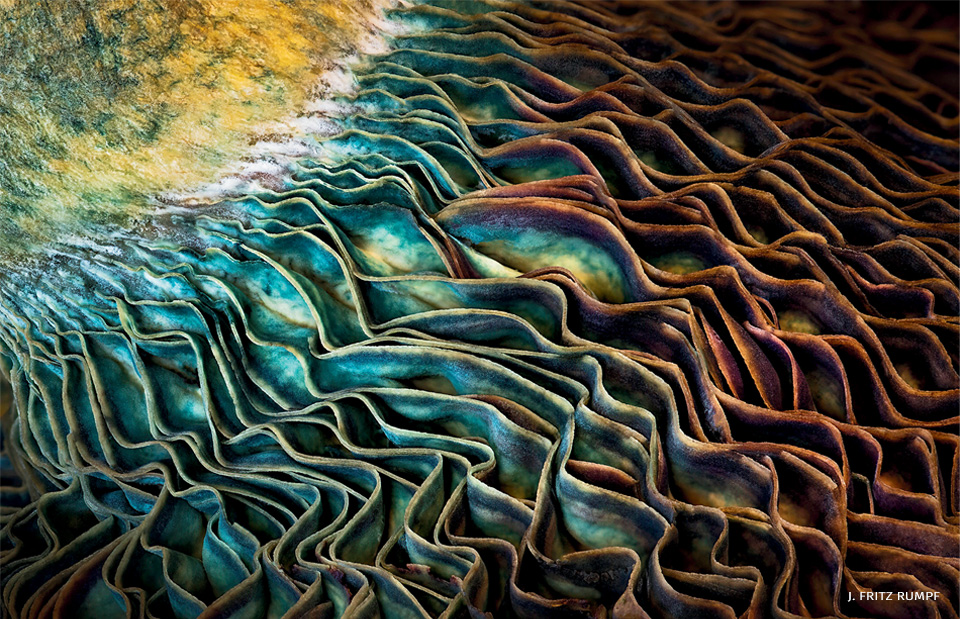
What do you see in this photo? Maybe “rays emanating from a distant planet, waves crashing against a cliff or deep furrows in a desert scene,” as the Phoenix-based Rumpf suggests? Think smaller. “On one of my first wild mushroom foraging trips, I found this mushroom, and not recognizing it as an edible one, I almost put it back,” he says of the milk cap. “Luckily I noticed the vibrant colors.”
LANDSCAPES & PLANTS
SECOND PLACE
Jason Mirandi Slatington, Pennsylvania
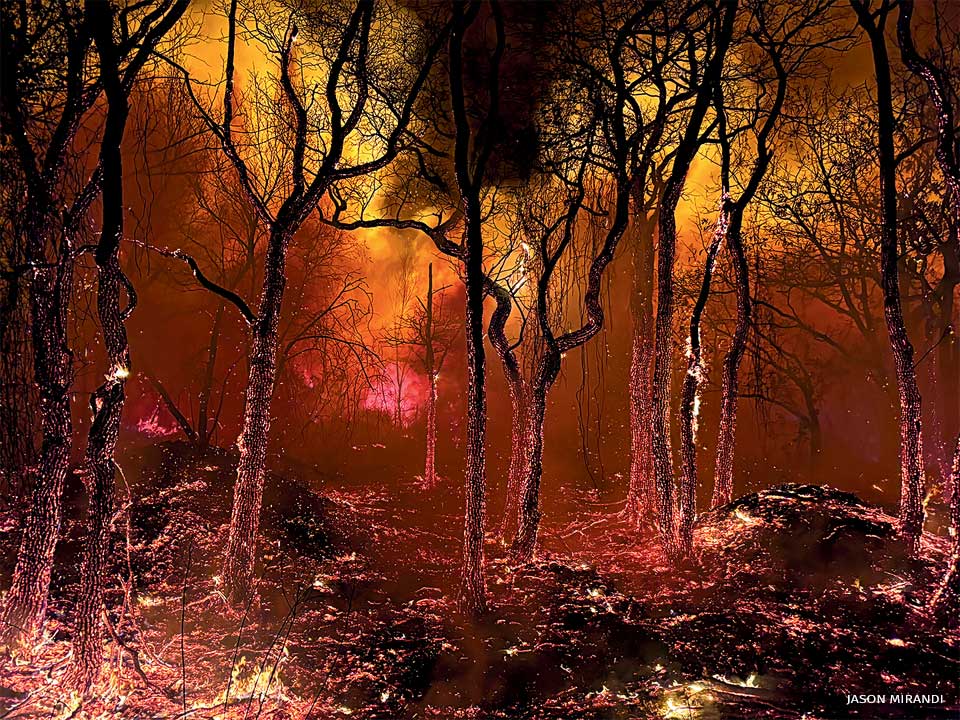
Mirandi, a wildland firefighter from Downingtown, Pennsylvania, describes this fall 2024 photo as the aftermath of a back-burn: “a fire intentionally set to consume fuel between a fire break and an oncoming, uncontrolled fire,” lit and managed by crews to contain a 600-acre wildfire near the Lehigh Gap. The image “shows the raw power of fire,” he says, with the “glowing embers and gnarled branches creating a scene of haunting beauty.”
MAMMALS
FIRST PLACE
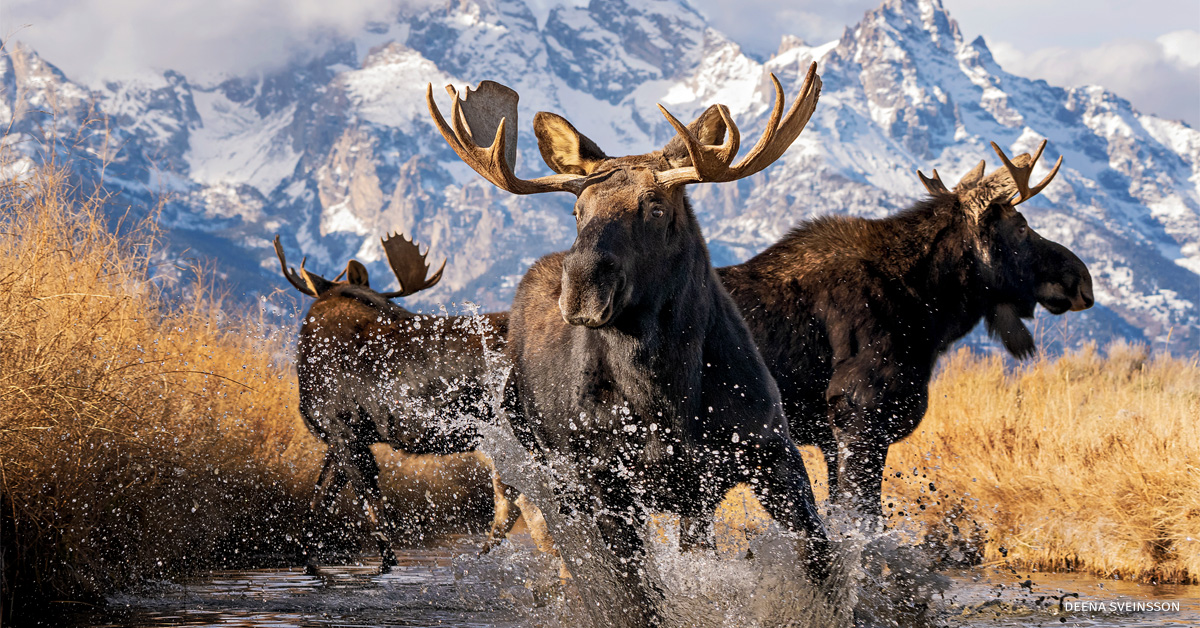
Deena Sveinsson Grand Teton National Park, Wyoming
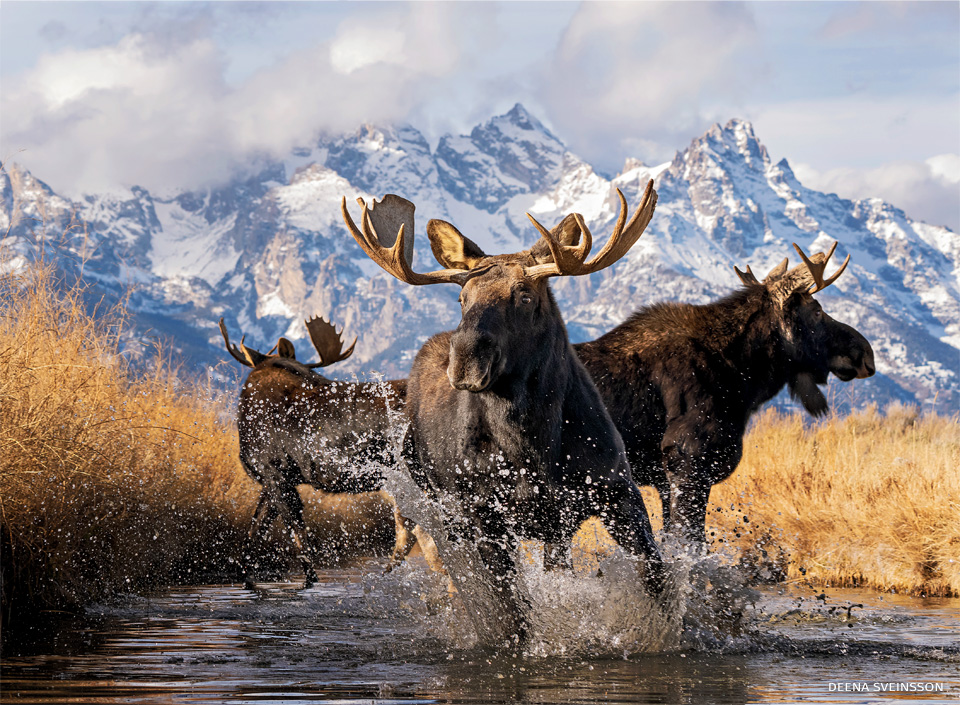
Sveinsson of Estes Park, Colorado, calls this photo one of her favorites from the Grand Tetons. “It looks like a movie poster,” she says, making it worth some discomfort. When she saw the bull moose headed for a channel after hours of waiting, “I squatted as low as I could get in the cold, muddy water. My socks, pants and coat got completely soaked with that smelly mud.”
MAMMALS
SECOND PLACE
Mark Panasuk Yellowstone National Park, Wyoming
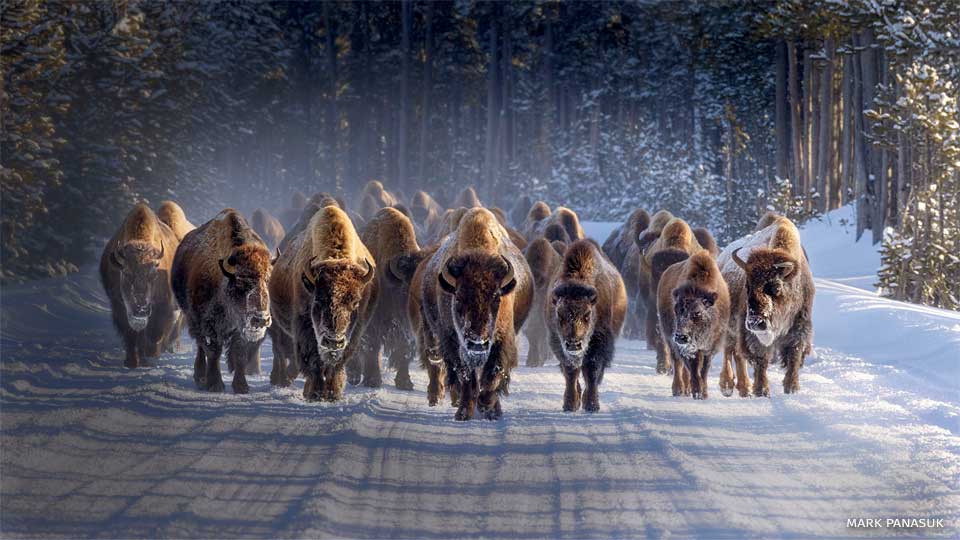
“It was a surreal experience, as the bison just kept walking in formation towards our vehicle,” says Panasuk of Douglas, Wyoming, who snapped this shot from inside a snow coach driven by a park guide in January 2024. Outside, it was minus 20 degrees F. “You can see a heat fog coming off the bison,” he says.
MOBILE
FIRST PLACE
Paige Rudolph Escondido, California
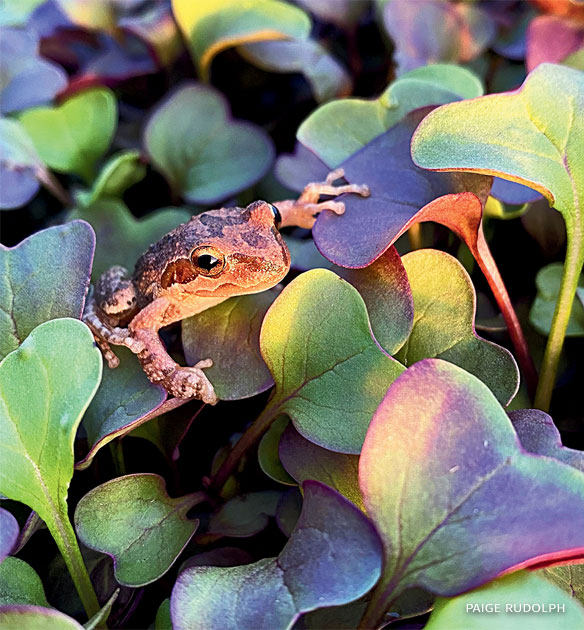
Rudolph took this shot at home, which doubles as her place of business: Sage Hill Ranch Gardens, a no-till regenerative farm where “we work with the land and not against it,” she says. “The farm is also my favorite place to observe the fascinating microworld of insects and amphibians,” including this tree frog nestled amid a “miniature jungle” of microgreens.
MOBILE
SECOND PLACE
Jess Steggall Plymouth, Minnesota
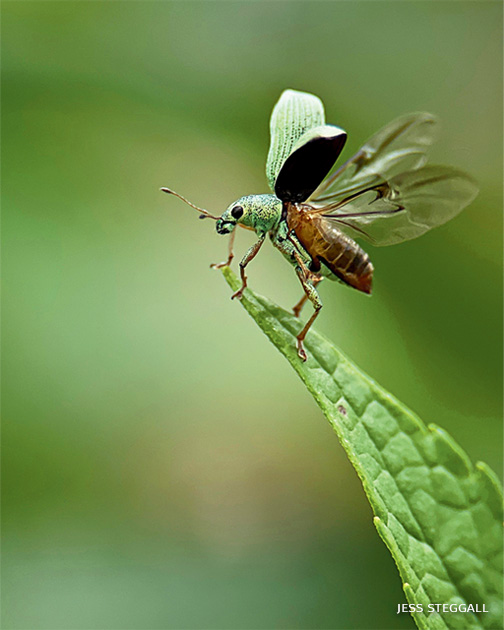
While Steggall credits this photo to luck—“I truly didn’t think I got the shot”—she has put ample effort into making her yard a wildlife habitat, planting “hundreds” of native grasses, trees and shrubs. The green immigrant leaf weevil, an introduced species seen here on an American hazelnut, isn’t considered an invasive threat, although severe infestations can cause damage.
OTHER WILDLIFE
FIRST PLACE
Massimo Giorgetta Lembeh Strait, Indonesia
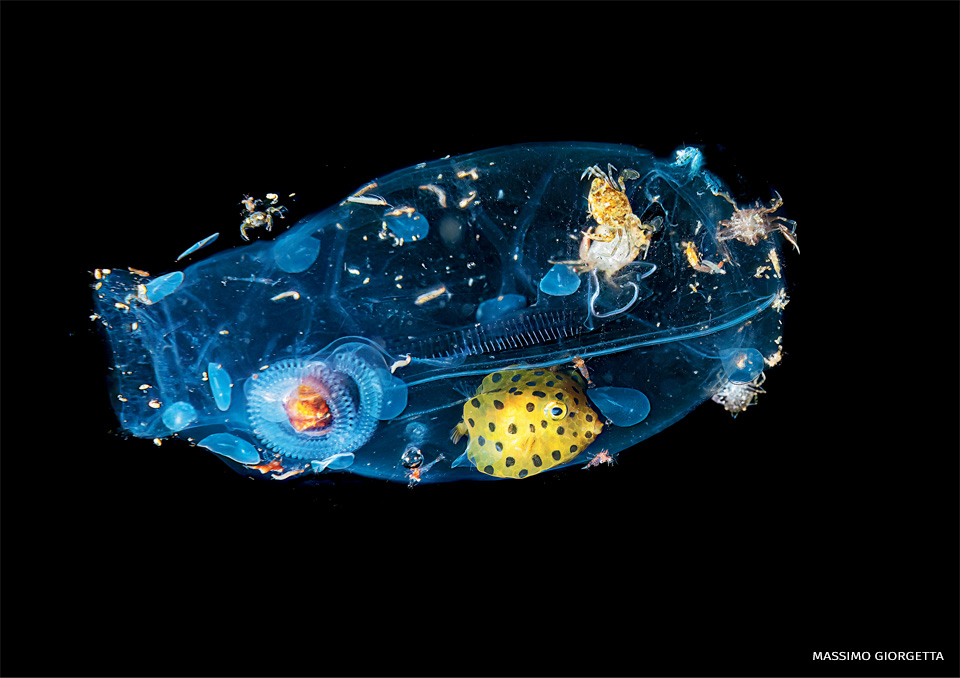
On a blackwater dive, Giorgetta of Latina, Italy, encountered “a mysterious sea creature so transparent, it’s almost invisible,” he says: a salp, with a mini ecosystem along for the ride, including a juvenile boxfish, crabs, marine worms and other invertebrates—all within the space of 2 or so inches.
OTHER WILDLIFE
SECOND PLACE
Remuna Beca Bimini, Bahamas
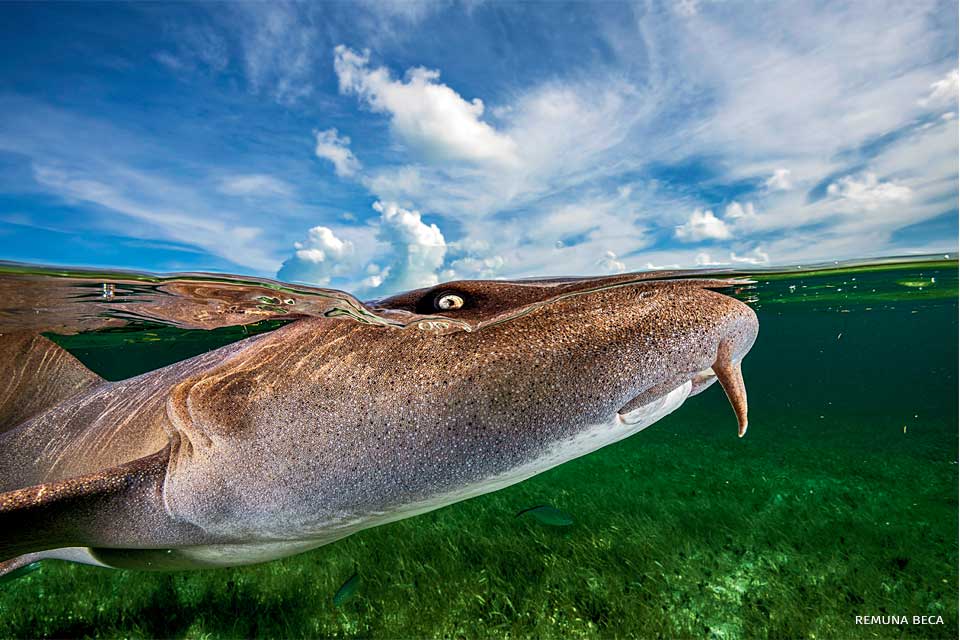
Nurse sharks are among the most commonly seen sharks along Atlantic and eastern Pacific reefs, but this view is anything but ordinary. With only its eye breaking the surface and its barbels—sensory organs equipped with taste buds—in stark profile, this shark peeked at Beca of Pompano Beach, Florida, as it swam by. “I captured our moment of eye contact,” she says.
PEOPLE IN NATURE
FIRST PLACE
Mike Mezeul II Grindavík, Iceland
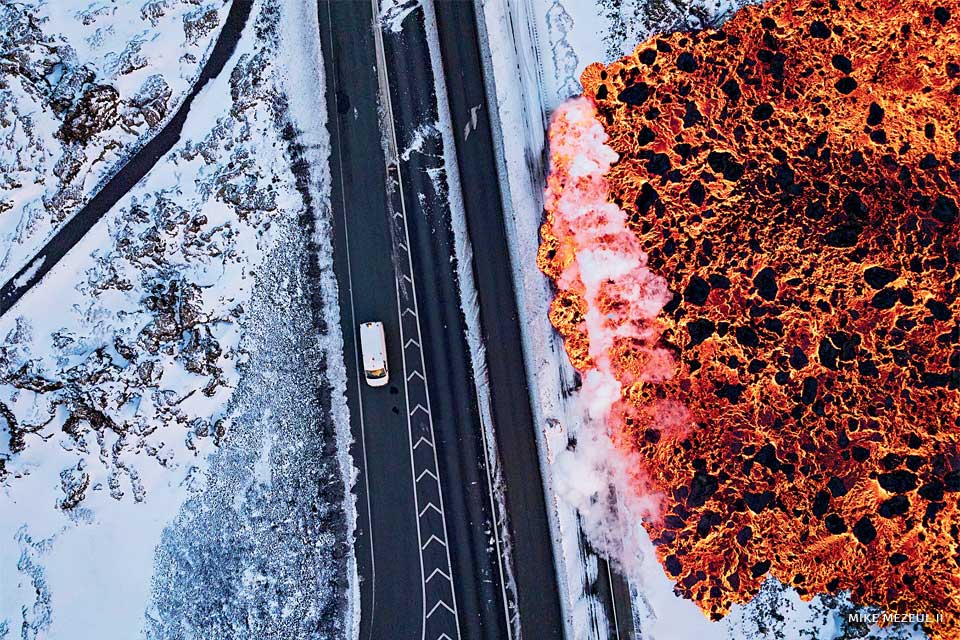
On February 8, 2024, the Fagradalsfjall volcano southwest of Reykjavík began erupting. That morning, Mezeul of Arvada, Colorado—who had permission to shoot by drone under police supervision—caught this image of a utility vehicle heading south. The van “made it through just a few minutes before the lava covered the road, completely destroying it,” he says.
PEOPLE IN NATURE
SECOND PLACE
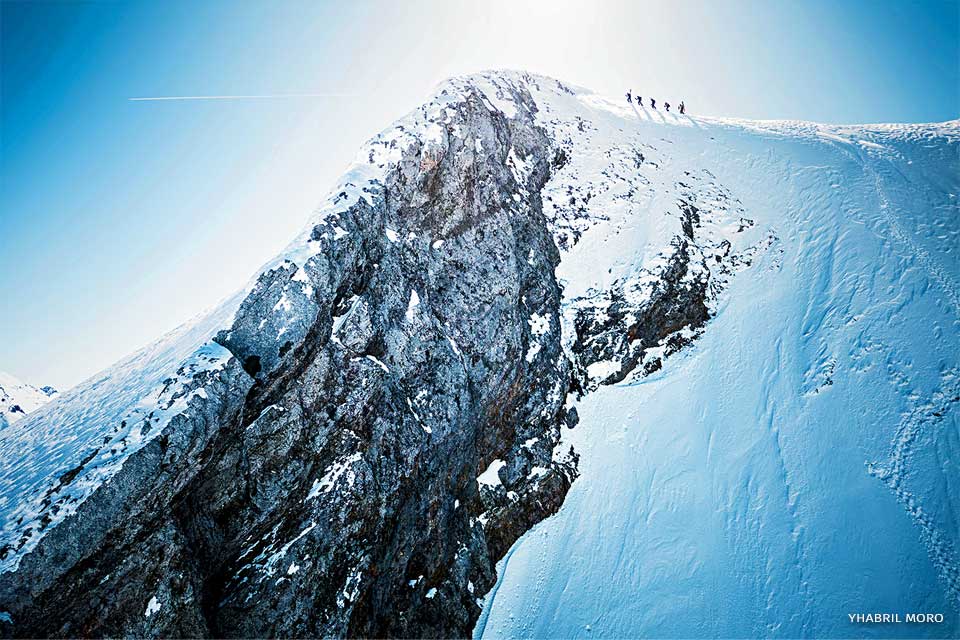
Yhabril Moro Pyrenees Mountains, Spain
In capturing extreme skiers preparing to tackle la Suela de la Zapatilla—or “the sole of the shoe” in English, “one of the most coveted descents in the Pyrenees”—Moro of Villanúa, Spain, “wanted to emphasize the steepness, creating a powerful sense of scale that highlights the smallness of the skiers against the vastness of the landscape.”
YOUNG NATURE PHOTOGRAPHERS
FIRST PLACE
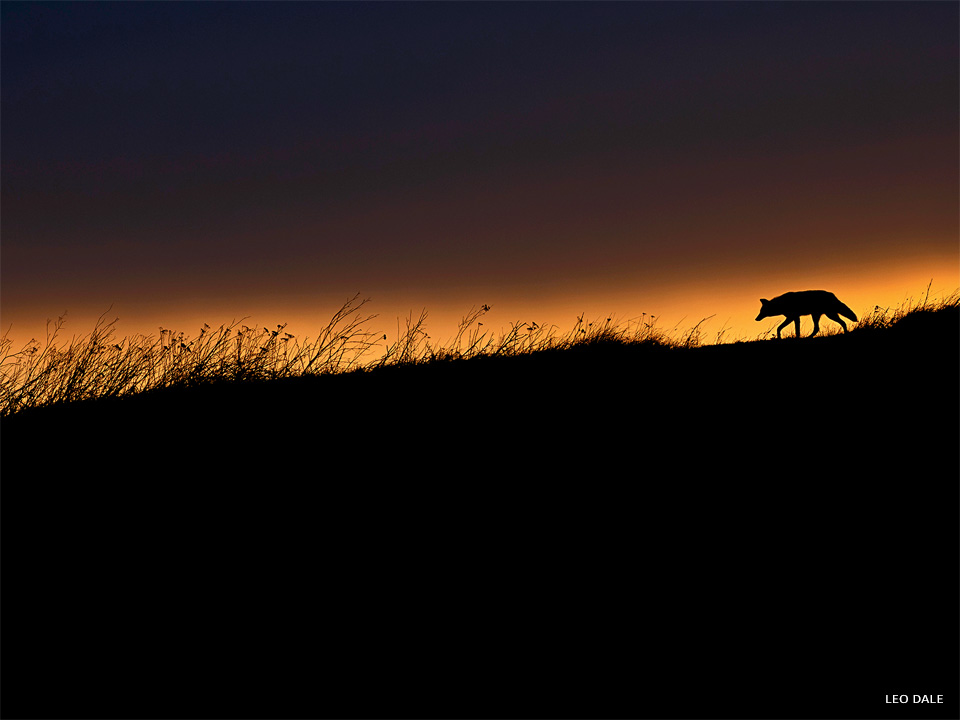
Leo Dale Point Reyes National Seashore, California
“I’m always on the lookout around dusk,” says Dale of Sonoma, California, who was 17 when he took this photo on a fall evening in 2024. He spotted a solo coyote in silhouette atop a grass-covered hill “as a magnificent, clouded sunset was materializing.”
YOUNG NATURE PHOTOGRAPHERS
SECOND PLACE
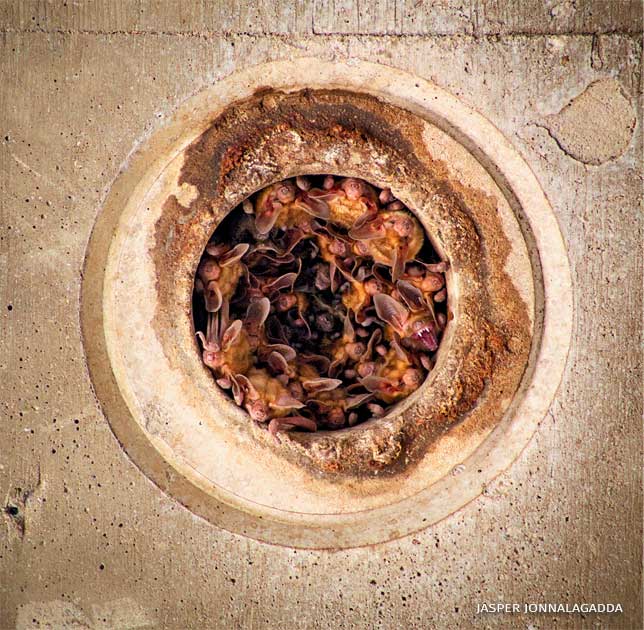
Jasper Jonnalagadda Morgan Hill, California
“Riding my bike under a freeway overpass, I heard some high-pitched squeaking,” says Jonnalagadda, who was 16 in 2024, when he took this photo. “Skidding to a stop and looking up, I saw this group of pallid and Mexican free-tailed bats jam-packed into a weep hole,” illustrating how wildlife have been able “to utilize human infrastructure for specific habitat needs.”
PORTFOLIO
FIRST PLACE
Zhengze Xu Christmas Island, Australia
Xu was thrilled to witness two directions of the annual Christmas Island red crab migration in December 2022: thousands of females headed toward the shore to spawn, as well as millions of juvenile crabs relocating to the forest, where they’d spend the next couple of years before starting the mating cycle over again. All that movement amounted to what the Shanghai photographer calls a “rewarding” traffic jam: “I got up every day at 2 a.m., drove in darkness towards the beach, then parked the car and walked [over a mile] with my camera equipment, because the roads were occupied by countless crabs.”