
“This extended surveillance will involve working closely with more beekeepers.” More than 575 registered apiaries are within the 11km zone.
“We will be placing traps near hives and providing information to beekeepers on how to monitor and what to look for.”
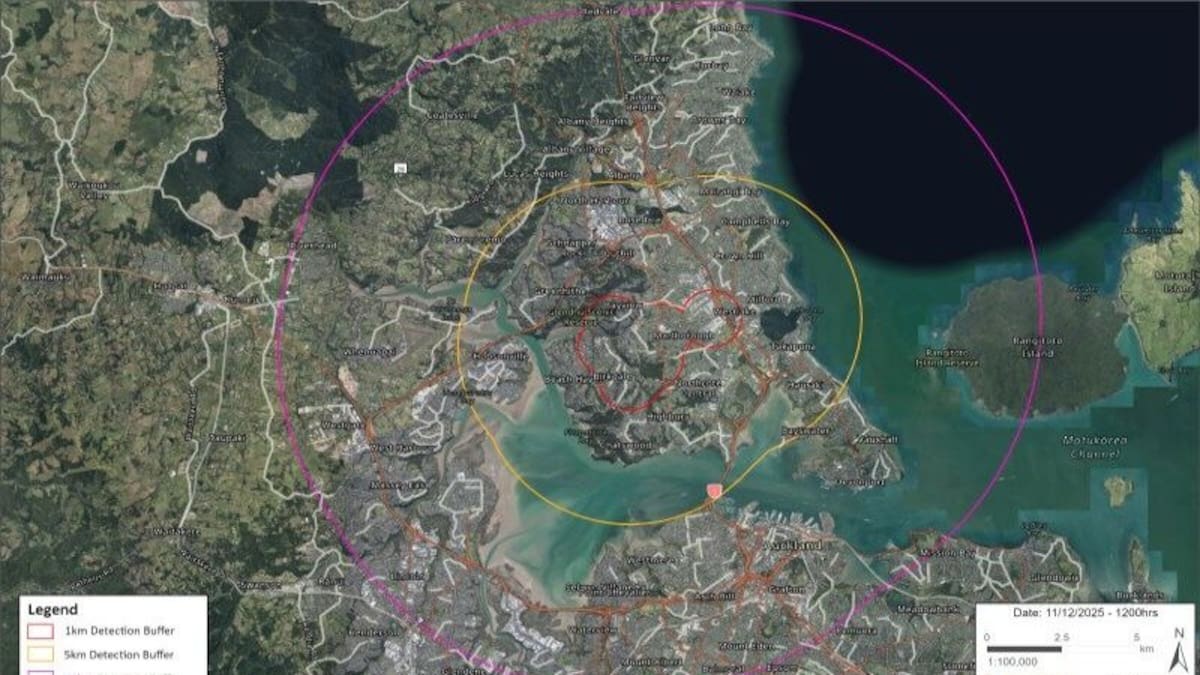
A large swathe of Auckland is now included in the surveillance zone for Asian Hornets. Photo / MPI
A spokesperson for the Ministry for Primary Industries said the response team was updating the surveillance zone and map, which was expected to be available later today. The updated zone would extend beyond the Harbour Bridge.
The surveillance area includes Auckland’s entire CBD and stretches east to Mission Bay.
The line runs through Remuera and extends to several other suburbs, including Newmarket, Mt Albert, Mt Eden, Balmoral, Rosebank, Henderson, and Westgate.
The zone extends north beyond Torbay to the top of Long Bay and covers half of Rangitoto Island.
Trapping and ground searches have expanded across the North Shore in recent weeks, with almost 650 traps in a 5km radius of detection sites.
More than 3500 properties have also been searched within 200m of confirmed finds.
Thirty-four queen hornets and 22 nests were successfully found and destroyed, which Inglis said shows the “surveillance is working well”.
Additional response measures include using different trap designs and lures, such as making the hornets sugar- or protein-based bait, along with inspections of hives near detection sites and ground surveys in reserves and residential areas.
A queen Asian yellow-legged hornet in the early stages of nest building.
Electronic tracking gear has also been purchased. With support from British experts, transmitters are attached to foraging worker hornets to trace nests.
Inglis said Biosecurity NZ was expected to find more hornets as a result of the increased surveillance, but he also stressed the need for the public and beekeepers to remain vigilant.
“We’ve had more than 5610 public notifications so far. It’s been fantastic to see such enthusiasm. We are very keen for this to continue, as it helps us respond quickly to possible detections.”
Biosecurity NZ has asked people looking for hornets and nests to check common nesting areas, including roof eaves, sheltered entrances, wooden structures, carports, under wooden decks, sheds, and outbuildings.
Sightings can be reported to report.mpi.govt.nz or by calling Biosecurity NZ’s exotic pest and disease hotline on 0800 809 966.