
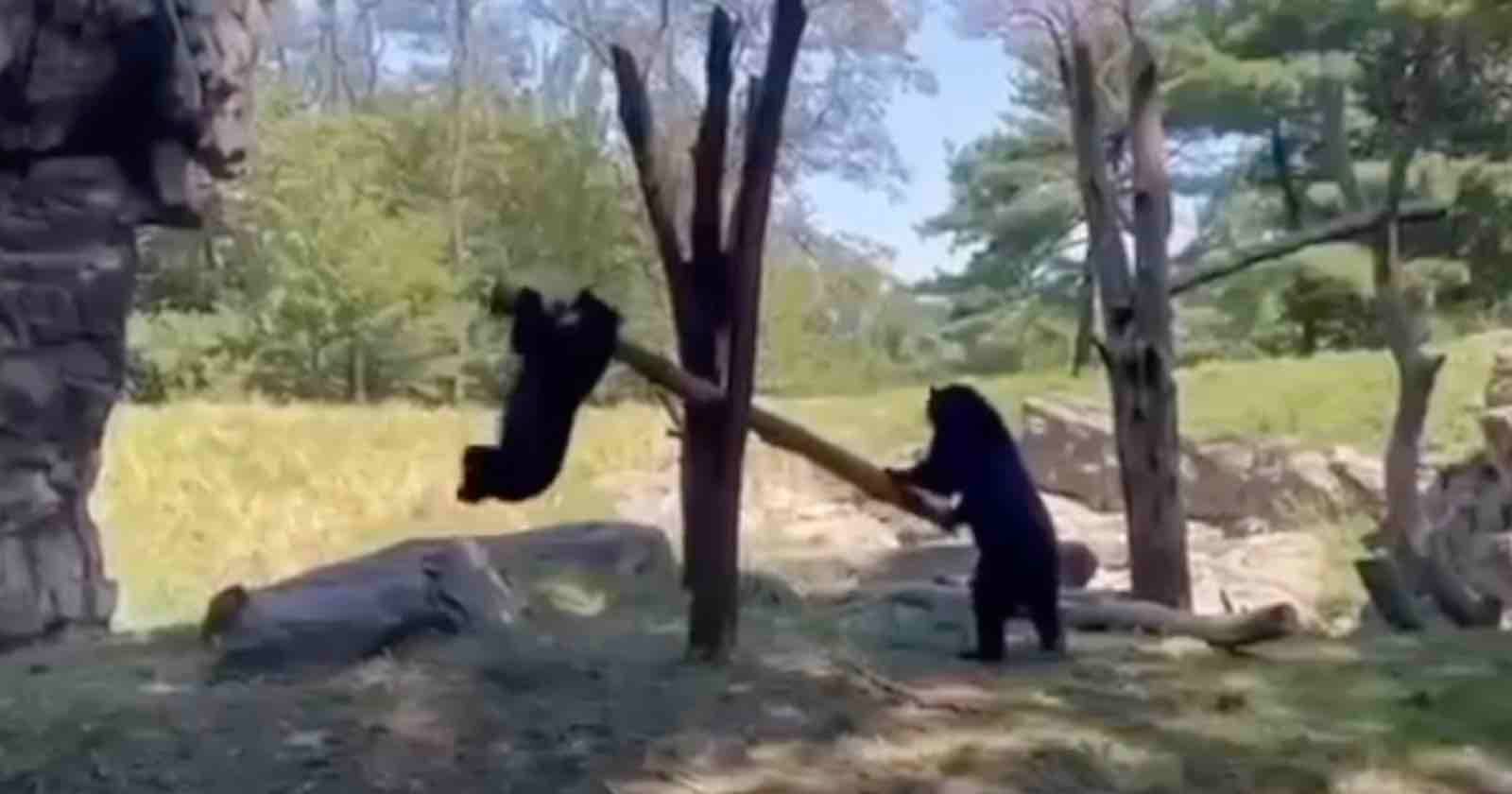
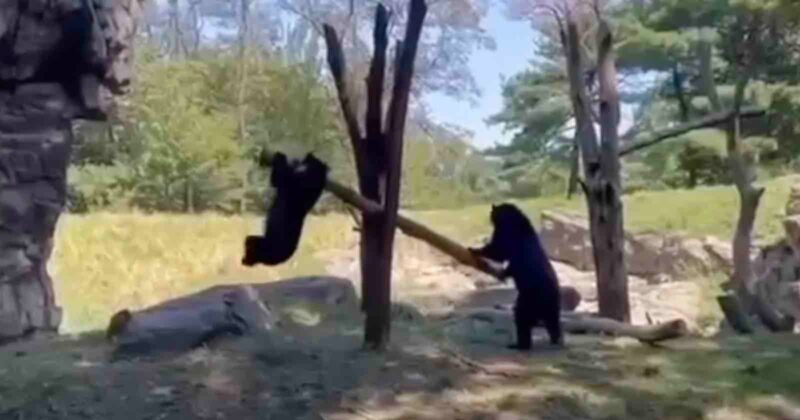
 A pair of young Andean bears are seen “see-sawing” in Queens Zoo (Credit: ©️Queens Zoo | Ursula McDermott)
A New York zoo visitor captured remarkable footage of two young Andean bears appearing to play see-saw with a fallen tree branch.
The Queens Zoo in New York City released the short video today, which was filmed by zoo guest Ursula McDermott. It shows the bears moving in a steady back-and-forth rhythm on opposite ends of the branch. In the clip which was filmed back in September, Coya, a female approaching her second birthday, is positioned on the right, while Ransisku, a nearly four-year-old male, is on the left.
The footage shows the pair of Andean Bears as they push, pull, and shift their weight in sync, creating what looks to observers like a coordinated game. Experts at the zoo say the behaviour is typical for the species.
“As young bears, Coya and Ransisku are curious about everything in their environment,” Mike Allen, Director of the Queens Zoo, says. “While this particular interaction with the branch is unique and fun to watch, it’s very much in line with their natural instinct to explore, climb, and test their surroundings. They’re learning about their habitat—and each other—every day.”
Andean bears, also known as spectacled bears because of the pale markings around their eyes, are the only bear species native to South America. Adults typically reach five to six feet in length, with males weighing up to 340 pounds and females around 200 pounds. The species is highly arboreal and depends on trees for nesting, foraging, and resting.
In the wild, Andean bears are found throughout the Tropical Andes, including Bolivia, Colombia, Ecuador, Peru, and Venezuela. They are listed as Vulnerable by the International Union for Conservation of Nature, with fewer than 18,000 estimated to remain. Habitat loss and conflict connected to cattle and corn production continue to threaten populations.
The Queens Zoo is operated by the Wildlife Conservation Society, which runs conservation programmes across the Andes aimed at protecting remaining bear populations. The zoo also participates in the Association of Zoos and Aquariums Species Survival Program as part of wider efforts to support the species.
Image credits: Header photos by ©️Queens Zoo/Ursula McDermott.