
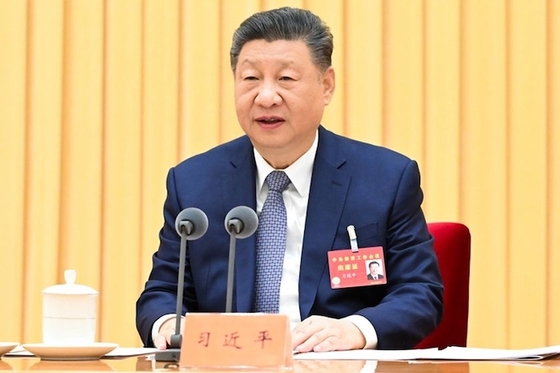
China’s top leadership, following the 2026 Central Economic Work Conference in Beijing, outlined a more proactive and coordinated macroeconomic policy stance for 2026. The resulting policy direction prioritizes domestic demand as the core focus of economic strategy, while placing less emphasis on aggressive stimulus, particularly regarding property markets and local government debt. The conference’s official statement called for “more active and effective macro policies,” aiming to merge both existing and innovative policy tools to improve the efficiency of economic management in the coming year. [para. 1][para. 2]
Economic stability is seen as achievable, with officials confident of meeting the 2025 growth target, citing a 5.2% GDP expansion in the first three quarters of 2024 and the IMF’s forecast of 5% growth for 2025 and 4.5% for 2026. Despite the challenges of weak demand and global uncertainty, the conference shifted its diagnostic tone. Rather than only pointing to weak consumption, leadership identified a “prominent contradiction between strong supply and weak demand,” signaling a structural issue as China heads into its “15th Five-Year Plan.” [para. 3][para. 4][para. 5]
This re-evaluation refocuses policy away from temporary boosts and toward systemic supply-demand imbalances. The 2026 macro policy will broaden both countercyclical and cross-cyclical adjustments, marking a step back from 2025’s drive for “extraordinary counter-cyclical measures.” Fiscal policy will remain “active,” but with softer rhetoric than before, and the government signaled it would keep its fiscal deficit and debt near current levels—analysts suggest the 2026 deficit ratio will hold close to 4%. Tax incentives will be standardized, more central government investment is expected, and local governments will see eased fiscal stress through larger special bond allowances and improved spending management. [para. 6][para. 7][para. 8]
Monetary policy will stay “moderately loose,” employing rate cuts and reductions in bank reserve requirements to support growth and boost price rebounds. The utmost priority is to revive domestic demand by growing the internal market, reducing constraints on consumption, and boosting incomes for urban and rural residents. New investment measures are planned to reverse recent declines, enhance infrastructure programs, and facilitate private sector financing. Nomura analysts noted the conference’s explicit commitment to reversing the investment downturn, including measures for real estate stabilization and the efficient use of reserve ratios and interest rates. [para. 9][para. 10][para. 11][para. 12]
Other major priorities—innovation, reform, and opening—include deeper market reforms, state-owned enterprise restructuring, and expanded legal protections for the private sector. Reaffirmed commitments include further liberalizing the services sector, optimizing free-trade zones, and enhancing digital and green trade. Risk prevention, particularly regarding real estate, will rely on policies like city-specific interventions, inventory reductions, and subsidized housing conversions. Local governments face tighter controls on hidden liabilities and improved debt restructuring tools. [para. 13][para. 14][para. 15][para. 16]
According to Capital Economics, while fiscal and monetary support will continue in 2026, no major new stimulus is anticipated. Forecasts include 30 basis points in rate cuts and 75 basis points in RRR reductions, which may not be enough to spark strong credit demand. Real estate policies remain incremental, with fiscal policy taking on the primary role for economic support and the deficit target unchanged, implying less new fiscal impulse than in 2025. [para. 17][para. 18]
Nevertheless, increasing efficiency of fiscal resources and targeting household incomes could pave the way for a more balanced economy. Analysts at China Merchants Securities expect a stable policy tone in 2026, likely benefiting large-cap equities, with petrochemicals, telecom, and electronics poised for gains. The “strong supply, weak demand” framing may lead to more pronounced demand-side actions, with further policies possible in early 2026. [para. 19][para. 20][para. 21][para. 22][para. 23]
AI generated, for reference only