
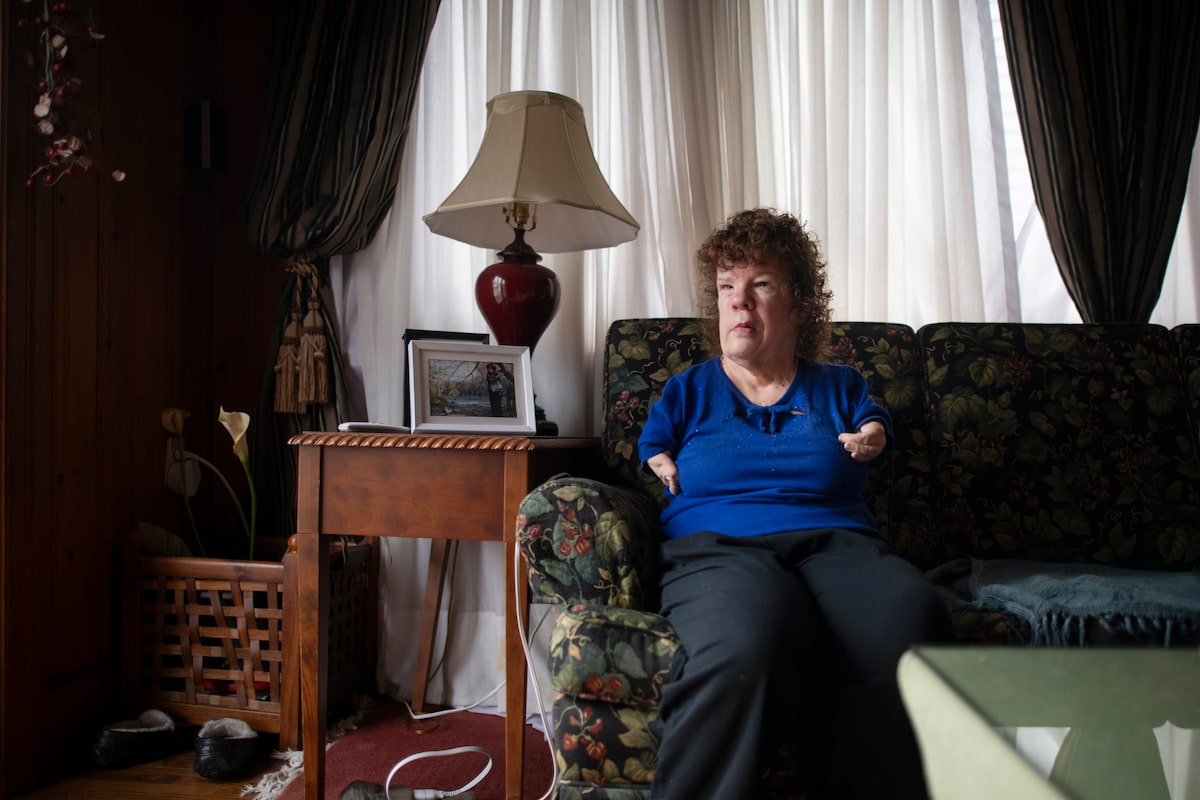
Good morning. The Globe spoke with thalidomide survivors about how their lives have changed 10 years after a settlement with the Canadian government. More on that below, along with news on Costco patriotism and Time’s person(s) of the year. But first:
Today’s headlinesOpen this photo in gallery:
In addition to daily medication, Johanne Hébert needs to receive pain treatments once every two months, something she says she can afford to do only because of a settlement she received for thalidomide survivors.Selena Phillips-Boyle/The Globe and Mail
HealthThe settlement, a decade later
Hi, I’m Erin Anderssen, a senior feature writer reporter at The Globe and Mail. I spent several months interviewing survivors of one of the worst drug disasters in Canadian history, working with my former colleague Ingrid Peritz.
The Globe wanted to find out how the Canadians most severely affected by the thalidomide tragedy were faring, a decade after our government finally stepped up to correct this historic negligence with a financial support program.
The money has indeed made difficult days easier for the thalidomide survivors, providing financial security, the ability to renovate their homes, pay for help and show kindness to themselves – even as many suffer with chronic pain, arthritis and joint issues, aging much faster than the average Canadian population.
But the word “survivor” has rarely been more appropriate: These are people who learned to manage everyday life on their own wits – typing with their toes, opening jars and carrying groceries with their teeth, doing everything from stoking wood stoves to loading dishwashers with their feet.
Alex Niblock resting, and reading a book she considers one of the best about the thalidomide story.Rachel Lenkowski/The Globe and Mail
As Alexandra Niblock, who was born with severely shortened arms, only five usable fingers on both hands and no thumbs told me, “All thalidomiders are kings and queens of innovation.”
Stories can be forgotten with time, so here are some details: In the early 1960s, doctors gave thalidomide to pregnant women for morning sickness; the consequences were 10,000 babies around the world – including more than 100 in Canada – born with birth defects: missing or stunted arms and legs, misshapen fingers and damaged organs.
The drug was never approved in the United States because Frances Kelsey, a steadfast Canadian-born medical reviewer at the Food and Drug Administration, refused to trust the drug company’s safety data.
In Canada, however, women had no such protector. And even after the link to birth defects was reported, Canada delayed three months before joining Britain and Australia in banning the drug.
The babies of the thalidomide tragedy are now in their sixties. It’s been 10 years since they received lump sums and lifelong pensions from the Canadian government. In 2014, Ingrid wrote doggedly for months about the poverty, indignity and despair long suffered by thalidomide survivors – award-winning work later credited for adding pressure on the government to deliver a support program.
A decade later, the 14 Canadians we interviewed for the story agree that the federal funds have made their lives more comfortable and financially secure. They have renovated their homes and paid for help, taken trips to see family and, for the first time, used some of the money to savour life and be kind to themselves.
Mercédes Benegbi hosts a brunch to celebrate the 10-year anniversary of a settlement being awarded to thalidomide survivors.Selena Phillips-Boyle/The Globe and Mail
But, as I write in the story, that doesn’t mean all is forgiven. “What are arms and legs worth?” asks Mercedes Benegbi, the former executive director of the Thalidomide Victim’s Association of Canada. They fought for decades to achieve a true measure of compensation – and that anger lingers. A handful continue to fight legally for a better settlement.
This story was a privilege to write. Over Zoom, I spoke for hours with survivors, who candidly described their most personal, difficult moments – dealing with periods as teenagers, having to ask school bullies for help, being underestimated by teachers and parents. In Perth, Ont., I sat with Susan Wagner-White just a few days after her longtime partner had moved out; she was still adjusting, distracting herself by strategizing how she’d now get the green bin to the curb in the snow.
They shared moments of joy, novelty and persistence. In Dartmouth, N.S., Jane Rogerson, who was born with severely shortened arms, recently received a hammer dulcimer for her birthday from her partner – her first musical instrument. This January, Lianne Powell, a survivor living in Toronto, will take her adult children to Jamaica for a week – their first all-family holiday.
One of my favourite anecdotes was provided by Nancy Blain, in Alberta, who described building back her strength after a fall shattered her femur; she would circle the hospital floor, using her feet to pull the wheelchair, singing her best version of Helen Reddy’s “I am woman, hear me roar” for inspiration.
Money doesn’t make hard lives instantly easy, and survivors worry about affording care as they get older – but they are resolved to keep going. For one thing, a few joked, the longer they live the more money the government pays up for its mistake. This story is most certainly about resilience and strength, but it’s also a reminder to the country to learn from the past how we can try, even imperfectly, to right a terrible wrong.
The Shot‘When I have the choice I still buy Canadian.’Open this photo in gallery:
A shopper exits a Costco in Toronto, Dec. 11.Sammy Kogan/The Globe and Mail
Nearly one year ago, the Globe spoke with shoppers at a Toronto Costco about their anxieties around the trade war and “Elbows Up.” This week, on a return visit, it was clear that the tensions remain top of mind for many Canadians.
The WrapWhat else we’re following
At home: Toronto Police say a suspected serial killer in three cold-case murders has been identified.
The House: Parliament wrapped up for its holiday break yesterday, ending a standoff in the Commons over a handful of bills.
In court: New Brunswick’s Court of Appeal has ruled that an Indigenous group cannot seek a declaration of Aboriginal title over private property.
Abroad: Winter storm wreaks havoc in Gaza as the war-battered territory suffers from insufficient aid.
Allies: U.S. warplanes join a Japanese fighter jet drill in a show of solidarity that follows Chinese and Russian war games in the region.
All in: The “Architects of AI” were named Time’s person of the year for 2025.