
“It’s not a cash figure but it features in our books and ends up in the media as a $1m loss before we do anything.”
The award-winning building cost about $33m to build but was recently revalued at about $45m, he said.
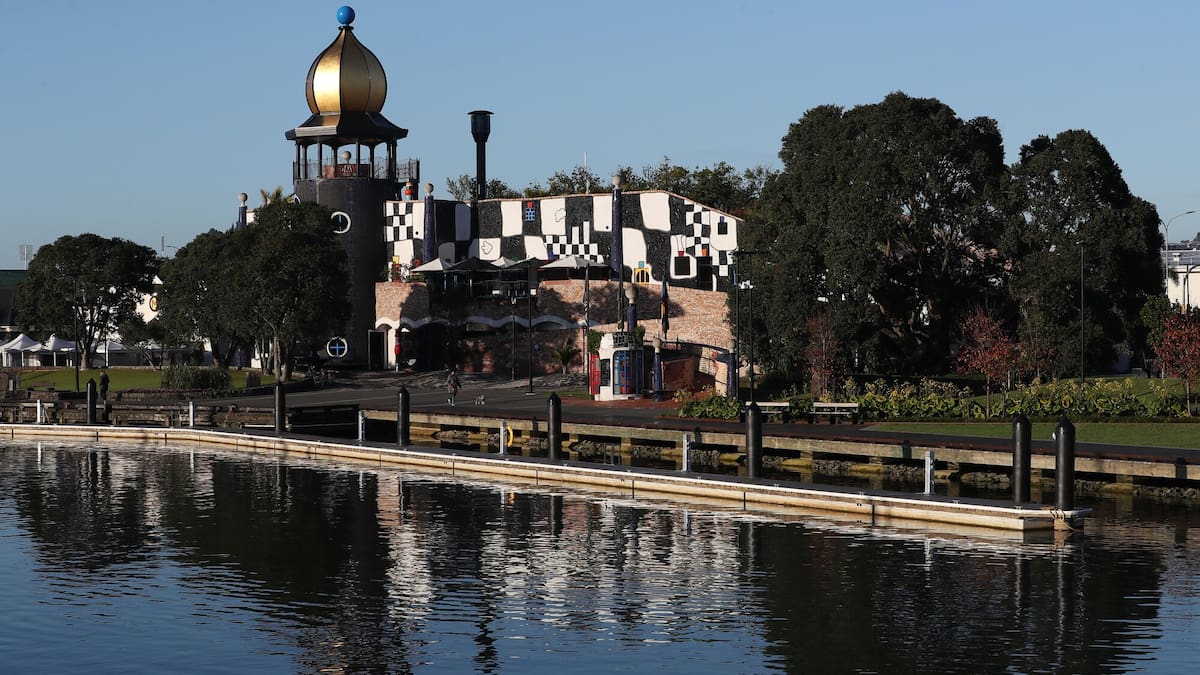
It includes an afforested rooftop, quirky tiling and the Wairau Māori Art Gallery, and is the last building designed by the famous Austrian artist Friedensreich Hundertwasser.
The depreciation is attributed despite yearly maintenance being carried out on the building, Shepherd said.
The trust also faces high fixed costs – such as $138,000 in insurance and $156,000 for electricity a year – needed in part to protect the artworks within the two buildings, he said.
Expenses were scrutinised line-by-line and were $28,000 less than budgeted, Shepherd said.
Whangārei Art Trust chairman Bill Shepherd, a former Northland Regional Council chairman, says depreciation is a non-cash cost added to the Hundertwasser Art Centre’s deficit. Photo / NZME
“I think the whole of our board is confident that to reduce expenses further would involve cutting staff, cutting into the nature of the organisation and cutting services.”
However, the Hundertwasser Art Centre continues to fall short on admission fees, which were $117,000 less than budgeted, and revenue from commercial activities, which was $114,000 less than budgeted for the year.
Need to attract tourists to Whangārei, director says
Director Dr Joost de Bruin said for the current business model to work, the Hundertwasser Art Centre needed to attract large numbers of international tourists.
That had not happened for a number of reasons, including the post-Covid downturn in international visitors to New Zealand and the fact only 10% to 12% of international tourists come to Northland, he told the committee.
On top of this, many tourists do not regard Whangārei as a destination, often travelling from Auckland to places further north without stopping, de Bruin said.
Hundertwasser Art Centre director Joost de Bruin says getting international tourists to Whangārei is a challenge. Photo / NZME
The Hundertwasser Art Centre is working with the likes of Northland Inc to get tourists to stop in Whangārei, he said.
Earlier this year, the centre was denied a request to have brown tourist destination signs placed on State Highway 1.
NZ Transport Agency declined the request, in consultation with the council, because the spot was oversubscribed with signs, including a generic Town Basin one.
But de Bruin successfully argued the Hundertwasser Art Centre was unique and deserved its own signs.
Approval has now been granted and signs will be put up very soon, he said.
“I’m very excited about it. We need to get people off State Highway 1 for people to see us.”
Hundertwasser Art Centre could be added to the signs on the corner of SH1 and Tarewa Rd in Whangarei, as proposed by this mock-up. Photo / Denise Piper
Facilities cost council but benefit district
Shepherd said the trust is now working on a strategic plan to stay financially viable, including reducing its reliance on council grants by 2027.
The council gave $710,000 in funding to the trust in 2024-25, including $186,000 in rent concessions. Just $30,000 of this was allocated to the Hundertwasser Art Centre, with the majority benefiting the Whangārei Art Museum.
The council’s long-term plan budgets annual funding to the trust of $920,000 to $930,000 a year, dropping to $461,000 in 2027-28.
Shepherd said the trust is assessing the value of the two facilities to Whangārei.
Of the Hundertwasser’s 34,000 annual visitors, about 11,000 were international and 18,000 were domestic visitors from outside Northland. The Whangārei Art Museum has 39,000 visitors a year but there was no breakdown of visitors’ place or origin, he said.
“It’s still a work in progress but we’re pretty confident that the two facilities add at least $5m worth of spending power to the local economy.
“That’s in addition to the richness that we add to the community with education and art appreciation.”
Whangārei Mayor Ken Couper thanked the trust for its work, which was not easy given the council’s economic constraints.
“It does add richness to the community but we also have to be aware of the economic realities that we have. It’s very tricky.”
Councillor Brad Flower also thanked the trust, saying while scrutiny was coming, it was being applied to all council expenses.
Denise Piper is a news reporter for the Northern Advocate, focusing on health and business. She has more than 20 years in journalism and is passionate about covering stories that make a difference.