
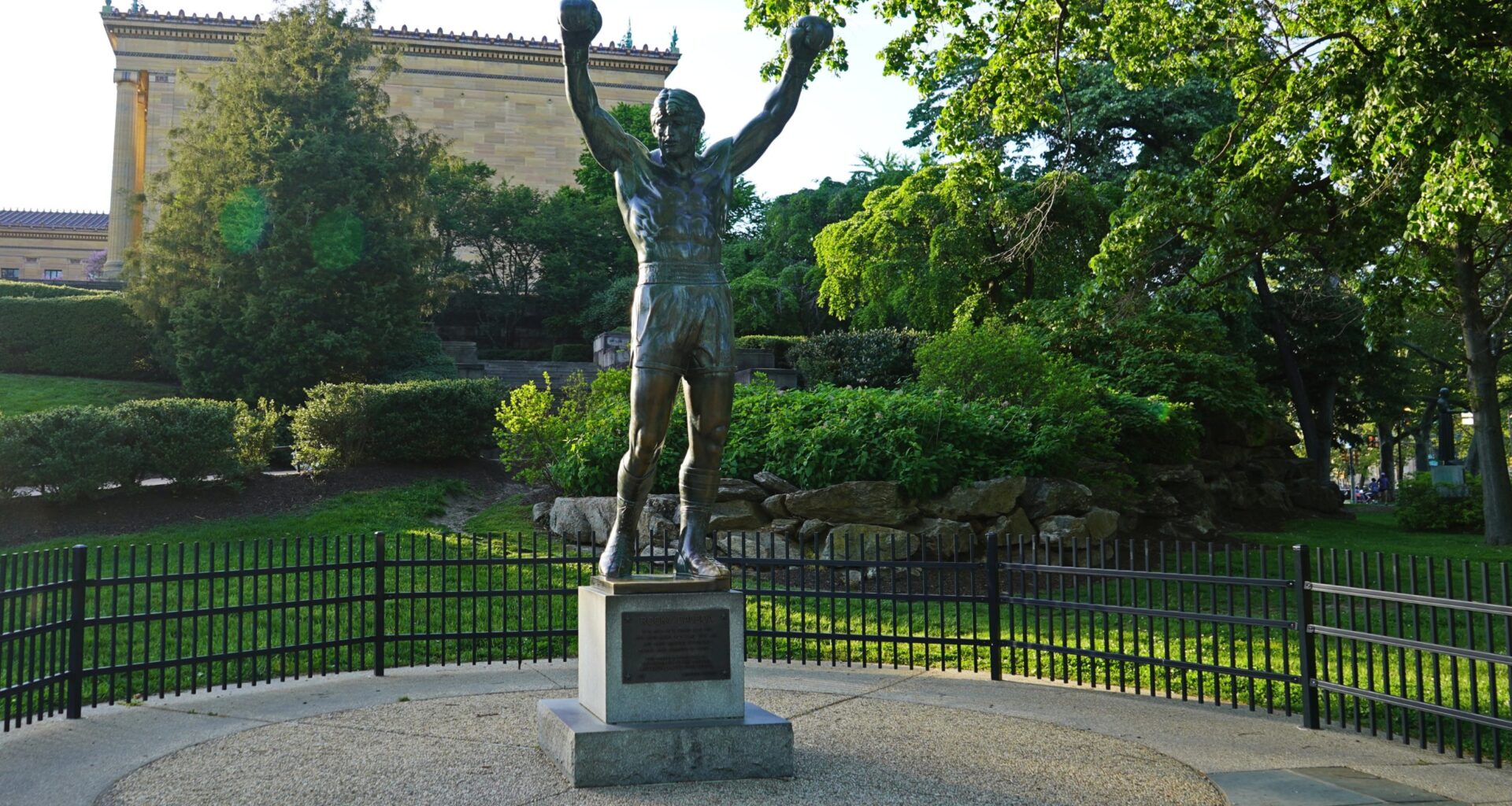
The Rocky statues are set to move soon.
Yes, statues, plural.
The iconic — and apparently divisive — fixture is on the move. But not that far.
After being located at the foot of the Philadelphia Art Museum steps since 2006, the original statue looks set to ascend to the top of the steps, sometime in 2026. It will (eventually) replace a duplicate that has been there for the past year.
The move was part of a proposal by Creative Philadelphia, the city’s arts department, presented to the Philadelphia Art Commission on Wednesday. The commission did not give final approval and the plans seemed to change after public outcry.
Here’s what we know so far.
How many Rocky statues are we talking about?
It’s probably best to first identify and label the three Rocky statues we’re going to be talking about.
Rocky Balboa actor Sylvester Stallone commissioned sculptor A. Thomas Schomberg to create the iconic Rocky statue for the filming of “Rocky III,” and Schomberg cast three. Let’s call the statue that was featured in “Rocky III” and has drawn an estimated 4 million tourists each year — according to Creative Philadelphia — Rocky A.
In the movie, Balboa beat James “Clubber” Lang with the help of rival-turned-ally Apollo Creed, and also defeated “Thunderlips,” a wrestler played by Hulk Hogan. (Not important to our explainer, but let’s just say it — “III” was the best movie in the franchise!)
Between 1981 and 2006, Statue A had moved around a bit, which has been well detailed in WHYY’s “The Statue” podcast.
Rocky B was also cast at the time. It arrived at the top of the museum steps for the first-ever RockyFest last year, on loan from Stallone himself.
Rocky C is the most recent arrival to Philly and, richly, is currently the most permanent. It was unveiled at Philadelphia International Airport in late November and will remain a permanent fixture in Terminal A-West, between Gates A15 and 16. That’s all you need to know about Statue C for this point.
The Rocky shuffle
This week’s proposal was to return the original, Statue A, to Stallone’s estate and eventually move Statue B closer to the front door of the Art Museum, “a comfortable distance back from the steps.” All of this was supposed to cost the city $150,000.
But a twist came during the meeting.
“In response to the strong and heartfelt feedback from the public, Mr. Stallone has graciously decided that we will no longer move forward with the proposed statue swap,” Valerie Gay, Creative Philadelphia’s chief cultural officer, revealed at Wednesday’s meeting. “This outcome reflects our shared commitment to listening deeply to the community and doing what is best for both the art and the people who cherish it.”
So now the proposal’s plan will be to bring Statue A into the museum for a 2026 exhibition and keep Statue B in front of the museum.
The museum has had a love/hate relationship with the very concept of embracing the Rocky statue over the decades. It’s currently on the love side, and will feature Statue A in its “Rising Up: Rocky and the Making of Monuments” exhibition, running from April 25 to Aug. 2. The exhibition coincides with the 50th anniversary of the first Rocky movie, and gives us some idea of when the first parts of the statue-switching needs to be done by.
When the exhibition is done, Statue B goes back to Stallone and Statue A (the original) moves to its final place at the top of the stairs. This opens a space at the bottom of the steps, that will be filled by another city-owned statue — probably un-Rocky related (maybe the statue of non-fictional, and Philly ‘s own, heavyweight champion “Smokin’” Joe Frazier , now residing outside Stateside Live!) — according to Creative Philadelphia.
When will we know?
The final details still need to be approved by the Philadelphia Art Commission, which next meets Jan. 14.
“We also see this as an opportunity to lean into the evolving conversation about what is considered ‘art,’ and what deserves a place in our most treasured civic spaces,” the proposal stated. “The Rocky statue is a clear example of this evolution. Its artistic significance has not been shaped by institutions, but by the millions of people who engage with it year after year. By formalizing its placement at the top of the steps, we are seeking to honor that public connection, strengthen this iconic site, and enhance the experience for residents and visitors.”