
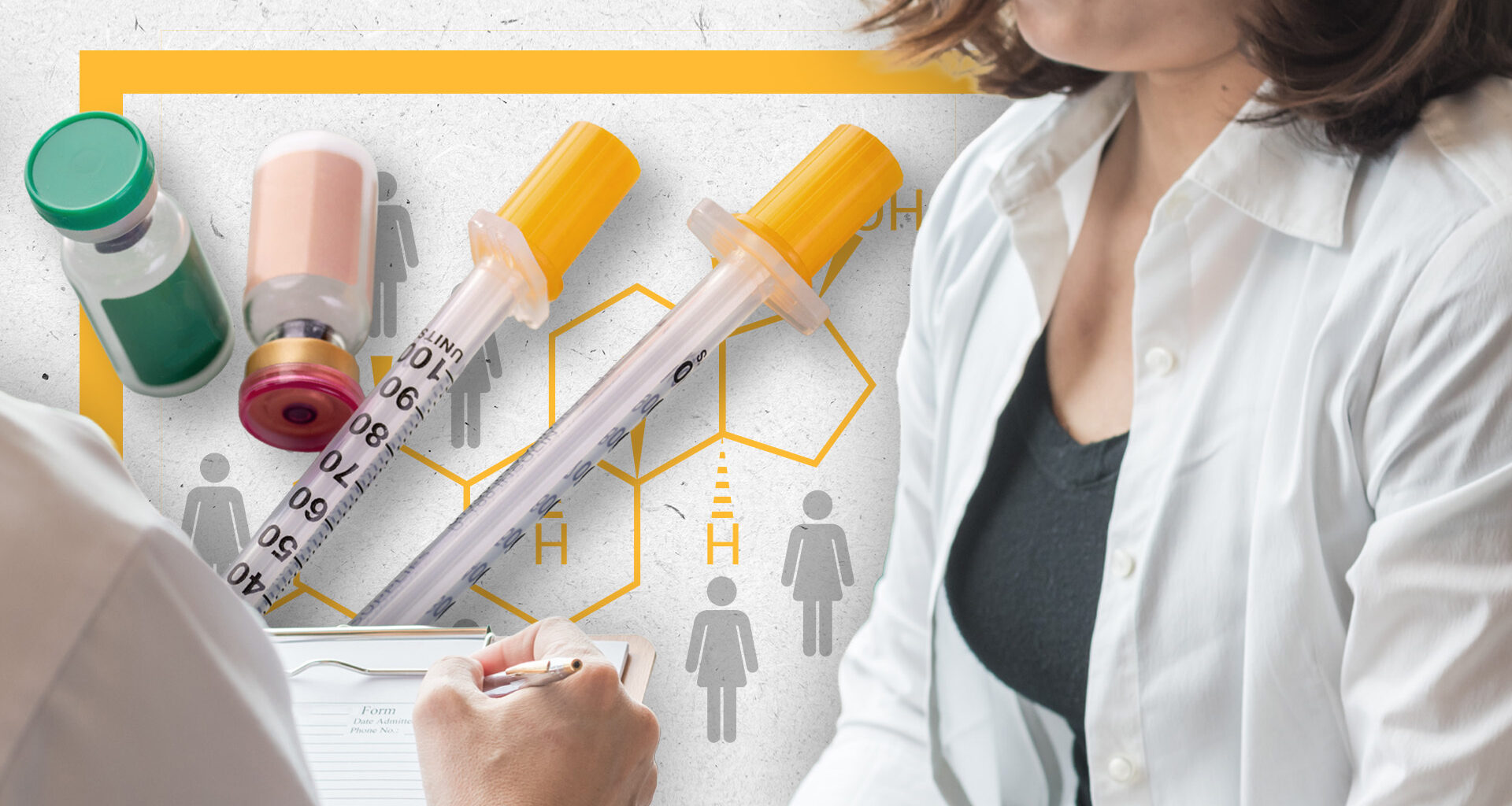
Menopause is having an overdue moment. Midlife women are talking more openly about debilitating symptoms like hot flashes, fatigue, brain fog and sexual dysfunction. Seeking relief, their social feeds and group chats fill with discussions about hormone replacement therapy, or HRT.
Lately, the hormone testosterone has stepped into the spotlight. Fans tout life-changing benefits: more energy, stronger bodies and better sex. A-list celebrities like Halle Berry, Naomi Watts and Kate Winslet have said they use it.
“I found my libido again,” Berry told influencer and podcast host Tamsen Fadal in a recent interview.
The U.S. Food and Drug Administration (FDA) approved a range of estrogen and progesterone products to treat menopausal symptoms, and last month announced it would remove long-standing black box warnings from a number of labels.
But there is still no FDA-approved testosterone product for women. Without one, insurance plans rarely cover treatment, leaving women with about $100 a month or more in out-of-pocket expenses. (Australian regulators approved a testosterone product for women called AndroFeme that’s now available in the U.K., South Africa and New Zealand, but not approved in the U.S.)
Clinicians who prescribe testosterone to women in the U.S. do so off-label, typically as a compounded topical cream, a reduced dose of an FDA-approved testosterone gel for men or a pellet inserted under the skin.
The result is a patchwork system in which testosterone is widely used off-label but without a product that has been specifically formulated to meet women’s needs, and thoroughly tested in large, long-term safety trials. Some experts say testosterone has been proven effective and relatively safe for many women, while others fear its widespread use is too experimental.
How can testosterone benefit women in midlife and what are the risks?
Testosterone is often branded as a “male hormone,” but women naturally produce it as well.
“Testosterone is not a male hormone; it’s a human hormone, and it is incorrect to believe that it is not significant for women,” said Dr. Kathleen Jordan, chief medical officer of Midi Health, a virtual care clinic that serves over 200,000 women in midlife.
Testosterone levels peak in women’s 20s and decline in their 40s and beyond. The hormone plays a key role in women’s sex drive, mood and cognition, bone and muscle health and energy, according to the Cleveland Clinic. Like estrogen and progesterone, it can plummet sharply in midlife.
The most studied and widely accepted use for testosterone therapy in women is for hypoactive sexual desire disorder — low libido that causes distress — in postmenopausal women. Many women take testosterone hoping to reignite their sex life and subsequently report improved sexual health and satisfaction.
Some clinicians say the benefits go well beyond the bedroom.
“There is also growing evidence of its positive impact on musculoskeletal health, with improvements in lean body mass and bone mass density noted,” Jordan told Straight Arrow News.
Testosterone may also boost energy, improve sleep and reduce brain fog for some women, said Dr. Gary Donovitz, a board-certified obstetrician-gynecologist, founder of BioTE Medical and author of “Age Healthier Live Happier.”
Jordan said that many midlife women on testosterone describe an increased sense of well-being and “feeling like themselves again.” She added that in Midi’s experience treating thousands of women, testosterone is “extremely well tolerated” and the clinic has seen no serious side effects.
If that all sounds too good to be true, some experts argue it is.
“There are scant data to support these widespread claims,” said Dr. Nanette Santoro, chair of obstetrics and gynecology at the University of Colorado School of Medicine. She said that testosterone is a reasonable option for some women with low libido, but believes it is overhyped.
“Testosterone is being sold to menopausal women under the incorrect assumption that it will keep them sexy,” Santoro told SAN.
In the early 2000s, the FDA reviewed several testosterone products formulated for women with low libido and declined to approve them. Regulators pointed to a lack of long-term safety data; concerns about potential risks like heart attack, stroke and breast cancer; and evidence that at least one product showed only modest benefits over a placebo.
In 2019, an international coalition of endocrine and menopause societies concluded that although there is solid science behind testosterone as a treatment for postmenopausal women with hypoactive sexual desire disorder, there is insufficient evidence that it improves energy, mood, cognition or muscle and bone health.
“You have to be cautious about endorsing testosterone for such a wide range of uses,” said Dr. Sharon Parish, professor of medicine at Weill Cornell Medical College. “We don’t have the long-term data for that.”
Experts agree about some potential risks of testosterone, particularly at high doses, including acne, increased facial or body hair, male-pattern baldness, clitoral enlargement or a deepening voice.
Why do some say testosterone is too hard to access and others call it the ‘wild west’?
The absence of an FDA-approved testosterone product for women, and the resulting gap in insurance coverage, creates a paradox. For many women, testosterone is financially out of reach. For others, it may be too readily accessible.
“Testosterone seems very easy to get,” said Santoro, at least in her home state of Colorado. Women can obtain testosterone without a blood test from nearly any licensed prescriber, including nurse practitioners and physician assistants with little to no specialized hormone training, she said. “One can ask just about anyone for the stuff and there’s a good chance that you will get a prescription.”
She is particularly alarmed about overdosing.
“I have seen patients with appallingly high testosterone levels, perhaps higher than my husband’s, and have seen it take months for those levels to come down. We know virtually nothing about long-term consequences of this level of exposure,” Santoro said. Testosterone “withdrawal” feels awful, she added, prompting some women to continue inappropriately high dosing.
Parish echoed that warning: Women “may feel great” when they start high dose testosterone, she told SAN, but they should never raise their levels higher than that of a typical woman in her 20s.
“We don’t have the safety data for that,” she said.
Jordan does not share this concern as long as testosterone is prescribed responsibly.
“We do not see women abusing testosterone nor wanting the massive dosing,” she said. Ultra-high doses, she noted, put women at greater risk of “androgenizing” side effects like facial hair and male-pattern baldness, which “women in general like to avoid.”
She and Donovitz urged women to work with responsible clinicians who are trained in hormone replacement and hormone optimization.
But Santoro said there aren’t enough guardrails in the U.S. For women seeking testosterone, Santoro said, “it’s buyer beware! It’s simply the wild west.”
Is testosterone policy justified caution or gender bias?
Both men and women naturally produce testosterone, and levels in both sexes decline with age. Yet testosterone therapies are FDA-approved and covered by insurance for men but not women.
The most straightforward explanation for this is that scientists and medical professionals simply know more about testosterone’s role in men’s health. There are far more studies, and decades more experience, on using these therapies for men. Regulators may be exercising justified caution by insisting on robust, long-term risk-benefit data before approving a hormone for chronic use by a huge and diverse population. The focus on testosterone’s role in women’s health and wellbeing is also relatively new, and the science is still catching up.
But some experts see gender bias layered in.
Start your day with fact-based news.
“Women were banned from studies altogether for decades until the regulation changed in 1993 — and the practice continued for years after that,” Jordan said. “So women really lack any long-term study results on much of anything.”
Advocates also argue that women’s sexual health is too often dismissed as an optional “quality of life” issue, while male sexual function has been treated as a medical imperative. Drugs like Viagra and testosterone for men have been heavily studied, developed and approved at scale and paid for by insurance.
Many women now want the same urgency applied to their midlife health issues. They want more research, clear safety data and effective treatments that are affordable and accessible.
“Testosterone use in women is such an important topic,” said Parish. “We want more answers.”
The FDA did not respond to SAN’s request for comment.